
Transformer Oil Regeneration & Reclamation Machine for Used Oil Restoration
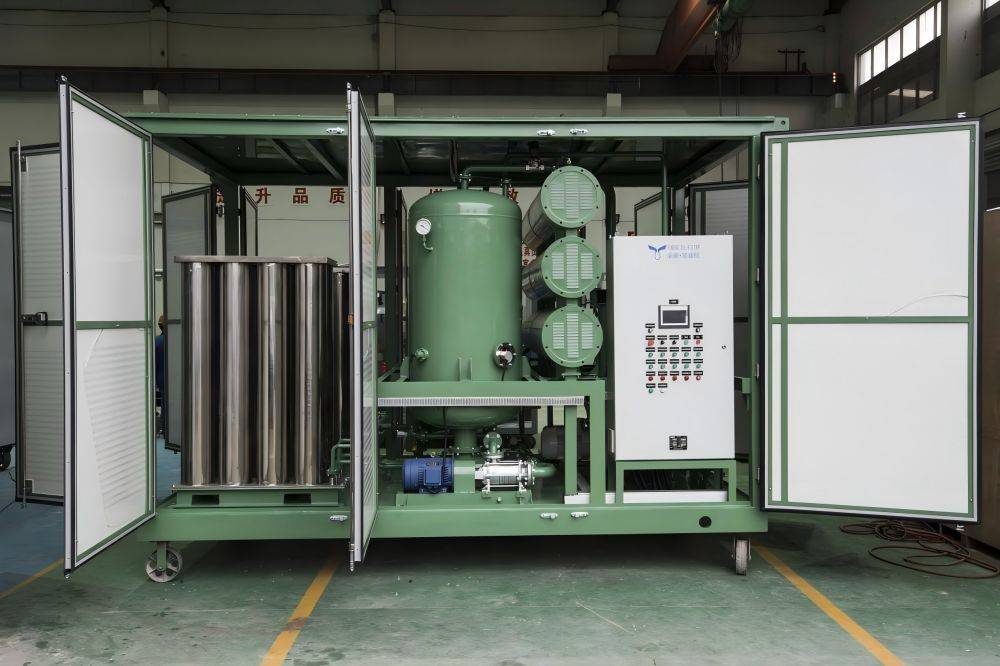
YUNENG’s Transformer Oil Regeneration and Reclamation Machine is a professional equipment that combines deep purification, regeneration, and reclamation of transformer insulating oil into one system. It utilizes multi-stage filtration, heating, degassing, dehydration, and sophisticated adsorption to get rid of moisture, gases, sludge, oxidation by-products, and other pollutants, bringing used oil back to its original quality and thereby prolonging its service life. This machine not only offers on-site transformer maintenance and oil quality improvement but also contributes to insulation performance upgrades and replacement cost savings.
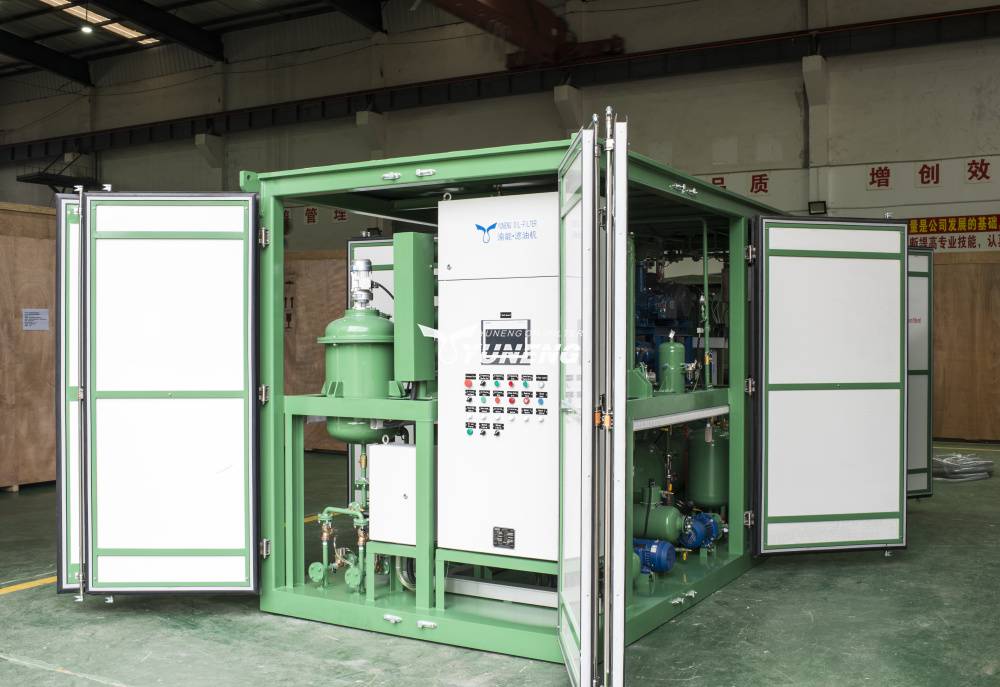
Explore Our Transformer Oil Regeneration and Reclamation Machine Ranges
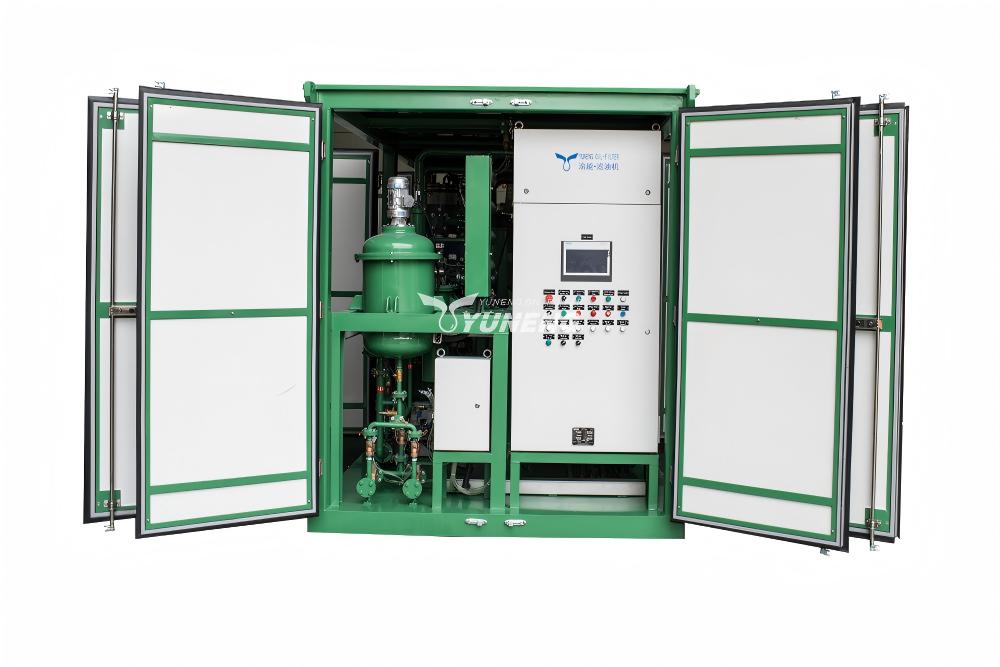
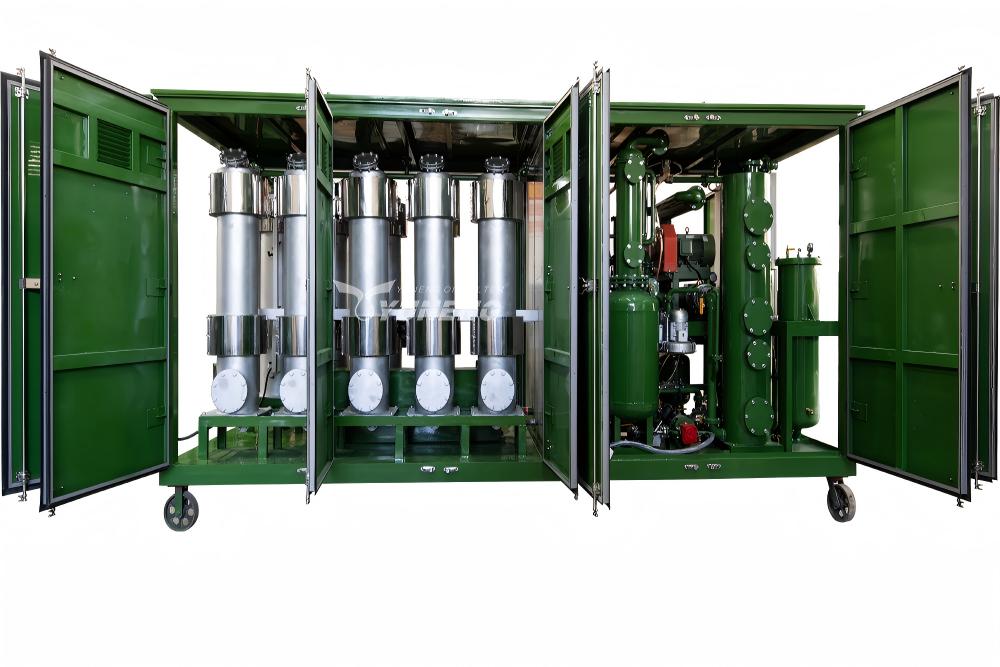
Transformer oil regeneration is a specialized process that restores aged insulating oil by removing moisture, dissolved gases, solid particles, acids, sludge, and oxidation by-products. Unlike basic filtration, which primarily eliminates water and contaminants, regeneration also restores the oil’s chemical properties through adsorption technology, typically using Fuller’s Earth or other high-efficiency adsorbent materials. This process helps recover the insulating and cooling performance of transformer oil, allowing it to meet industry standards again without complete oil replacement.
Compared with conventional transformer oil filtration, regeneration offers a much deeper level of treatment. A standard filtration system focuses on removing free water, dissolved gases, and suspended particles to improve dielectric strength. A transformer oil regeneration machine goes further by removing acidic compounds, oxidation products, sludge, varnish, and oil discoloration, restoring the oil’s chemical stability and extending its usable lifespan.
Transformer Oil Regeneration vs. Purification
Although the terms transformer oil purification, regeneration, and reclamation are sometimes used interchangeably, they refer to different levels of oil treatment. Purification focuses on removing physical contaminants, while regeneration and reclamation also restore the oil’s chemical properties, extending its service life and reducing the need for complete oil replacement.
| Comparison Item | Transformer Oil Purification | Transformer Oil Regeneration/Reclamation |
| Primary Purpose | Remove physical contaminants | Restore aged transformer oil to near-new condition |
| Moisture Removal | ✓ Excellent | ✓ Excellent |
| Dissolved Gas Removal | ✓ Yes | ✓ Yes |
| Solid Particle Removal | ✓ Yes | ✓ Yes |
| Acid Removal (Neutralization) | ✗ Limited | ✓ Yes |
| Oxidation By-products Removal | ✗ No | ✓ Yes |
| Sludge & Varnish Removal | ✗ No | ✓ Yes |
| Oil Color Restoration | ✗ Minimal | ✓ Significant |
| Dielectric Strength (BDV) Improvement | ✓ High | ✓ High |
| Interfacial Tension (IFT) Recovery | ✗ Little improvement | ✓ Restored |
| Adsorption Technology | Not required | Fuller’s Earth or activated adsorbent |
| Typical Oil Condition | Slightly contaminated oil | Aged oil |
| Typical Application | Routine preventive maintenance | Life extension of in-service transformers |
| Expected Oil Life Extension | Short-term | 5–10+ years (depending on oil condition) |
| Relative Operating Cost | Low | Higher than purification, but significantly lower than complete oil replacement |
| Recommended Maintenance Stage | Regular maintenance | Mid-life asset management |
Which Process Should You Choose?
- Choose Purification if the oil contains moisture, gases, or particles but still has acceptable acidity and oxidation levels.
- Choose Regeneration when the oil shows increased acidity, reduced dielectric strength, darker color, or oxidation products, and its service life needs to be extended.
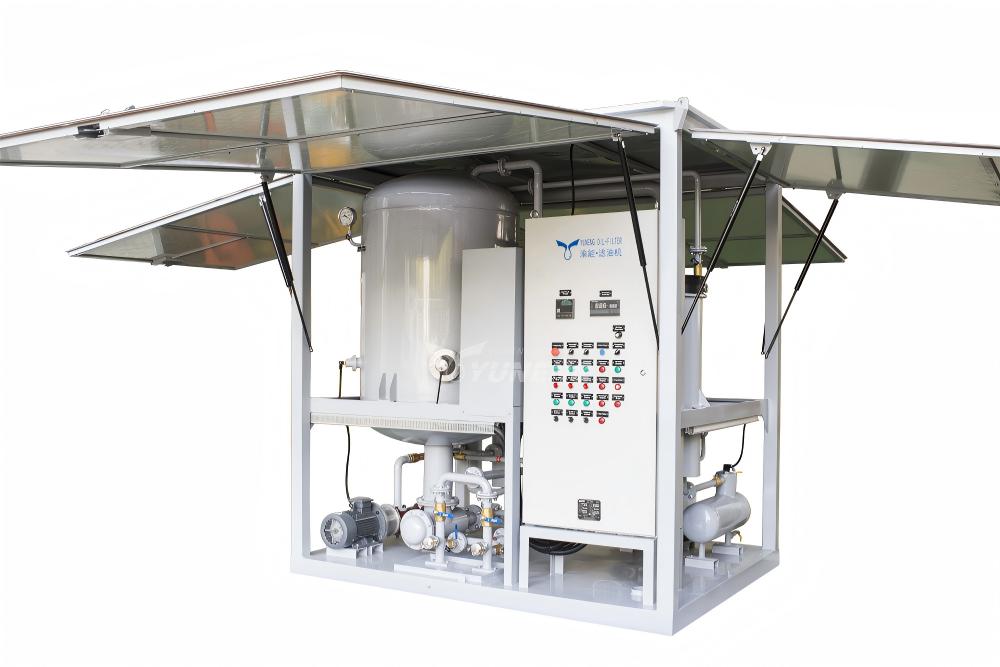
Why Transformer Oil Needs Regeneration
Transformer insulating oil gradually deteriorates during years of operation due to electrical stress, heat, oxygen exposure, and environmental contamination. While conventional filtration removes moisture, gases, and solid particles, it cannot reverse the chemical aging of the oil. Transformer oil regeneration restores both the physical and chemical properties of insulating oil, helping extend transformer service life, improve reliability, and reduce replacement costs.
Problem: Moisture enters transformer oil through aging seals, paper insulation, and atmospheric exposure.
Consequence: Even a small increase in water content can significantly reduce dielectric strength (BDV), accelerate cellulose insulation aging, and increase the risk of partial discharge or insulation failure.
Solution: Regeneration removes dissolved and free water using high-vacuum dehydration, restoring insulation performance and improving transformer reliability.
Problem: Continuous exposure to heat and oxygen causes transformer oil to oxidize over time, producing harmful oxidation by-products.
Consequence: Oxidized oil loses its cooling and insulating properties, while oxidation products accelerate the aging of both oil and solid insulation.
Solution: Regeneration removes oxidation compounds through adsorption technology, restoring oil stability and slowing future degradation.
Problem: Oxidation gradually increases the acid value (Neutralization Number) of transformer oil.
Consequence: Acidic oil attacks cellulose insulation, corrodes metal components, and shortens transformer service life.
Solution: Adsorbent media such as Fuller’s Earth effectively remove acidic compounds, reducing the acid number and restoring oil quality to acceptable operating standards.
Problem: Oxidation by-products eventually polymerize into sludge and varnish deposits.
Consequence: Sludge blocks cooling ducts, restricts oil circulation, raises transformer operating temperatures, and accelerates insulation deterioration.
Solution: Transformer oil regeneration removes sludge precursors and dissolved contaminants before they accumulate, restoring efficient cooling performance.
Problem: Electrical arcing, switching operations, and localized overheating generate microscopic carbon particles inside the transformer.
Consequence: Conductive carbon contamination lowers dielectric strength and increases the likelihood of electrical discharge and insulation breakdown.
Solution: Multi-stage precision filtration combined with regeneration removes fine carbon particles, improving oil cleanliness and electrical insulation.
Problem: Electrical faults and thermal stress generate dissolved gases such as hydrogen, methane, ethylene, acetylene, and carbon monoxide.
Consequence: Excessive dissolved gas may indicate developing insulation faults and increases the risk of partial discharge or transformer failure.
Solution: High-vacuum degassing efficiently removes dissolved gases, restoring dielectric performance and supporting more accurate dissolved gas analysis (DGA).
Problem: Aging oil contaminated by moisture, acids, and oxidation products develops a higher dielectric dissipation factor (tan δ).
Consequence: Increased dielectric loss results in greater energy losses, higher operating temperatures, and reduced insulation efficiency.
Solution: Regeneration removes polar contaminants responsible for dielectric loss, reducing tan δ, improving insulation performance, and helping the oil meet IEC and ASTM quality requirements.
How a Transformer Oil Regeneration Machine Works
A transformer oil regeneration machine restores the physical and chemical properties of insulating oil through a multi-stage treatment process. Unlike conventional filtration systems, regeneration combines vacuum dehydration, vacuum degassing, precision filtration, and adsorption technology to remove moisture, gases, solid particles, acids, sludge, and oxidation by-products. The regenerated oil can then be returned to the transformer with significantly improved dielectric performance and an extended service life.
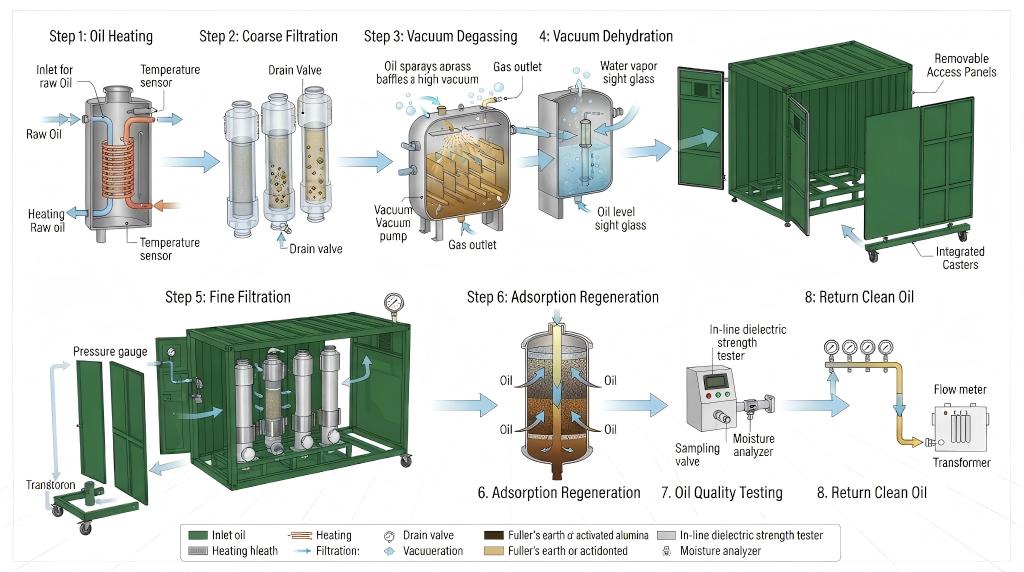
Step 1 – Oil Heating
The contaminated transformer oil is pumped into the regeneration system and gently heated to the optimal processing temperature, typically between 45°C and 65°C. Controlled heating reduces oil viscosity, improves moisture evaporation, and increases the efficiency of vacuum dehydration and degassing while preventing thermal damage to the insulating oil.
Step 2 – Coarse Filtration
The heated oil first passes through a coarse filter that removes larger contaminants such as rust, metal chips, carbon deposits, fibers, and other suspended particles. Removing these impurities protects downstream components and extends the service life of precision filters and adsorption materials.
Step 3 – Vacuum Degassing
The filtered oil enters a high-vacuum chamber where dissolved gases—including hydrogen, oxygen, nitrogen, methane, acetylene, and carbon dioxide—are rapidly extracted. Vacuum degassing restores the oil’s dielectric properties, minimizes the risk of partial discharge, and improves transformer insulation performance.
Step 4 – Vacuum Dehydration
After degassing, the oil remains under deep vacuum to remove dissolved and free water. Moisture is vaporized at low temperatures under vacuum conditions, allowing water content to be reduced to very low levels without damaging the oil. This significantly increases breakdown voltage (BDV) and protects cellulose insulation from accelerated aging.
Step 5 – Fine Filtration
The dehydrated oil passes through high-precision filters, typically rated from 1 to 5 microns, to remove remaining microscopic particles, carbon contamination, and suspended solids. This stage ensures high oil cleanliness and reduces the risk of electrical faults caused by particulate contamination.
Step 6 – Adsorption Regeneration
This is the core stage of the regeneration process. The purified oil flows through adsorption columns filled with Fuller’s Earth or other high-performance adsorbent media. These materials remove acidic compounds, sludge, varnish, oxidation products, and other polar contaminants that cannot be eliminated by ordinary filtration. As a result, the oil’s color, interfacial tension (IFT), acid value (TAN), and oxidation stability are significantly improved, restoring the oil’s chemical properties and extending its service life.
Step 7 – Oil Quality Testing
Before the regenerated oil is returned to service, key performance indicators are verified through laboratory or online testing. Typical quality parameters include:
- Breakdown Voltage (BDV)
- Water Content (ppm)
- Acid Value (TAN)
- Dielectric Dissipation Factor (Tan δ)
- Interfacial Tension (IFT)
- Particle Cleanliness
- Oil Appearance and Color
Testing ensures the regenerated oil complies with applicable standards such as IEC 60422, IEC 60296, ASTM D877, and ASTM D1816.
Step 8 – Return Clean Oil
Once all quality requirements are satisfied, the regenerated transformer oil is returned directly to the transformer or transferred to a clean storage tank. The restored oil provides improved insulation strength, enhanced cooling performance, lower operating risk, and a significantly extended service life—often eliminating the need for costly oil replacement.
Transformer Oil Regeneration Machine Applicable Industries
Transformer oil regeneration machines are widely used across industries that rely on oil-filled transformers for power transmission and distribution. By restoring the insulating and cooling properties of transformer oil, these systems help reduce maintenance costs, extend transformer service life, and improve power system reliability without the need for complete oil replacement.
Power Utilities
Extends transformer life, improves grid reliability, reduces oil replacement costs, and minimizes planned outages.
Wind Farms
Supports continuous renewable energy generation by preventing transformer failures and reducing maintenance downtime in remote locations.
Solar Power Plants
Maintains transformer efficiency under high ambient temperatures and fluctuating loads while extending insulating oil service life.
Hydropower Stations
Removes oxidation products and moisture caused by long-term operation, ensuring reliable power generation and improved cooling performance.