
Transformer Dry Air Generator for Low Dew Point Moisture Protection
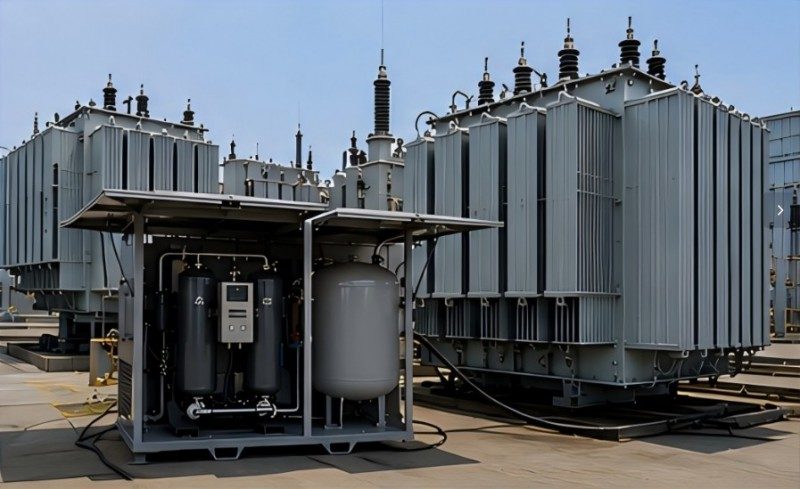
The dry air generator is suitable for large power equipment such as transformers and reactors in power systems. It is also suitable for air drying and circulating drying in warehouses, packaging, electronics, and other industries. At the same time, it is especially ideal for the drying of hydrogen in the hydrogen cooling system of the generator set and the drying of SF6 gas in the SF6 equipment.
YUNENG, a prominent manufacturer in the field of air drying machines, specializes in creating innovative solutions to meet diverse industrial needs. Their dry air generator, engineered for large power equipment like transformers and reactors in power systems, also excels in applications across various sectors, including warehousing, packaging, electronics, and more. Notably, it stands as an ideal choice for efficiently drying hydrogen in generator set cooling systems and SF6 gas in SF6 equipment. YUNENG’s offerings are renowned for their top-notch quality and cost-effectiveness, making them a preferred choice for discerning customers.
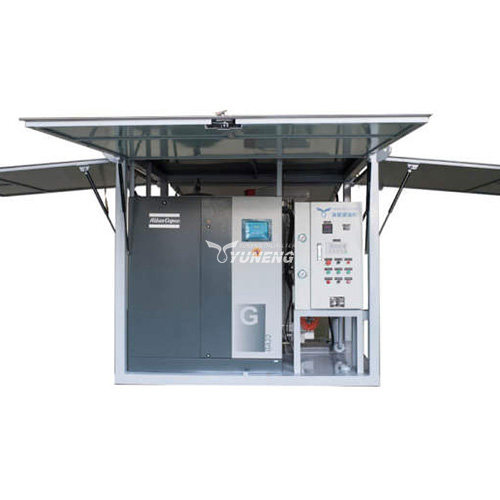
Explore Our Transformer Dry Air Generator
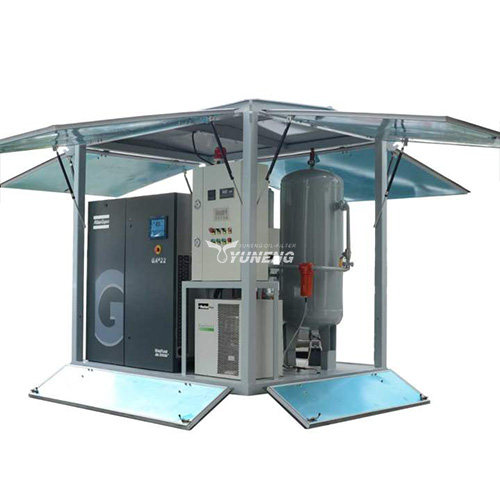
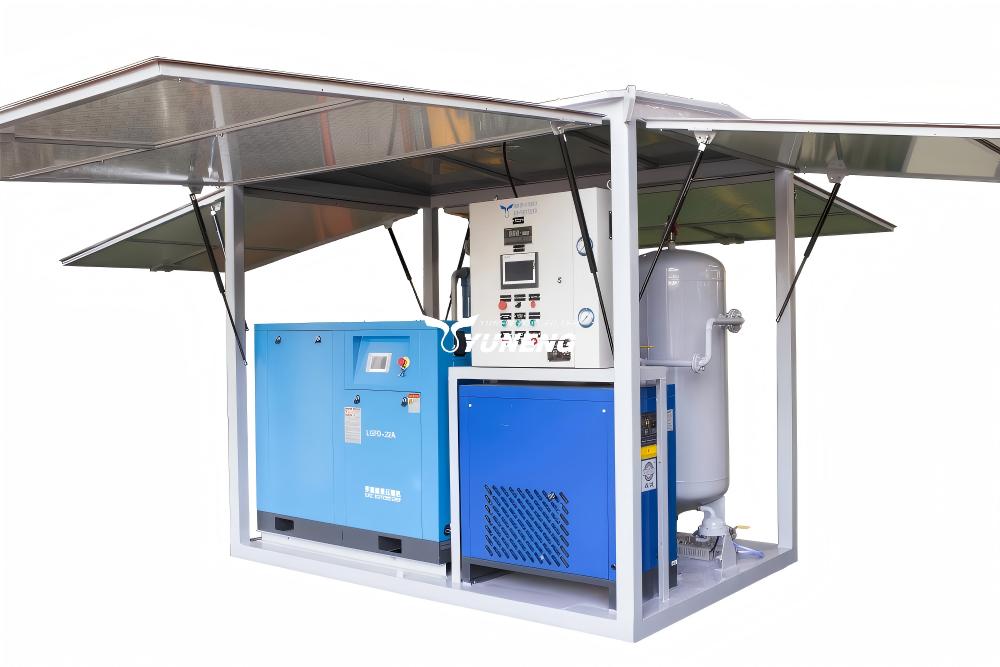
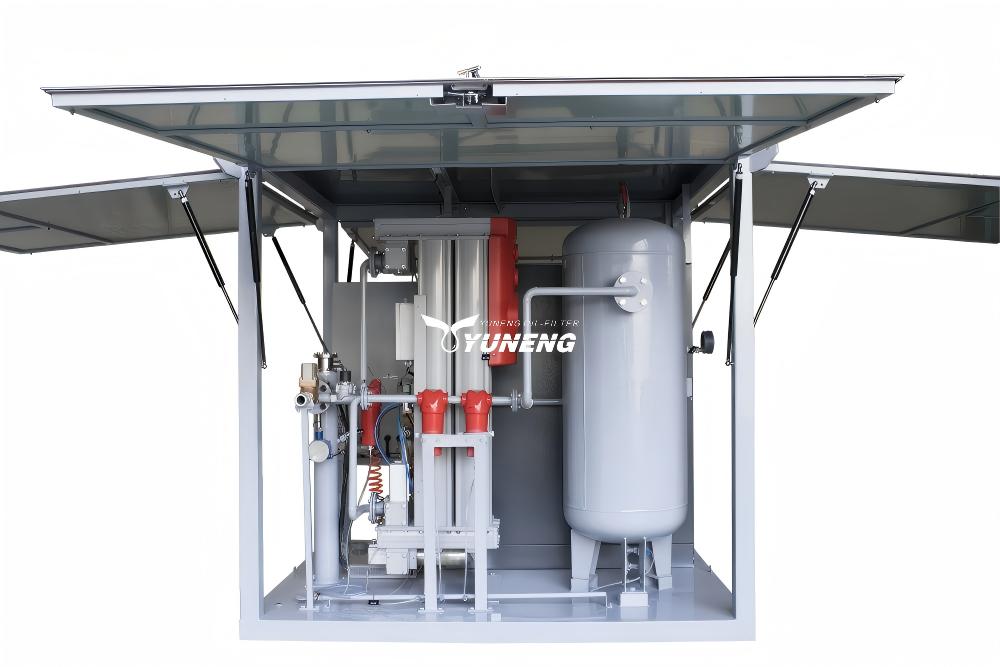
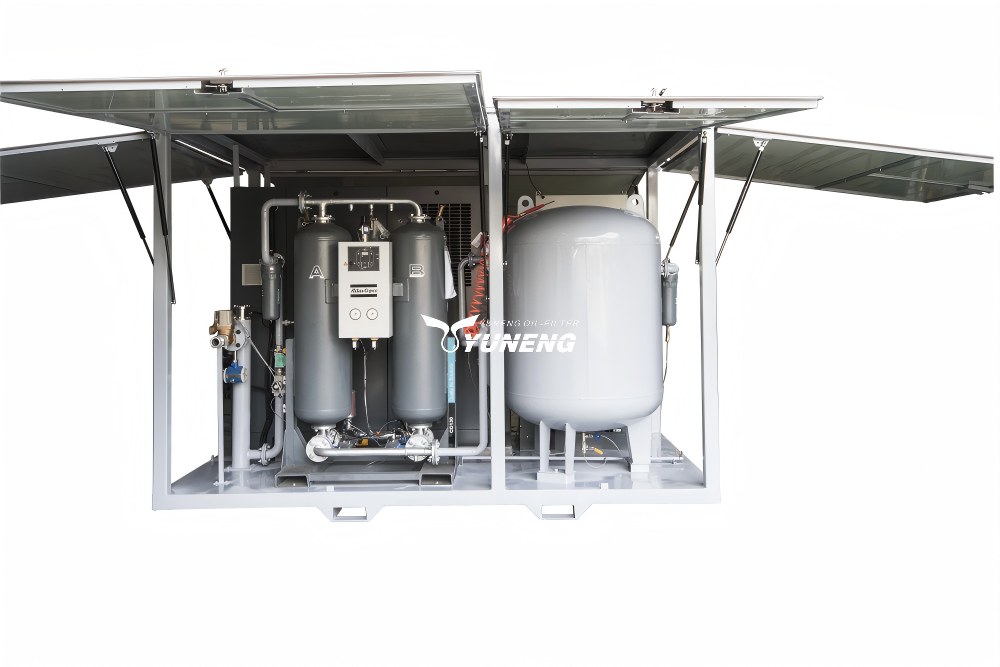
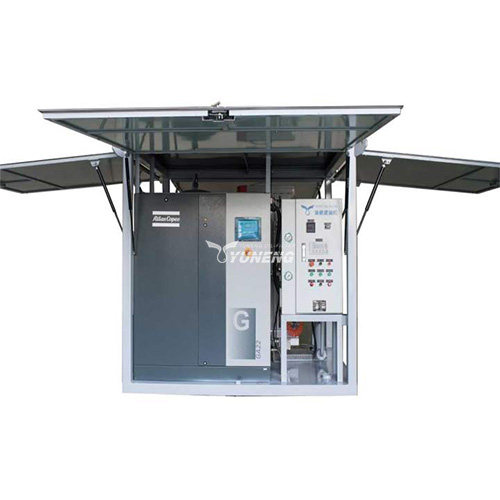
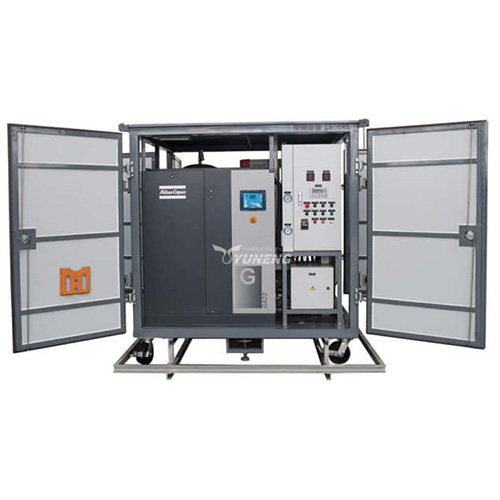
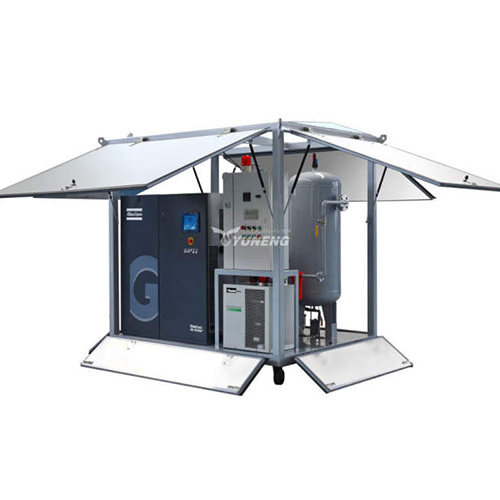
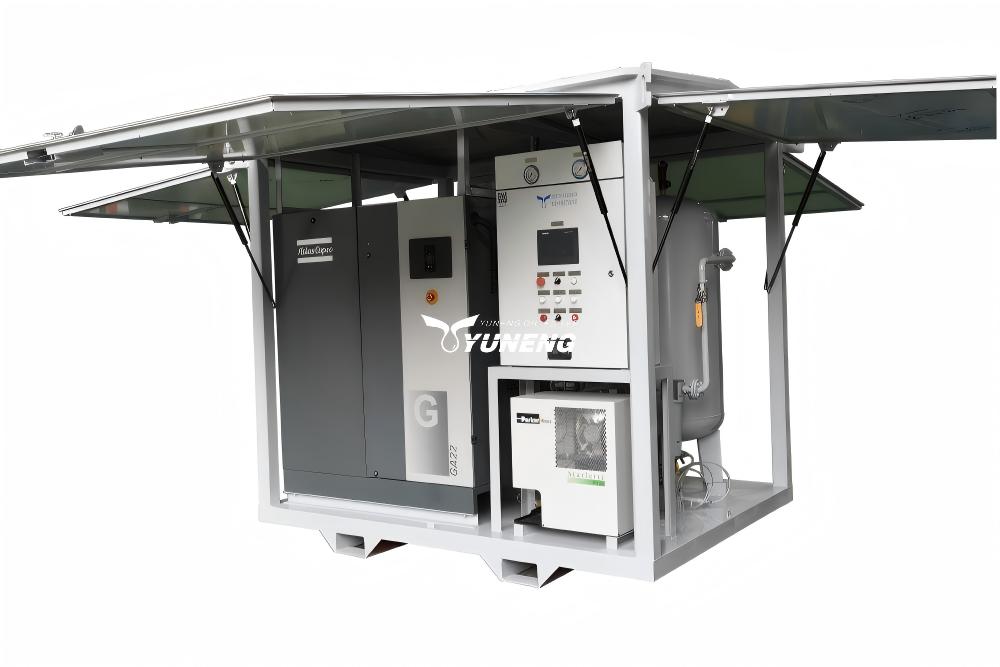
Maintaining a dry internal environment is essential for ensuring the safety, reliability, and long service life of power transformers. A transformer dry air generator provides a continuous supply of clean, low-dew-point air to prevent moisture from entering transformer tanks during installation, inspection, repair, and oil treatment. Designed for demanding power industry applications, YUNENG dry air generators deliver stable performance, energy efficiency, and reliable protection for critical electrical equipment.
What Is a Transformer Dry Air Generator?
A transformer dry air generator is a specialized system designed to produce clean, low-dew-point air for transformer manufacturing, installation, maintenance, and repair. Unlike ordinary compressed air, the output air is processed through multi-stage filtration and moisture removal to achieve a very low moisture content, helping protect transformer insulation from humidity contamination.
During transformer maintenance, the tank is often opened to replace components, inspect internal parts, or perform oil treatment. At this stage, moisture in the surrounding air can quickly enter the transformer and be absorbed by the cellulose insulation. Even a small amount of moisture may reduce insulation strength, accelerate paper aging, and shorten transformer service life.
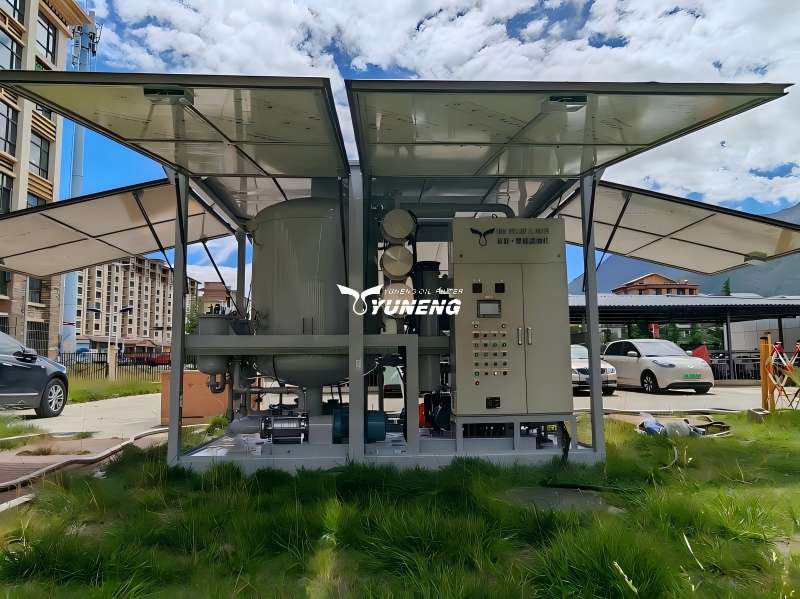
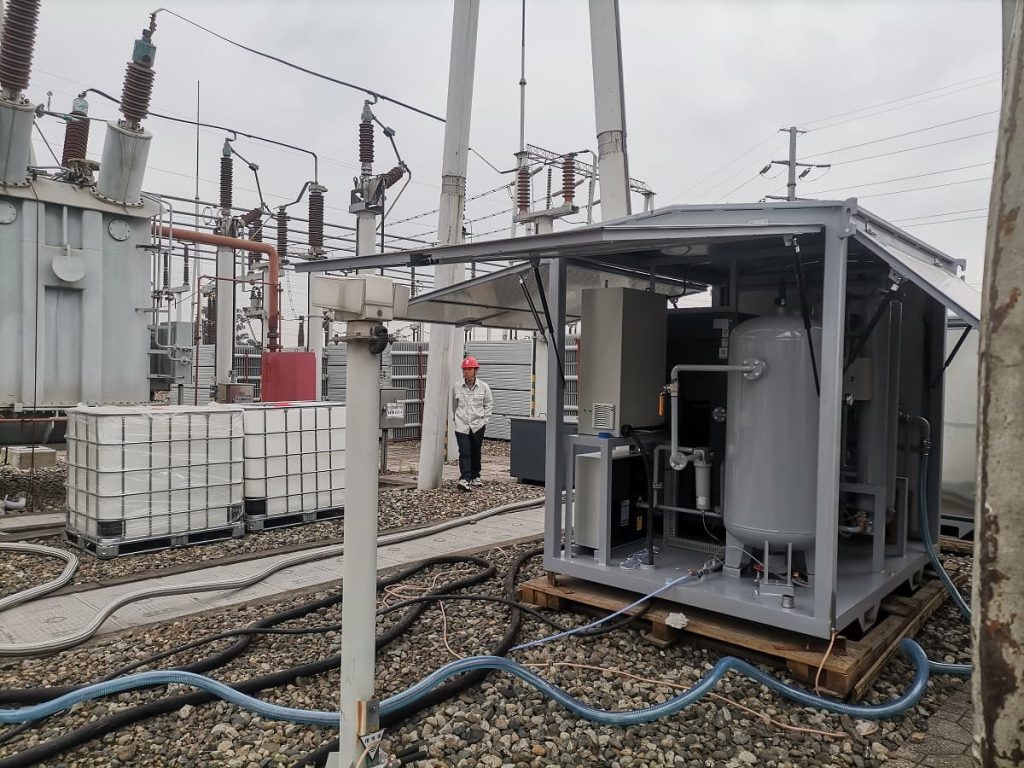
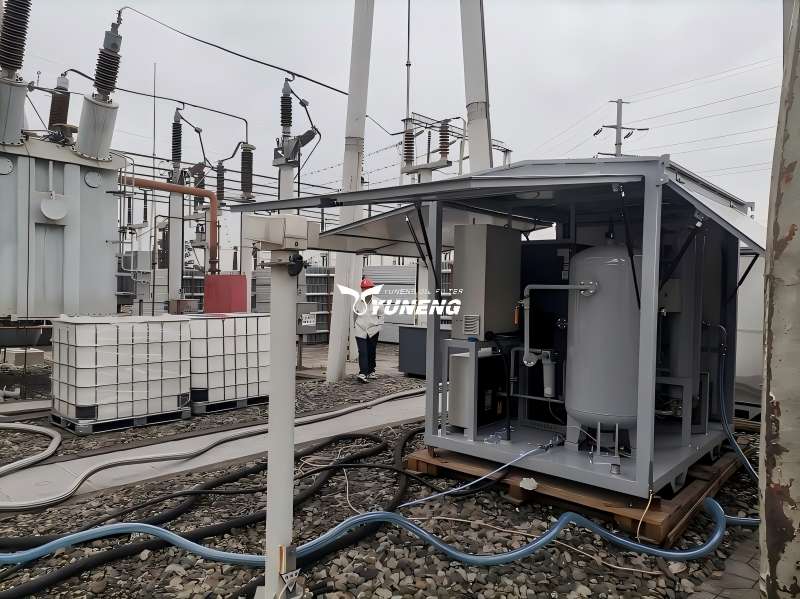
A dry air generator continuously supplies clean, oil-free, and moisture-free air into the transformer tank, maintaining a slight positive pressure that prevents humid ambient air from entering. This helps preserve the condition of insulation paper and transformer oil throughout maintenance operations.
Compared with bottled nitrogen, a dry air generator offers continuous air supply, lower operating costs, and easier on-site operation. Since it produces dry air directly from ambient air, there is no need for gas cylinder transportation or replacement, making it a practical solution for utilities, transformer manufacturers, and electrical contractors.
Typical applications include:
- Transformer installation
- Transformer overhaul and repair
- Transformer oil treatment operations
- Vacuum drying assistance
- Factory assembly and testing
- Long-term transformer storage
By delivering stable low-dew-point air, a transformer dry air generator helps improve insulation reliability, reduce moisture-related failures, and extend the operational life of power transformers.
Why Transformer Maintenance Requires Dry Air
Moisture is one of the most common causes of transformer insulation deterioration. Whenever a transformer tank is opened, humid ambient air can enter the equipment and be absorbed by cellulose insulation paper, even if exposure lasts only a short time.
Unlike transformer oil, insulation paper releases moisture very slowly. Once moisture penetrates the insulation system, it becomes difficult and time-consuming to remove completely. This can reduce dielectric performance and increase the risk of electrical failures.
Using a dry air generator during maintenance creates a controlled environment inside the transformer tank. Continuous low-humidity airflow prevents external moisture from entering while protecting sensitive insulation materials throughout the maintenance process.
Maintaining dry conditions provides several important benefits:
- Protects insulation paper from absorbing moisture.
- Maintains transformer oil quality by minimizing water contamination.
- Improves dielectric strength (BDV) and overall insulation performance.
- Reduces the risk of partial discharge caused by moisture.
- Minimizes corrosion of internal metallic components.
- Shortens drying time before transformers are returned to service.
- Extends transformer service life by slowing insulation aging.
For power utilities and transformer service companies, supplying dry air during maintenance is a cost-effective preventive measure that helps improve equipment reliability while reducing future maintenance expenses and unexpected outages.
How a Dry Air Generator Works
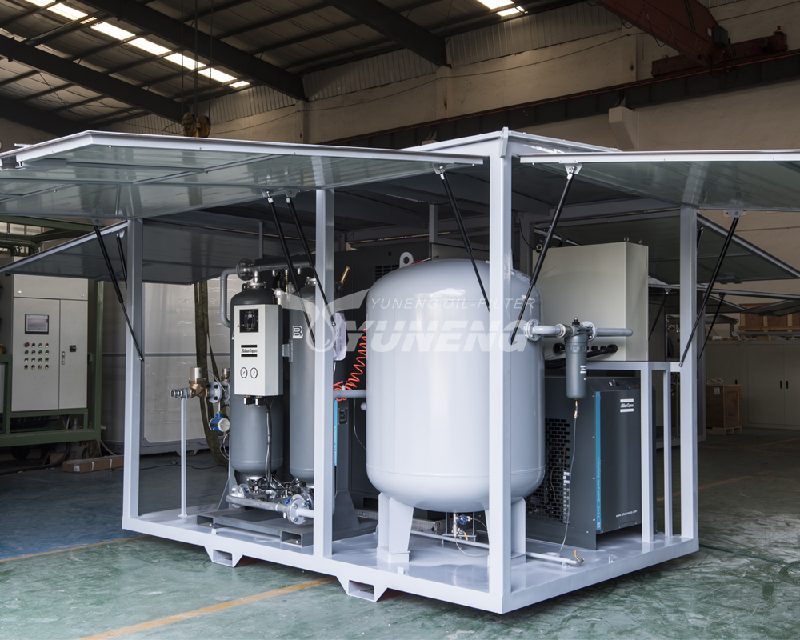
A dry air generator converts ordinary atmospheric air into clean, low-dew-point dry air through a series of filtration and drying stages. Each stage removes specific contaminants, ensuring the output air is suitable for transformer maintenance and insulation protection.
Step 1 – Ambient Air Intake
The system draws in surrounding air through an inlet filter that removes dust, insects, and other large particles before compression.
Step 2 – Air Compression
An integrated compressor increases air pressure, providing the stable airflow required for continuous drying and transformer protection.
Step 3 – Primary Moisture Separation
Compressed air passes through a cooling and water separation stage where most liquid moisture and condensate are removed.
Step 4 – Deep Adsorption Drying
The air enters a dual-tower adsorption dryer, where desiccant materials absorb the remaining water vapor. This process produces low-dew-point air, typically reaching -40°C to -70°C, depending on system configuration.
Step 5 – Fine Filtration
High-efficiency filters remove residual oil mist, dust, and microscopic particles, ensuring the output air remains clean and suitable for electrical equipment.
Step 6 – Dry Air Supply
The purified dry air is continuously delivered into the transformer tank, creating a slight positive pressure that prevents humid outside air from entering during maintenance or installation.
This multi-stage drying process provides:
- Stable low dew point
- Continuous dry air supply
- High air cleanliness
- Reliable moisture protection
- Safe operation for transformer maintenance
By combining efficient drying, filtration, and automatic control, a dry air generator provides consistent protection for transformer insulation in both factory and field applications.
Dry Air Generator Applications
A dry air generator is widely used throughout the power industry wherever moisture control is critical. By supplying continuous low-dew-point air, it protects transformer insulation, reduces contamination risks, and improves maintenance efficiency.
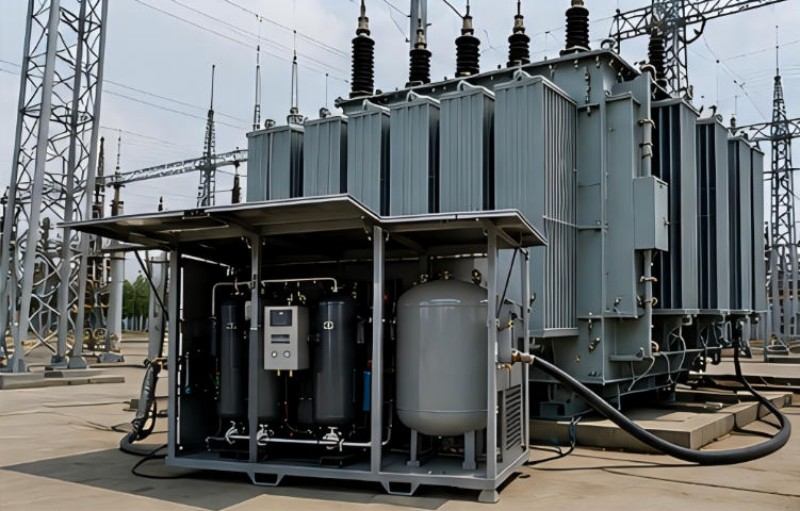
Power Transformer Maintenance
Provides dry air during transformer inspection, repair, oil filtration, and component replacement to prevent moisture from entering the tank.
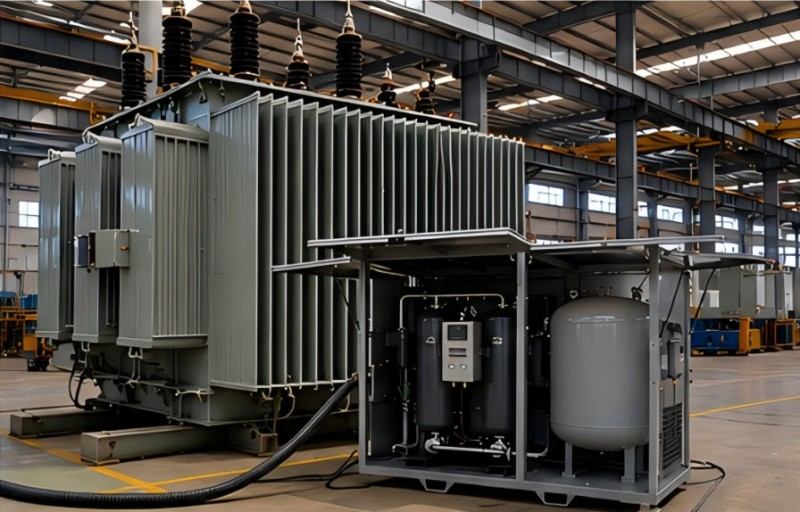
Transformer Manufacturing
Maintains a clean and dry internal environment during assembly, factory testing, and quality inspection before delivery.
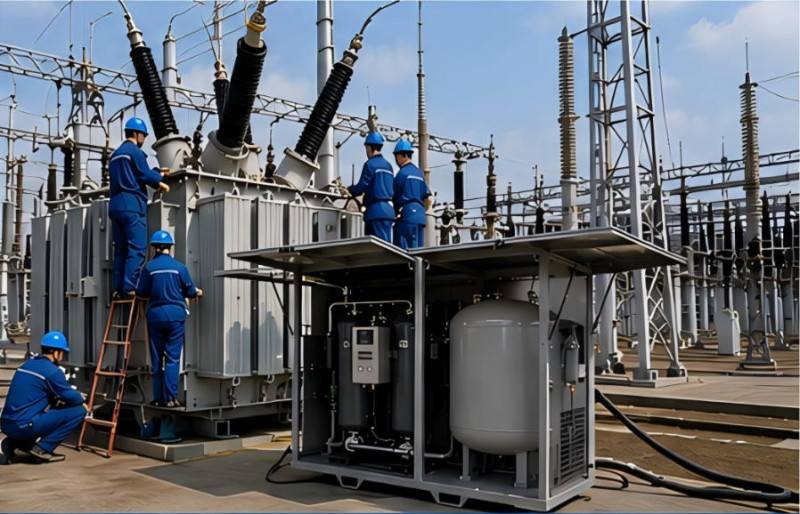
Substation Installation
Protects transformers from humidity exposure during transportation, installation, and energization, helping maintain insulation quality.
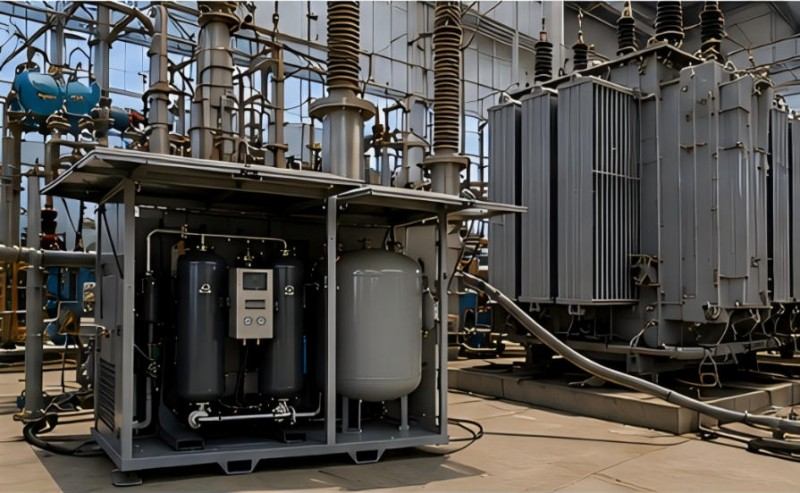
Transformer Oil Treatment
Works together with transformer oil purifiers and vacuum oil treatment systems to improve overall drying efficiency during oil processing.
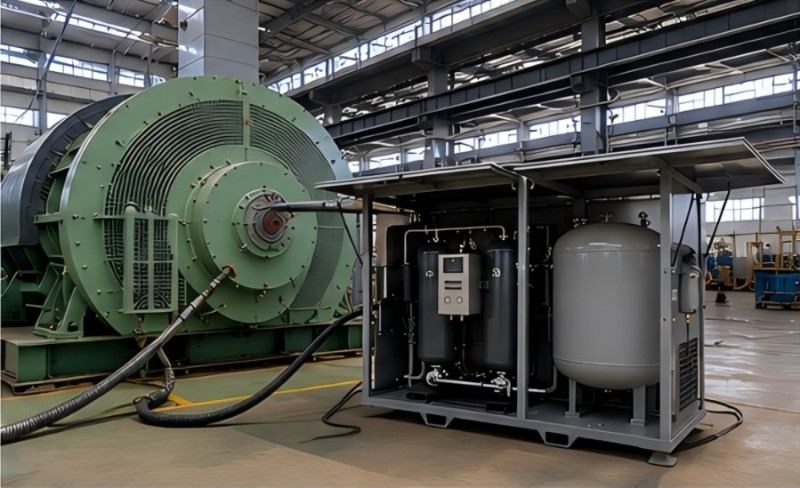
Reactors and GIS Equipment
Supplies dry air for electrical equipment that requires strict humidity control, including reactors, gas-insulated switchgear (GIS), and high-voltage apparatus.
Transformer Storage
Maintains positive pressure inside stored transformers, reducing oxidation and preventing humid air from entering over extended storage periods.
Dry Air Generator vs. Nitrogen
Both dry air and nitrogen are used to protect transformers from moisture during maintenance and storage. However, they differ significantly in operating cost, safety, and long-term practicality. Choosing the right solution depends on the application, maintenance frequency, and site conditions.
| Comparison Item | Dry Air Generator | Nitrogen Supply |
| Air Source | Produces dry air from ambient air | Requires bottled or bulk nitrogen |
| Operating Cost | Low after installation | Higher due to gas refilling and transportation |
| Continuous Supply | Unlimited with power supply | Limited by cylinder or tank capacity |
| Safety | Safe for normal working environments | Oxygen-deficient atmosphere may require additional safety measures |
| Maintenance | Routine filter and desiccant replacement | Cylinder management and gas logistics |
| Mobility | Suitable for on-site maintenance | Dependent on gas cylinder availability |
| Environmental Impact | No cylinder transportation required | Requires gas production and transportation |
For utilities and transformer service companies performing frequent maintenance, a dry air generator provides a more economical and efficient long-term solution. It delivers a continuous supply of low-dew-point air, simplifies field operations, and eliminates the need to transport or replace nitrogen cylinders.
Dry Air Generator vs. Vacuum Drying
Although both technologies help reduce moisture in transformer insulation systems, they are designed for different purposes. Understanding their functions helps determine whether one system—or a combination of both—is the best solution.
| Feature | Dry Air Generator | Vacuum Drying System |
| Primary Function | Prevents moisture from entering | Removes moisture already inside insulation |
| Working Principle | Supplies low-dew-point dry air | Creates a deep vacuum to evaporate moisture |
| Typical Application | Maintenance, installation, storage | Transformer drying and oil processing |
| Operating Mode | Continuous air supply | Vacuum dehydration process |
| On-site Efficiency | Fast setup and continuous operation | Longer treatment cycle |
| Best Used For | Moisture prevention | Moisture removal |
In many transformer maintenance projects, these two systems are used together. The vacuum pumping system removes existing moisture from transformer oil and insulation, while the dry air generator prevents new moisture from entering during maintenance, ensuring the transformer remains dry before returning to service.
Protect Your Transformer from Moisture
Looking for a reliable dry air generator for transformer maintenance?
YUNENG offers portable and stationary dry air generators with low dew point, stable airflow, customized configurations, and global technical support. Contact our engineering team today to find the right solution for your transformer maintenance project.
Benefits of Low Dew Point Air
The effectiveness of a dry air generator is determined largely by its dew point, which indicates how much moisture remains in the air. A lower dew point means drier air and better protection for transformer insulation.
Why Low Dew Point Matters
During transformer installation, maintenance, or storage, exposure to humid air can introduce moisture into insulation systems. Using low-dew-point dry air helps maintain a dry internal atmosphere inside the transformer tank, reducing moisture ingress and protecting insulation performance.
Key advantages include:
- Reduces moisture absorption by cellulose insulation
- Helps prevent moisture contamination of transformer oil and insulation systems
- Helps maintain insulation performance and reliability
- Reduces moisture-related insulation deterioration risks
- Supports longer transformer service life
- Minimizes moisture ingress during transformer installation, maintenance, and storage
With a stable dew point below -70°C, YUNENG Dry Air Generator provides ultra-dry air to maintain a low-moisture internal atmosphere inside the transformer tank, helping protect cellulose insulation during installation, maintenance, and storage.
Typical Dew Point Recommendations
| Dew Point | Application |
| ≤ -50°C | Standard requirement for transformer installation, maintenance, and storage protection |
| ≤ -60°C | Recommended for high-voltage and critical transformer applications |
| ≤ -70°C | Advanced moisture protection for high-voltage and ultra-reliable transformer applications |
With advanced adsorption drying technology, YUNENG Dry Air Generator continuously supplies dry air with a dew point below -70°C, providing superior moisture control and reliable insulation protection for high-voltage transformers and critical power equipment.
Technical Standards for Dry Air Generator
A high-quality transformer dry air generator should comply with internationally recognized standards for transformer maintenance, compressed air quality, and manufacturing. Meeting these standards helps ensure reliable equipment performance, consistent air quality, and safe operation in power industry applications.
| Standard | Scope | Importance |
| IEC 60076 | Power Transformers | Defines general requirements for transformer design, testing, and maintenance. |
| IEC 60422 | Mineral Insulating Oil | Provides recommendations for maintaining transformer insulation systems and controlling moisture contamination. |
| IEEE C57 Series | Transformer Maintenance | Offers best practices for transformer operation, diagnostics, and preventive maintenance. |
| ISO 8573 | Compressed Air Quality | Classifies air purity levels for particles, moisture, and oil content. |
| ISO 9001 | Quality Management | Ensures consistent manufacturing processes and product quality. |
| CE Certification | Product Safety | Demonstrates compliance with European safety and regulatory requirements. |
When selecting a dry air generator, buyers should consider not only the equipment specifications but also whether the manufacturer follows internationally recognized standards. This helps ensure stable low-dew-point performance, reliable operation, and long service life under demanding field conditions.
Why Choose YUNENG Dry Air Generator
With more than 25 years of experience in transformer maintenance equipment, YUNENG provides reliable dry air generation solutions for power utilities, transformer manufacturers, EPC contractors, and maintenance service providers around the world.
Proven Industry Experience
More than two decades of expertise in transformer oil purification and moisture control technologies enable YUNENG to deliver practical solutions for a wide range of power industry applications.
Global Project Experience
YUNENG equipment has been supplied to customers in more than 80 countries, supporting transformer installation, maintenance, and manufacturing projects across diverse operating environments.
Customized Engineering
Different transformer capacities and maintenance conditions require different solutions. YUNENG offers customized airflow, dew point, voltage, control systems, and installation configurations to meet specific project requirements.
Reliable Quality
Each dry air generator is manufactured under a strict ISO 9001 quality management system and is available with CE certification, ensuring dependable performance and international compliance.
Factory Direct Supply
As a professional manufacturer, YUNENG provides competitive pricing, fast production, and direct technical support without unnecessary intermediaries.
Comprehensive After-Sales Service
Customers benefit from installation guidance, operator training, spare parts supply, remote technical assistance, and long-term maintenance support throughout the equipment lifecycle.