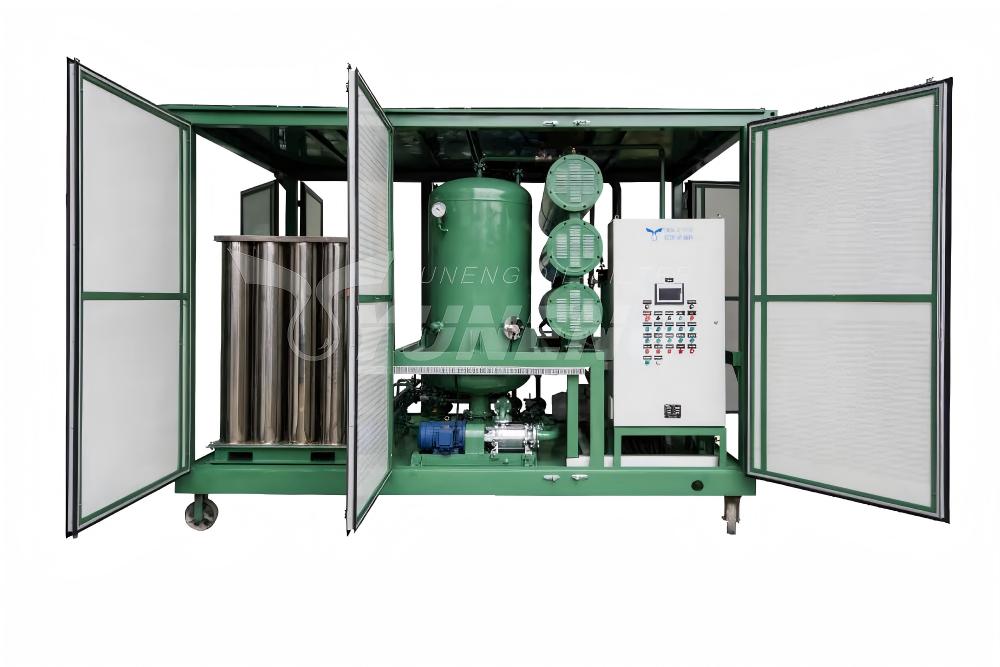
YZS-ZJA
Transformer Oil Reclamation Machine | Vacuum Oil Regeneration System with Reactivated Filters
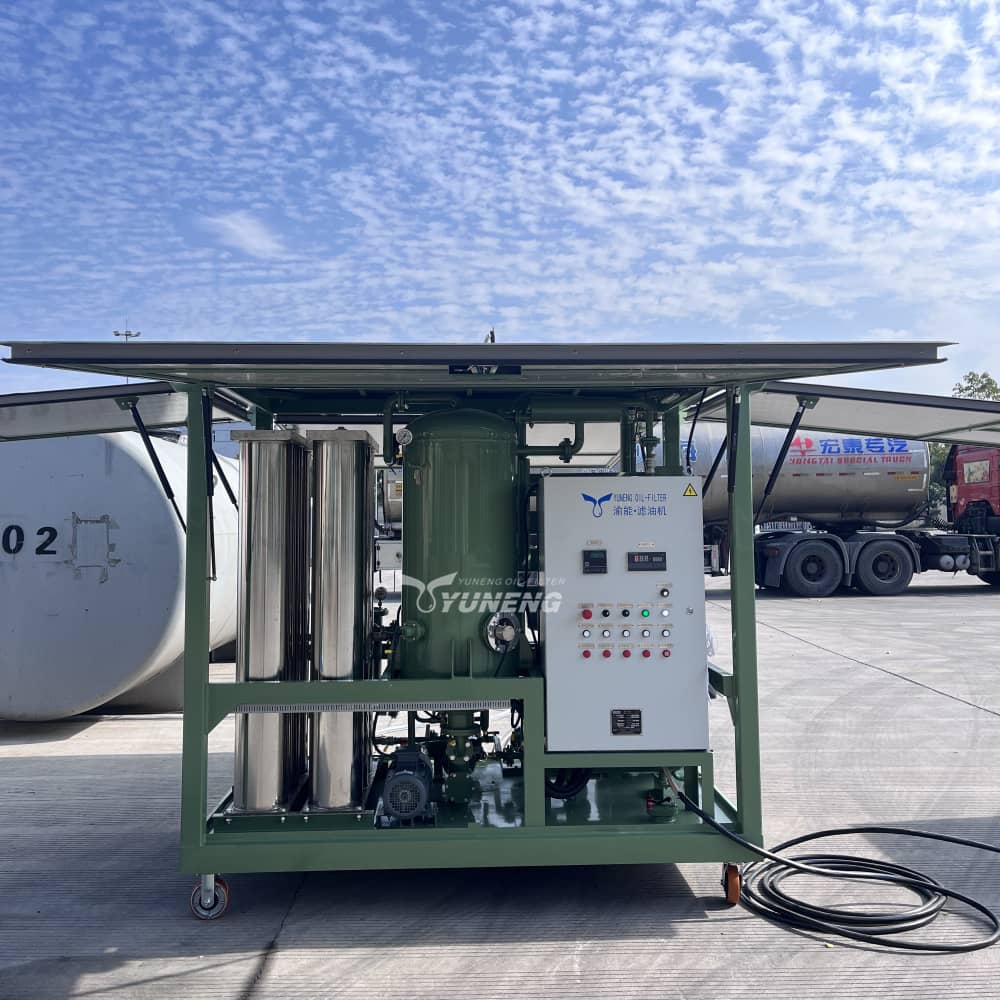
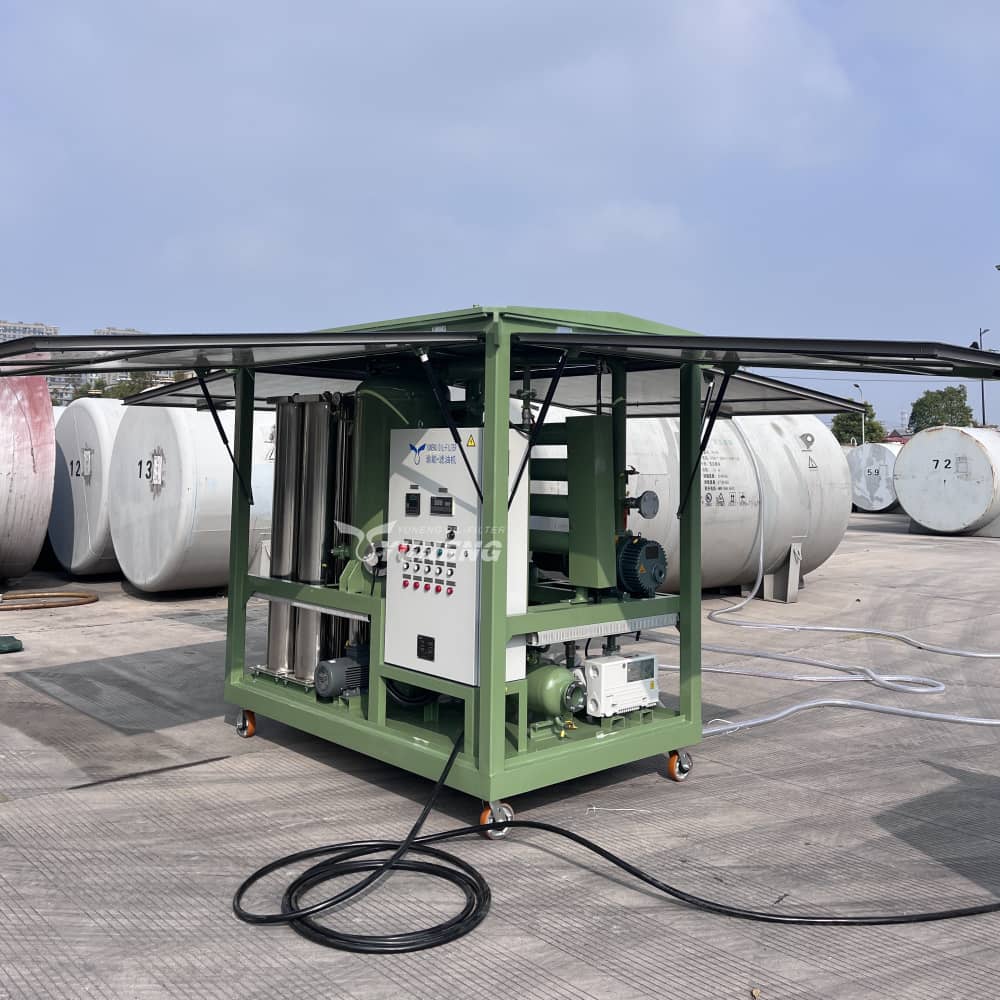
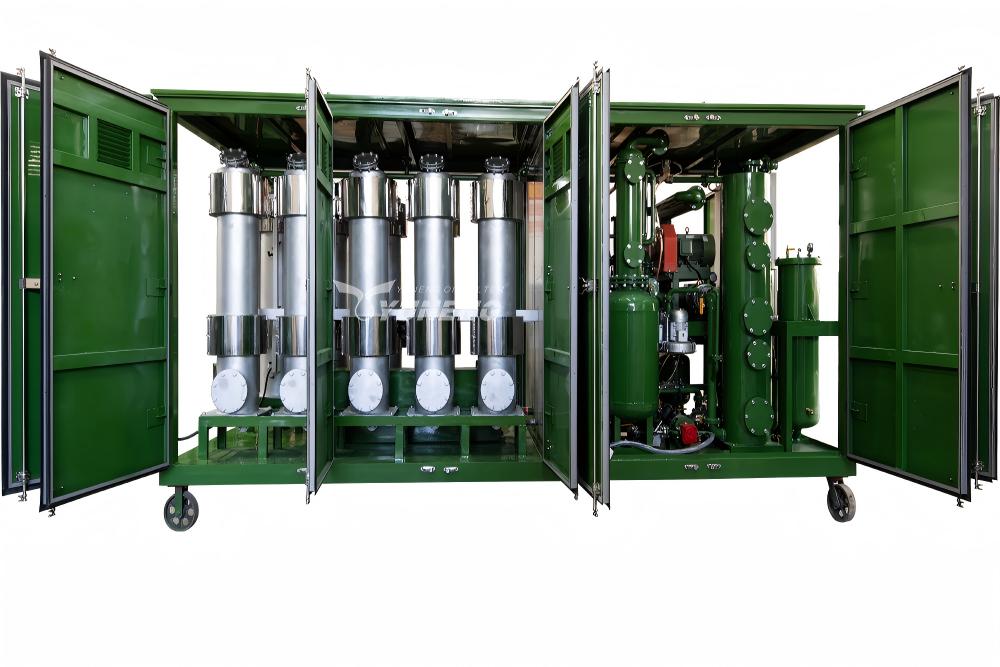
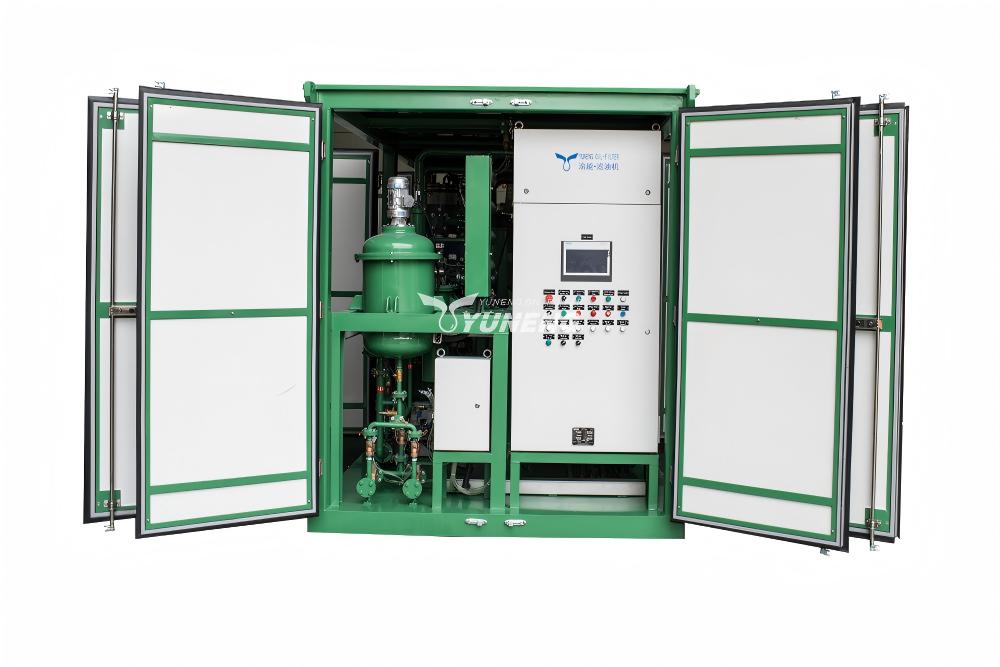
- YUNENG Transformer Oil Reclamation Machine is a high-efficiency vacuum transformer oil regeneration system designed to restore aged insulating oil to near-new condition.
- The machine combines vacuum dehydration, degassing, fine filtration and reactivated regeneration filters to remove moisture, dissolved gases, sludge, acids and oxidation products.
- It helps power utilities, transformer manufacturers and maintenance contractors extend transformer service life while reducing oil replacement and disposal costs.
Specification of Transformer Oil Reclamation Machine with Reactivated Regeneration Filters
Transformer oil reclamation machine with reactivated regeneration filters refers to the process of restoring the performance characteristics of oil to its original state. That is, transformer oil Reclamation enables the continuous reuse of used oil, restoring the oil to its original state.
Transformer oil regeneration machines, including transformer oil filtration and regeneration systems.
During the use of transformer oil, various impurities such as moisture and sludge will be generated over time. This will affect the physical and chemical properties of the transformer oil, so it is necessary to recycle the transformer oil.
Transformer oil recovery is a step-by-step purification process of oil. Gradually remove particulate impurities, moisture, degassing, etc.
| Item | Name of Parameter | Unit | YZS-ZJA3 | YZS-ZJA6 | YZS-ZJA9 | YZS-ZJA10 | YZS-ZJA12 |
| Technical parameters | Nominal flow capacity | L/h | 3000 | 6000 | 9000 | 10000 | 12000 |
| Ultimate Vacuum | Pa | ≤5 | |||||
| Working vacuity | Pa | ≤80 | |||||
| Working pressure | Mpa | ≤0.5 | |||||
| Working temperature of oil | ℃ | 45~90(Adjustable) | |||||
| Working power | / | As per buyer’s option | |||||
| Oil treatment index | Oil breakdown voltage | kV | ≥75(Spherical Electrodes) | ||||
| Water content | ppm | ≤5 | |||||
| Air content | % | ≤0.3 | |||||
| Filtering accuracy | μm | 1 | |||||
| Acetylene Gas Content | 0 | ||||||
| Dielectric Dissipation Factor tan δ (90°C) | ≤0.005 | ||||||
Advantage of Transformer Oil Reclamation Machine with Reactivated Regeneration Filters
- Significant Cost Savings: This is the primary driver. Regenerating oil costs 50-70% less than purchasing new oil and disposing of the old oil as hazardous waste. The savings are enormous for large transformers holding thousands of liters.
- Eliminates Disposal Costs and Liabilities: Used transformer oil is classified as hazardous waste. Regeneration on-site avoids high disposal fees, complex logistics, and the long-term environmental liability associated with sending waste oil off-site.
- Extends Transformer Life: By removing acids and sludge that degrade paper insulation, regeneration directly contributes to extending the operational life of the transformer by decades, delaying multi-million dollar replacement costs.
- Reduces New Oil Inventory: Utilities and large industries can reduce their capital tied up in storing bulk new oil, as the same oil can be maintained in service indefinitely.
Application of Transformer Oil Reclamation Machine with Reactivated Regeneration Filters
| Use Case | Application Rationale |
| Life Extension of Critical Assets | For grid substation transformers, generator step-up units, or large industrial units, where replacement cost is in the millions, and lead times are long. Regeneration adds 15+ years of life at ~10-20% of the replacement cost. |
| Preventive Intervention Before Failure | For grid substation transformers, generator step-up units, or large industrial units, where replacement cost is in the millions and lead times are long. Regeneration adds 15+ years of life at ~10-20% of the replacement cost. |
| Restoring Contaminated Oil | For grid substation transformers, generator step-up units, or large industrial units, where replacement cost is in the millions, and lead times are long. Regeneration adds 15+ years of life at ~10-20% of the replacement cost. |
| Environmental & Regulatory Compliance | In regions with strict waste oil disposal laws or high landfill taxes, regeneration eliminates the disposal problem entirely. |
| Heritage or Obsolete Transformers | For transformers where the original oil specification is no longer available or where compatibility with older materials is a concern. Preserving the original oil is safer. |
| Fleet Management Strategy | Following minor internal faults or after ingress of moisture/particulates, where the oil is chemically salvageable. |