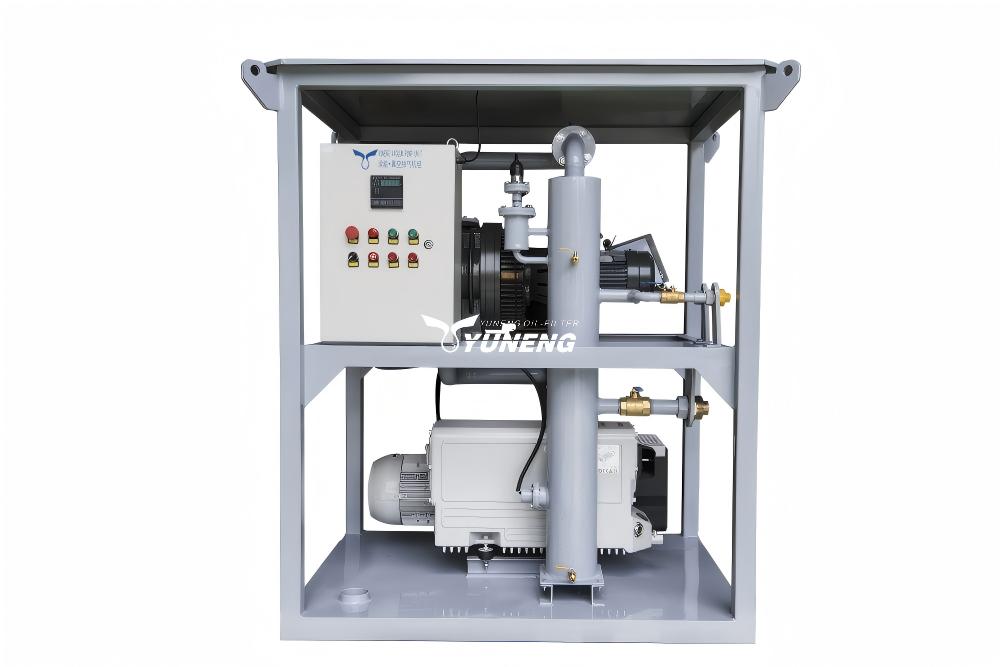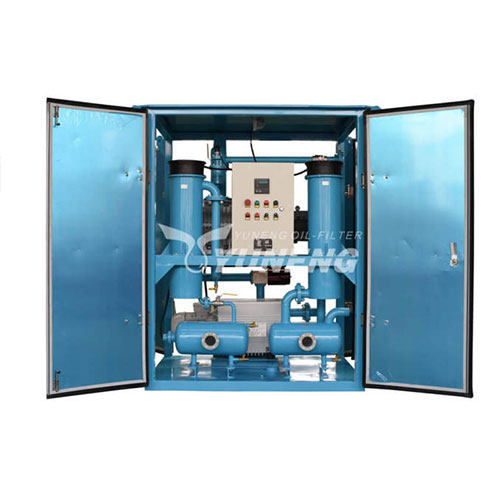
2026 All-in-One Transformer Evacuation System: IP54 Trailer Design

Oil Purification & Vacuum Technology Expert
Table of Contents
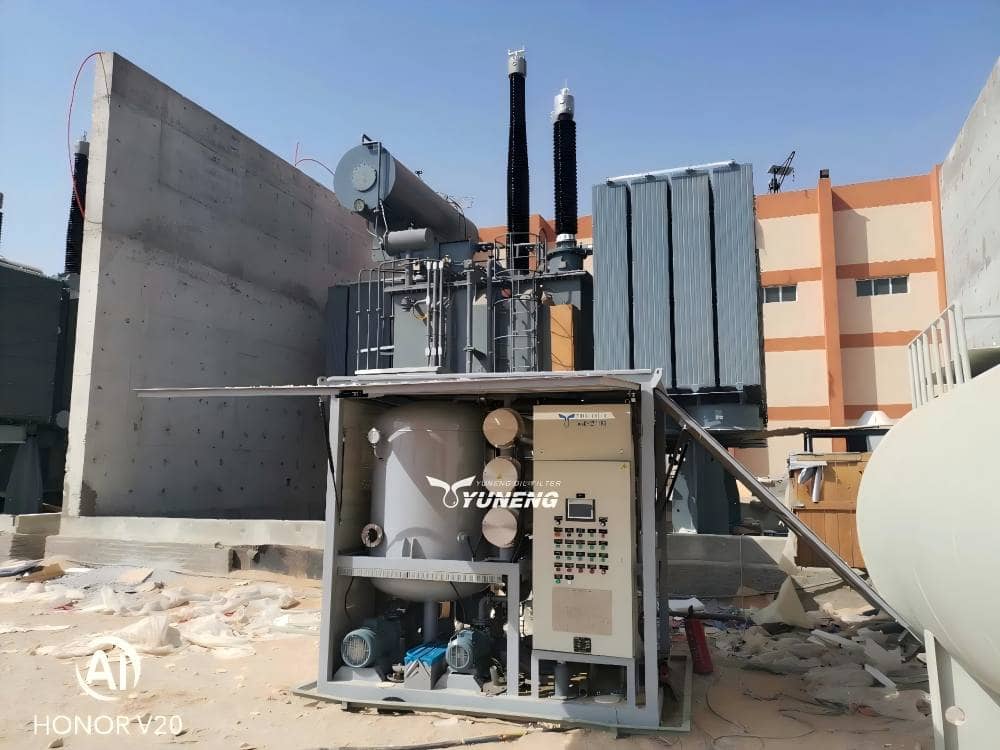
The worldwide energy situation in 2026 sees a fast-paced shift towards distributed renewable generation technology as well as the progress of the ultra-high voltage UHV transmission grids. This is because wind turbines and photovoltaic systems are increasingly located in remote areas such as arid deserts, high mountains, and aggressive ocean zones. The sustenance of those power transformers has consequently met the insurmountable logistical and environmental difficulties. Traditional, fragmented maintenance methods no longer suffice for the rigorous uptime demands of modern smart grids with the new demanding uptime requirements of the modern grids. Therefore, the sector has taken the approach to move to the current “All-in-One Mobile Station,” which is a self-contained trailer with an advanced transformer evacuation system, online oil filtration, and filling apparatus.
The Environmental Challenge in Remote Power Infrastructure
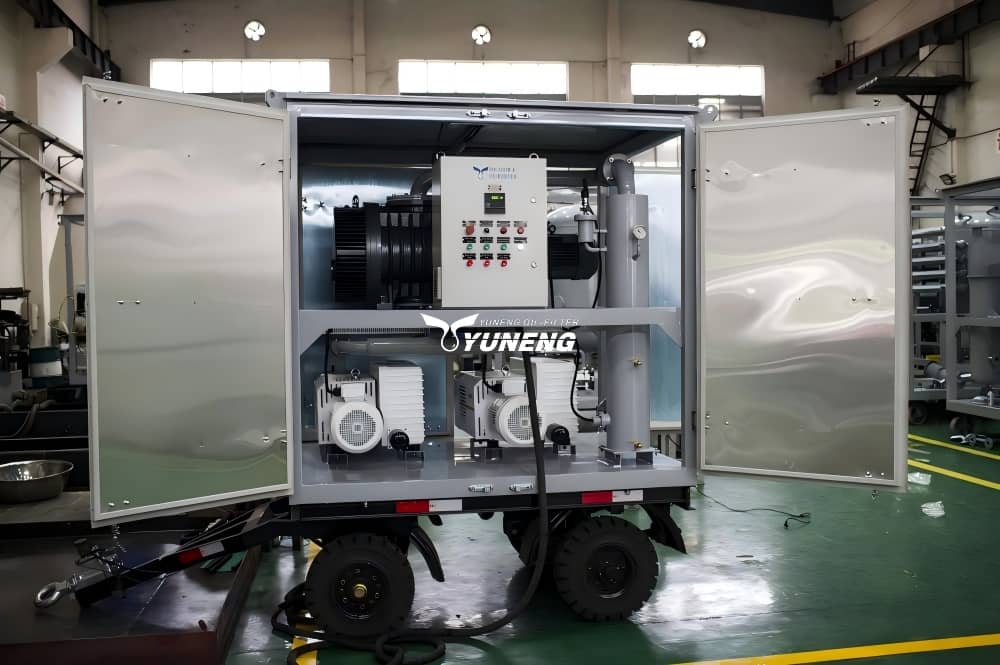
Field substations in remote areas are exposed to extreme weather conditions that directly threaten the integrity of sensitive maintenance operations. In desert environments, airborne particulate matter and sandstorms can contaminate transformer oil during the filtration process if the equipment is not hermetically sealed. In tropical or coastal regions, high humidity and salt spray accelerate the oxidation of mechanical components and degrade the dielectric strength of the insulating oil.
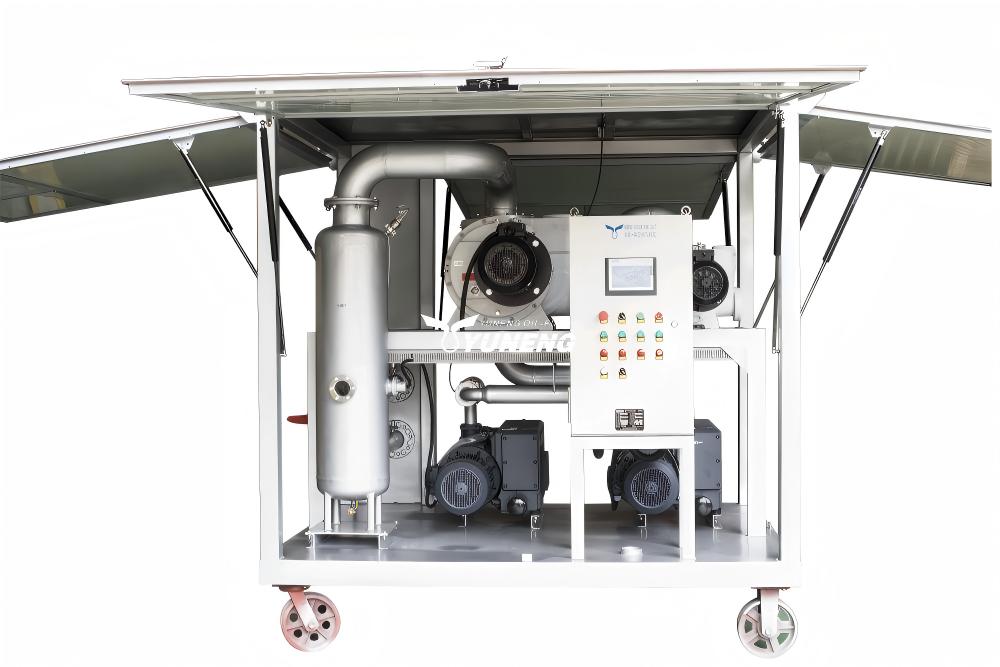
The fully enclosed trailer design addresses these issues by providing an IP54-rated protective shell. This “armor” creates a controlled micro-environment for the internal machinery. Integrated thermal management systems, comprising industrial-grade heat pumps and automated ventilation louvers, maintain optimal operating temperatures for the vacuum pumps and filtration elements, regardless of whether the external ambient temperature is −30℃ to +55 ℃. This ensures that the maintenance window remains open year-round, significantly improving grid resilience.
Technical Architecture of the Integrated Transformer Evacuation System
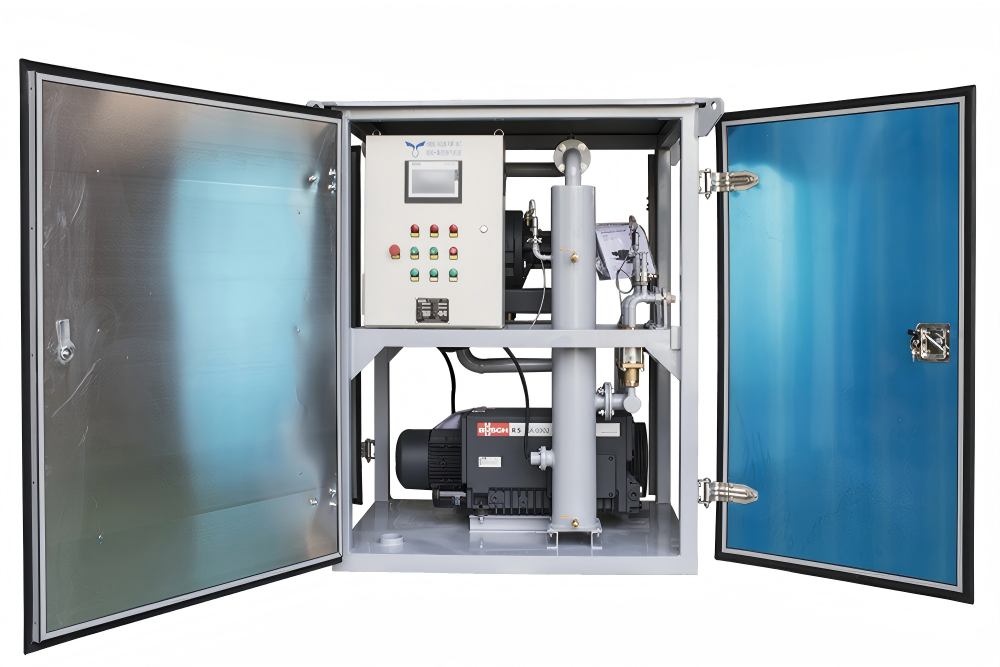
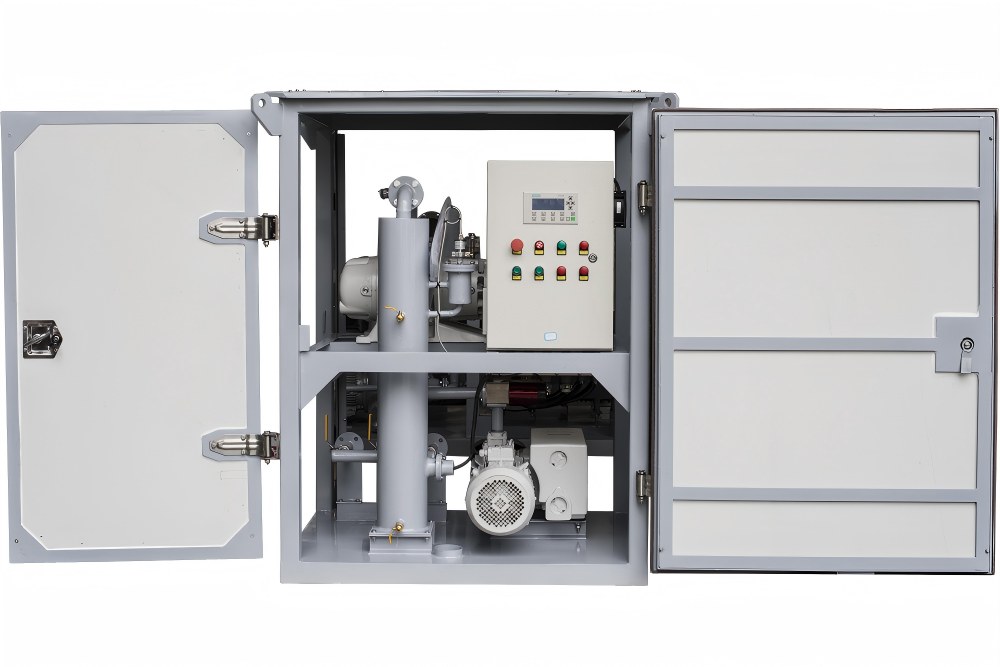
The core functionality of these mobile stations revolves around the transformer evacuation system. In 2026, the standard for UHV and EHV (Extra-High Voltage) maintenance requires achieving an ultimate vacuum level of ≤1 Pa (0.01mbar) to ensure the total removal of non-condensable gases and moisture from the transformer tank before oil injection.
In order to make this possible, a multi-stage design method is employed. An oil-sealed screw pump or a dry screw pump can be connected as a preliminary low-pressure stage with a root blower (booster) having a high delivery capacity. This combines the best characteristics of each constituent part, which greatly enhances the performance in the search for the ultimate vacuum over the pressure range 100 – 10 Pa.
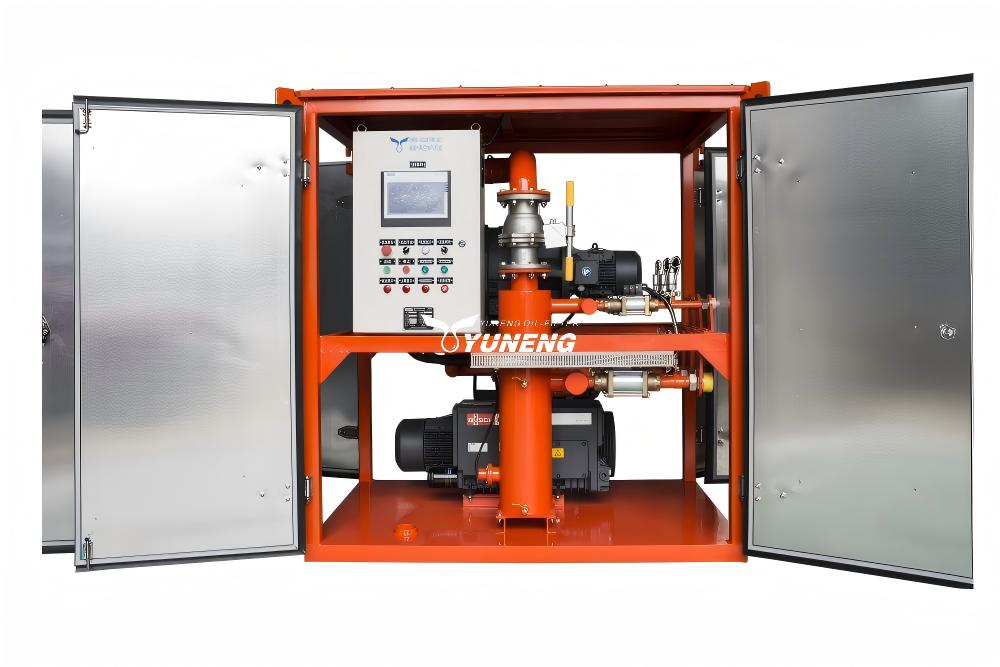
The modern transformer vacuum pump units within these stations are now equipped with Variable Frequency Drives (VFD). These drives allow the system to modulate motor speed based on real-time vacuum sensors. During the initial “roughing” stage, the pumps operate at maximum frequency to remove the bulk of the air. As the system approaches the target vacuum, the frequency is reduced to prevent oil backstreaming and to reduce energy consumption by up to 35%. This precise control is managed via a centralized PLC (Programmable Logic Controller) with a human-machine interface (HMI), allowing operators to monitor the evacuation curve and leak-rate tests with scientific accuracy.
Synergy Among Evacuation, Filtration, and Oil Filling
The primary advantage of the all-in-one station is the seamless transition between maintenance phases without exposing the transformer’s internal insulation to the atmosphere. The process follows a strict technical sequence:
- Preparation and Evacuation: The transformer evacuation unit is in close connection with the main transformer tank. It makes possible the extraction of air and moisture from the paper insulation via the use of the vacuum pumping system. This stage is extremely important because any moisture left in the insulation can promote partial discharges and possibly even extreme failures of the transformer.
- Vacuum Dehydration and Degassing: The mobile station’s filtration system moves the transformer oil through the tank while it is under vacuum. It goes through flash distillation, which is a vacuum degasification chamber and high-efficiency heaters. The oil’s large surface area in this chamber lets the vacuum pumps pull out dissolved gases and water vapor.
- Particulate Filtration: The oil goes through a series of filters, the last of which is usually a 1-micron fiberglass or polymer filter element. This gets rid of carbon deposits, metal particles, and other dirt that make the fluid’s breakdown voltage lower.
- Vacuum Oil Filling: When the oil’s dielectric strength is high enough (usually over 70 kV) and the transformer tank’s vacuum has been kept intact, the oil is pumped back into the transformer under vacuum. This makes sure that there are no air pockets trapped inside the windings, which is a requirement for units rated 110 kV or higher.
Operational Efficiency and Mobility
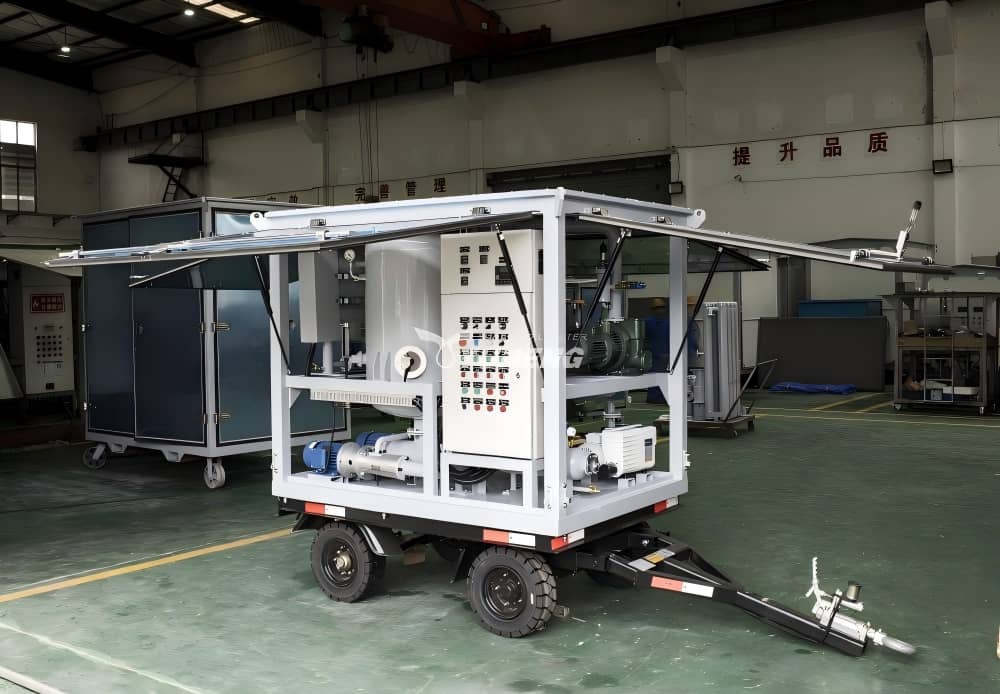
In the context of 2026 grid operations, the “time-to-site” and “time-to-service” metrics are vital. Traditional maintenance equipment requires heavy lifting via cranes and complex onsite assembly of hoses, cables, and separate pump skids. The trailer-mounted design eliminates these steps.
With their sturdy air suspension systems and ABS brakes, these mobile stations are capable of being hauled over long distances at highway speeds. If they have to, hydraulic leveling jacks are used to keep the equipment on ground that has no uniform level. When all the parts are encased in one structure, there is hardly any need to use outer links, which in turn means that instances of oil or vacuum contamination are significantly reduced.
In addition, the 2026 generation of these systems has remote monitoring that works with 5G. The central command center gets information from the transformer vacuum pump, such as the oil temperature, moisture content (PPM), and vacuum levels. Utility companies can keep a digital twin of the maintenance event this way, making sure that all procedures follow international standards like IEEE or IEC.
Economic and ESG Impacts
The adoption of fully enclosed mobile stations provides a clear Return on Investment (ROI) through several channels. First, the efficiency of the vacuum pumping system reduces the total downtime of the substation, which is essential for maintaining the stability of the power market. Second, the high-quality filtration and evacuation process extends the life of the transformer’s solid insulation. By preventing the premature degradation of the paper insulation, utilities can delay the replacement of multi-million dollar assets by 10 to 15 years.
The enclosed design is a big step forward from an ESG (Environmental, Social, and Governance) point of view. It has extra safety features to keep the ground from getting contaminated if a hose breaks. Also, the vacuum pumps’ exhaust goes through high-efficiency oil-mist eliminators, which make sure that no harmful aerosols are released into the wild areas where many of these stations work.
In Summary
The evolution of grid maintenance in 2026 is characterized by a move toward total system integration and environmental resilience. The “All-in-One” fully enclosed trailer-mounted station represents the pinnacle of this evolution. By combining a sophisticated transformer evacuation system, a robust vacuum pumping system, and advanced filtration technologies into a mobile, weather-proof platform, power companies can ensure the reliability of their most critical assets. As the global demand for electricity continues to rise and the infrastructure extends into more challenging environments, the reliance on these specialized transformer vacuum pump configurations will only increase, cementing their role as the cornerstone of modern electrical engineering maintenance.