Transformer Oil Purifier for Wind Turbines: Vacuum vs. Centrifuge

Oil Purification & Vacuum Technology Expert
Table of Contents
Wind turbine transformers require specialized oil purification to avoid dielectric breakdown due to thermal cycling, constant vibration and environmental moisture. Choosing the right filtration method can be the deciding factor in the life of an asset and the amount of time it is up and running. In this article we will make a technical engineering comparison between vacuum dehydration and centrifugal filtration systems as applied in wind farm maintenance and explain why the transformer oil purifier should be selected according to the fluid type, contamination profile, and maintenance objective.
Vacuum Dehydration vs. Centrifugal Filtration: Core Technological Comparison
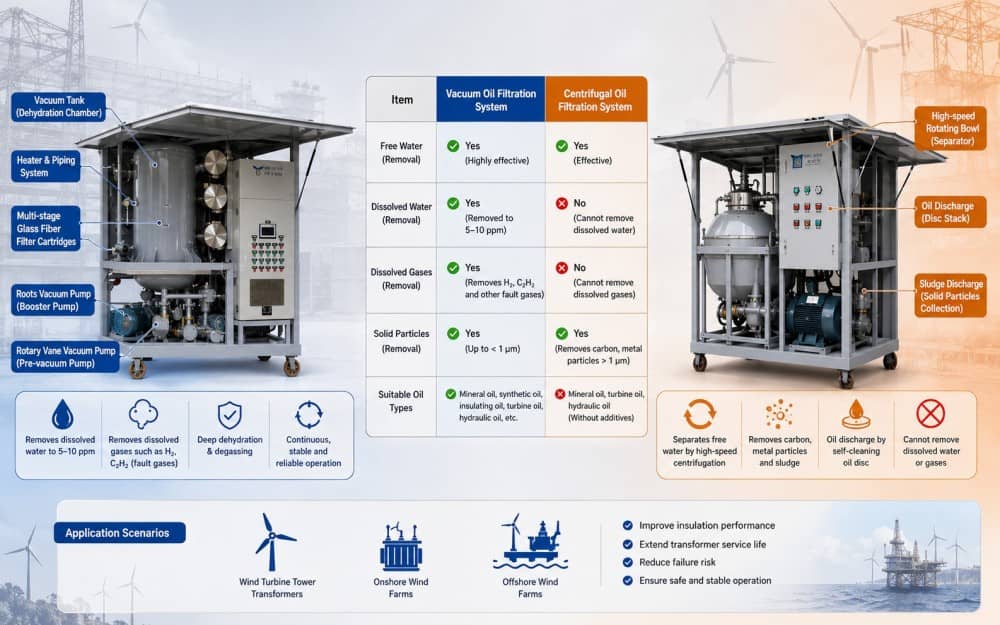
The baseline technical differences between these two purification methods center on the physical mechanisms used to isolate and remove contaminants from insulating fluids.
| Performance Criteria | Vacuum Dehydration System | Centrifugal Filtration System |
| Primary Separation Mechanism | Low-temperature boiling under deep vacuum (10 to 100 mbar) | High-speed rotation leveraging density differentials (g-force) |
| Free & Emulsified Water Removal | Excellent (Instant vaporization via flash distillation) | Excellent (Mechanical separation based on specific gravity) |
| Dissolved Water Removal | Excellent (Reduces total water content to less than 5–10 ppm) | Poor/None (Cannot break chemical bonds of dissolved moisture) |
| Dissolved Gas Removal (DGA) | Excellent (Strips H2, CH4, C2H2, and air) | None (Gases remain fully dissolved in the oil matrix) |
| Particulate & Sludge Removal | Relies on micro-glass filter elements (1 to 5 microns) | Excellent (Removes large-volume heavy soot, carbon, and metal) |
| Fluid Compatibility | Mineral oils, silicone fluids, natural/synthetic esters | Primarily standard mineral oils |
In practice, centrifugal filtration and vacuum dehydration are not competing technologies but complementary solutions for different contamination conditions.
Technical Operational Mechanisms
Vacuum Dehydration Systems
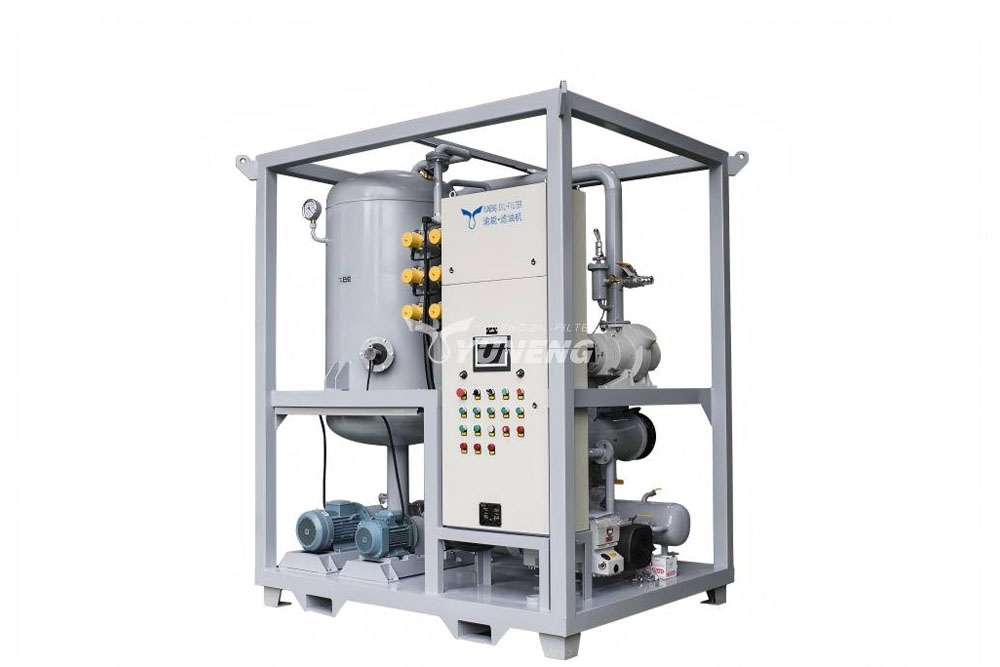
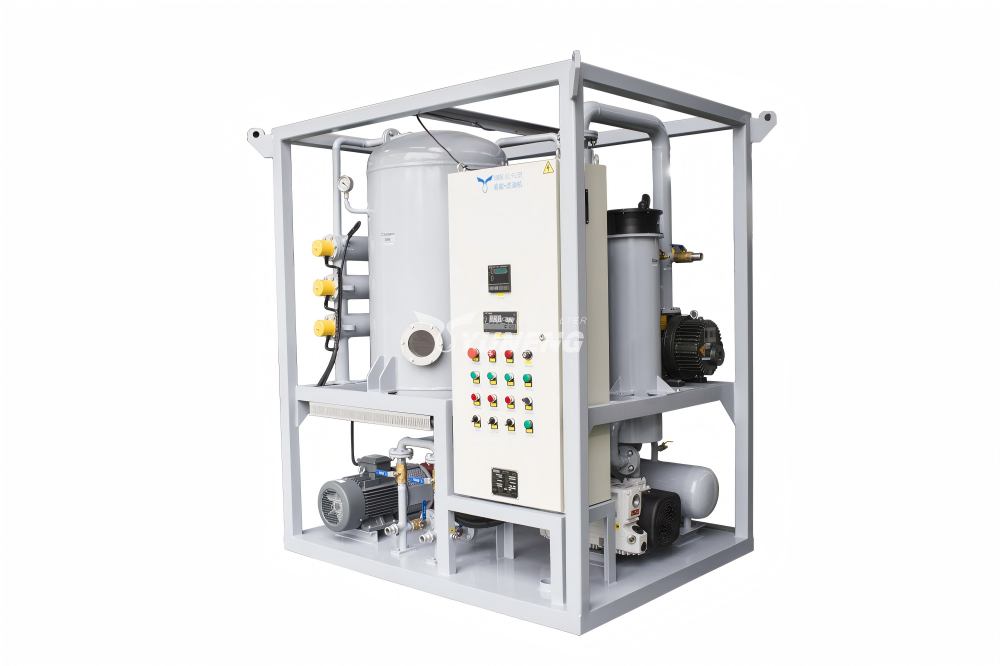
A vacuum transformer oil purifier operates on the principle of shifting fluid vapor pressure. Insulating oil is drawn into the processor and passed through a low-temperature heating arrangement that raises the fluid temperature to 50 ℃ to 65 ℃. This temperature range is high enough to facilitate moisture evaporation under vacuum but low enough to prevent thermal degradation or the cracking of the oil molecules.
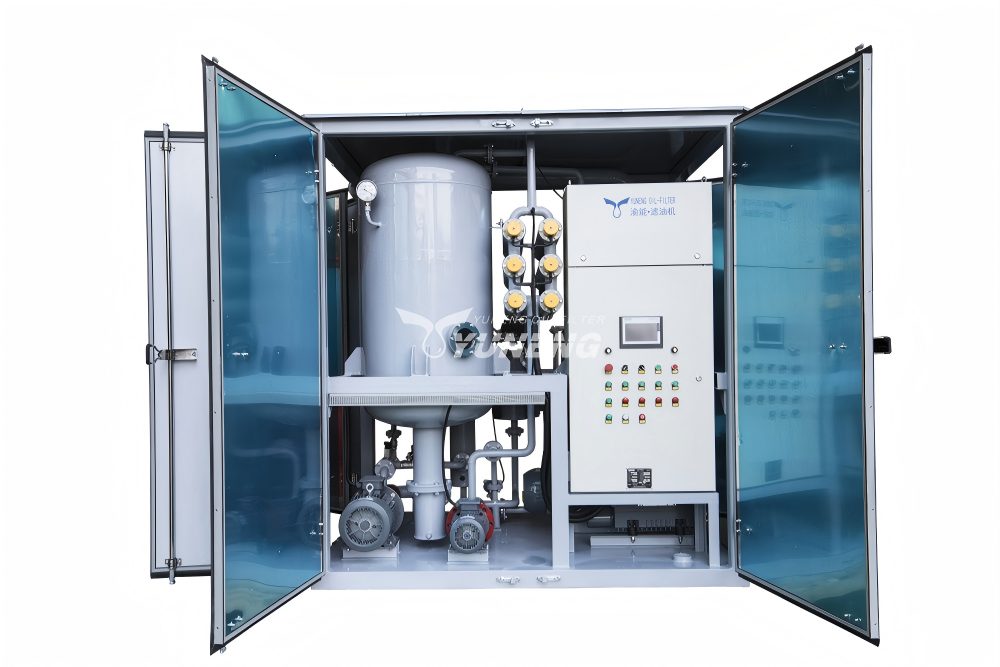
The heated oil enters a specialized vacuum degasification chamber operating at absolute pressures between 10 and 100 mbar. Inside this chamber, the oil is distributed over high-surface-area fiberglass columns or cascading elements. Because the boiling point of water drops significantly under these vacuum conditions, both free and dissolved water vaporize instantly along with dissolved combustible gases. The clean oil is then pumped through a final particulate filter, typically rated at 1 to 3 microns, to capture residual solid debris.
Centrifugal Filtration Systems
Centrifugal systems utilize mechanical mass separation. The contaminated oil is pumped into a high-speed rotating bowl or rotor assembly that generates thousands of g-forces. Because water (1.0 g/cm³) and solid particulates like carbon soot or wear metals have a higher specific gravity than insulating mineral oil (0.85 to 0.89 g/cm³), the centrifugal force flings these heavy contaminants to the outermost walls of the spinning bowl.
The clean, lighter oil stays in the center of the column and is continuously skimmed off by an internal paring disc. This mechanical process is continuous and does not require consumable filter elements to remove bulk solids. However, it relies entirely on density differences, meaning it cannot separate fluids that are fully dissolved or chemically bonded.
Critical Factors for Wind Turbine Applications
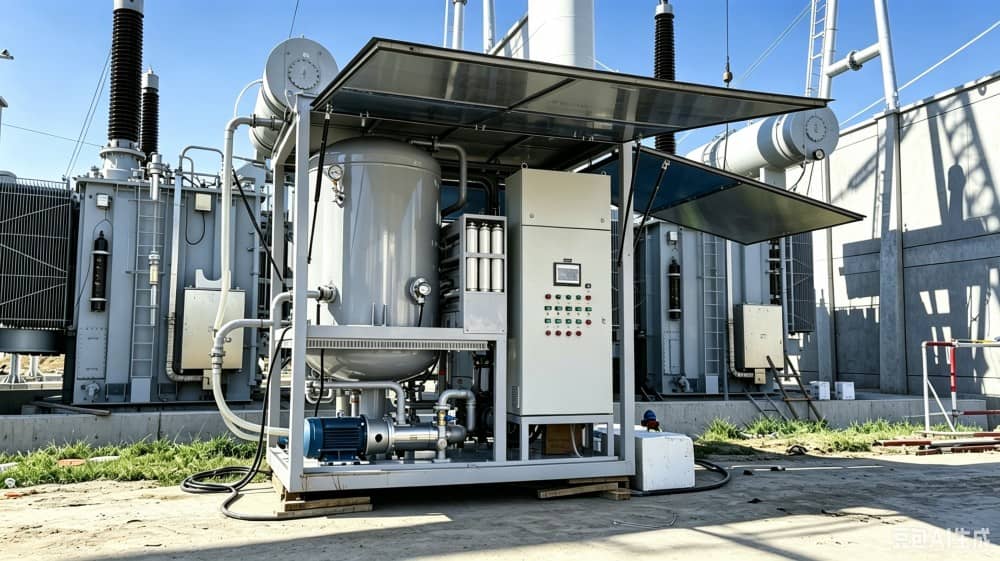
Wind farm substations and nacelle-integrated transformers possess distinct operational profiles that make the choice of a transformer oil purifier a critical technical decision.
1. Dissolved Water vs. Free Water
While free water sits at the bottom of a tank or forms a distinct cloudy emulsion, dissolved water is bound at the molecular level within the oil. Centrifugal filtration cannot remove dissolved water from transformer oil. It only removes free water that has separated from the oil matrix.
Wind turbine insulation paper continuously releases moisture into the oil due to extreme load fluctuations. If this dissolved moisture is not mitigated, it accelerates the depolymerization of the solid paper insulation, reducing the transformer’s life expectancy. A vacuum dehydration transformer oil purifier reduces the internal moisture concentration to less than 10 ppm, restoring the fluid’s dielectric strength (breakdown voltage) to acceptable industrial limits (>60 kB).
2. Dissolved Gas Analysis (DGA) Resetting
The fault gases in the wind transformers, such as hydrogen (H2), methane (CH4), ethane (C2H6), ethylene (C2H4), and acetylene (C2H2), are generated from electrical arcing, corona discharge and localized thermal overloads. These gases stay dissolved in the oil.
The centrifuge is not capable of degassing. However, a vacuum transformer oil purifier removes these volatile components during the flash distillation process. For maintenance engineers, removing these gases is important so that a clean baseline can be established for Dissolved Gas Analysis (DGA) testing, the main predictive diagnostic tool used to detect internal transformer faults before catastrophic failure occurs.
3. Natural and Synthetic Ester Liquids
Modern offshore and onshore wind turbines are increasingly using biodegradable synthetic or natural ester fluids instead of standard mineral oil, due to fire safety regulations and environmental concerns. Ester fluids are very hydrophilic and can contain up to 20 times more dissolved water than mineral oil.
The water molecules are held strongly in the ester structure, so that they cannot be detached by centrifugal forces. For ester fluids, a high-vacuum dehydration system operating at specific temperatures and vacuum levels is needed to pull the dissolved water out of the chemical bonds without changing the fluid’s native viscosity or additive packages.
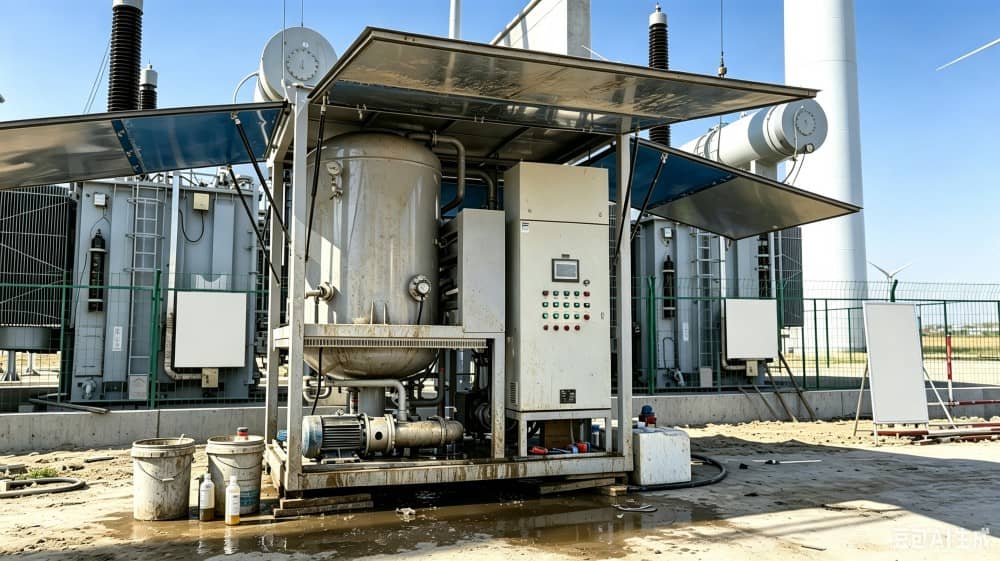
Mobile Transformer Oil Purifier Selection Criteria for Wind Farms
Logistical challenges at wind farm sites impose certain parameters on the purchase or deployment of a transformer oil purifier:
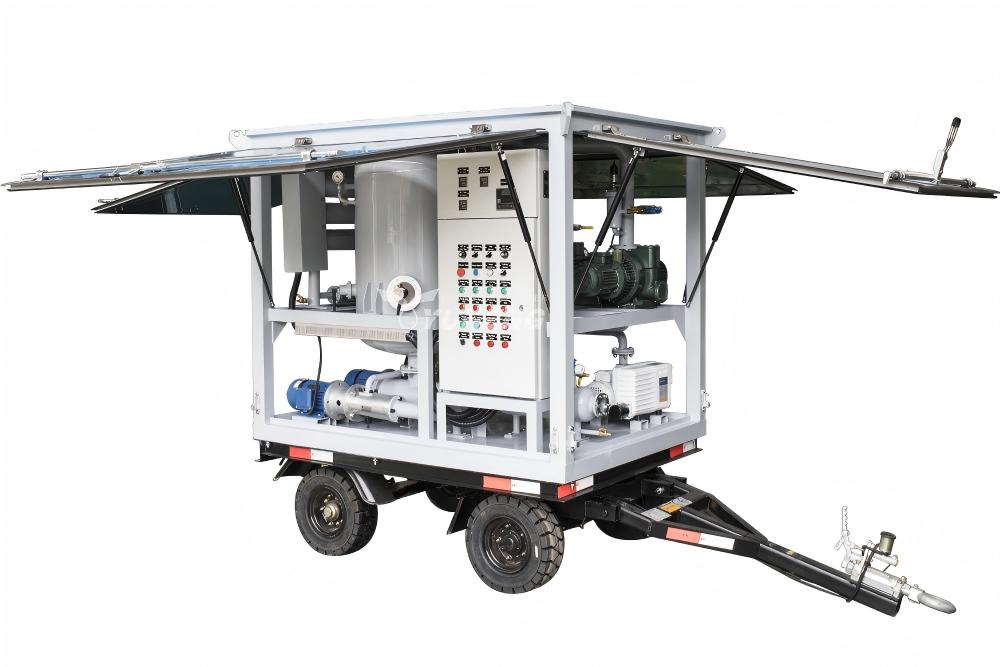
- Portability and Footprint: Access roads are narrow and the base of wind towers has limited space. The purifier system would have to be established as a compact trailer or skid-mounted mobile unit.
- Two-Stage Vacuum Setups: A single rotary vane vacuum pump is insufficient for wind farms having high voltage step-up transformers (33 kV to 132 kV or more). For high volumetric flow rates at low absolute pressures, the units must be equipped with a two-stage vacuum system, composed of a mechanical booster pump (Roots blower) and a backing pump.
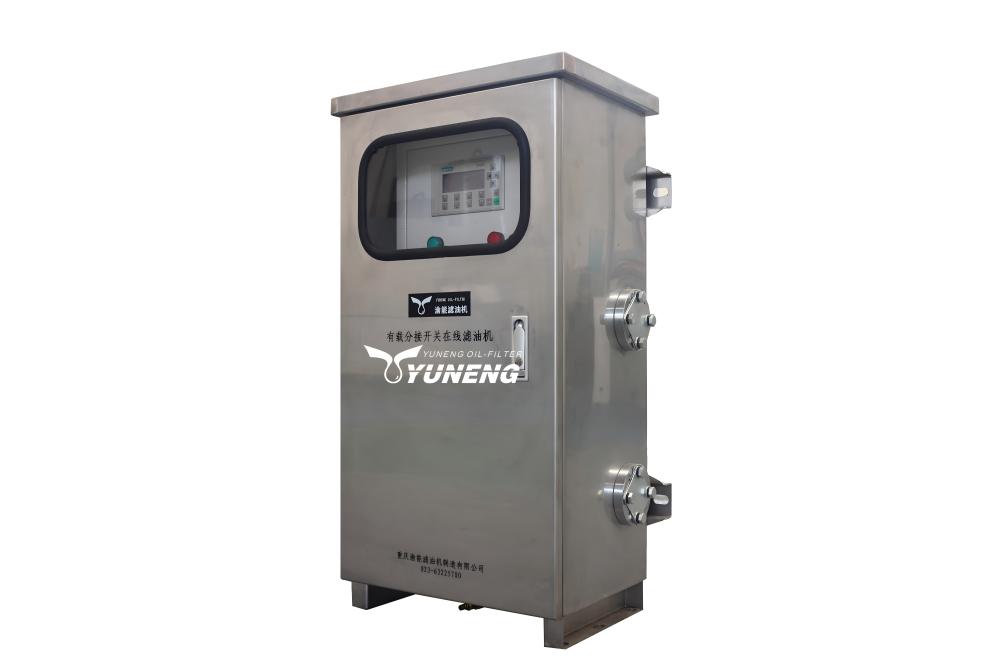
- Automatic Protection Parameters: Field units need automated variable frequency drives (VFDs), foam sensors, level switches and inline moisture-in-oil sensors to monitor the ppm levels in real time without having to sample the oil manually during processing.
FAQs
Q1: Does a centrifugal oil purifier have application in any aspect of transformer maintenance?
A1: Yes. A centrifugal purifier is good for rough processing of heavily contaminated oil with large amounts of free water, sediment or solid sludge. However, it cannot be the last stage of treatment because it does not remove dissolved water and gases, which are critical for restoring the dielectric strength.
Q2: Does vacuum oil purification remove the important chemical additives from the oil?
A2: No. Typical thermal vacuum purifiers work below 65 degrees Celsius and at vacuum depths that will work on substances with high vapor pressures (water and gases). Modern transformer fluids contain pour-point depressants, antioxidants and passivating agents with low vapour pressures, which are not consumed in the oil matrix.