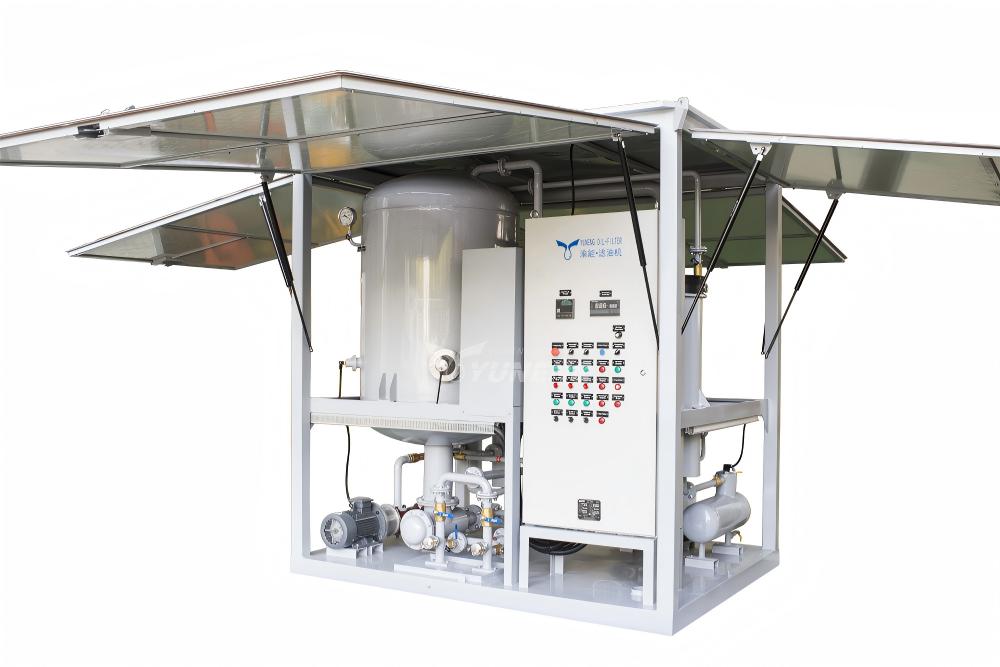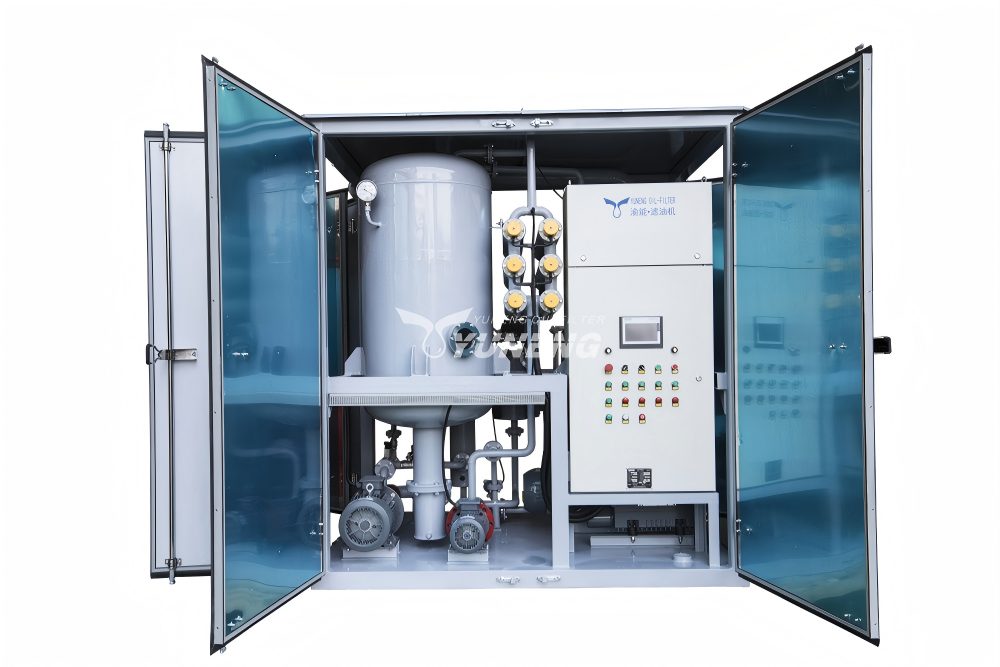
How Does a Transformer Oil Purifier Remove Moisture and Gas?

Oil Purification & Vacuum Technology Expert
Table of Contents
Transformer oil is crucial in cooling high-voltage equipment and in providing electrical insulation. Over time, however, this oil will absorb moisture from the atmosphere and generate dissolved gases as a result of thermal and electrical stress. If water and gases get into the oil, the dielectric strength is greatly reduced and can cause catastrophic failure of the transformer. In this article, we will demonstrate how a transformer oil purifier eliminates these damaging contaminants, restoring the properties of the oil and ensuring the safe operation of power grids.
Why Moisture and Gas Threaten Transformer Lifespan
Before we get to how a transformer oil purifier works, we must look at why these specific contaminants are so dangerous.
Transformer oil contains moisture in three forms, namely free, emulsified, and dissolved water. Even a very small amount of dissolved water, measured in parts per million (ppm), can cut the oil’s insulation breakdown voltage in half. Moisture also increases the degradation of the cellulose insulation paper inside the transformer. When the paper breaks down, there is no remedy, and the life of the transformer is permanently shortened.
Dissolved gases are just as problematic. Transformer oil decomposes under thermal or electrical stress and generates fault gases such as hydrogen, methane, ethane, ethylene, and acetylene. If these gases accumulate, they reduce the oil’s flash point and can form gas pockets, causing internal arcing, localized overheating, and ultimately explosions. The standard practice of preventive maintenance to eliminate these risks is the regular use of a transformer oil purifier.
The Step-by-Step Transformer Oil Purification Process
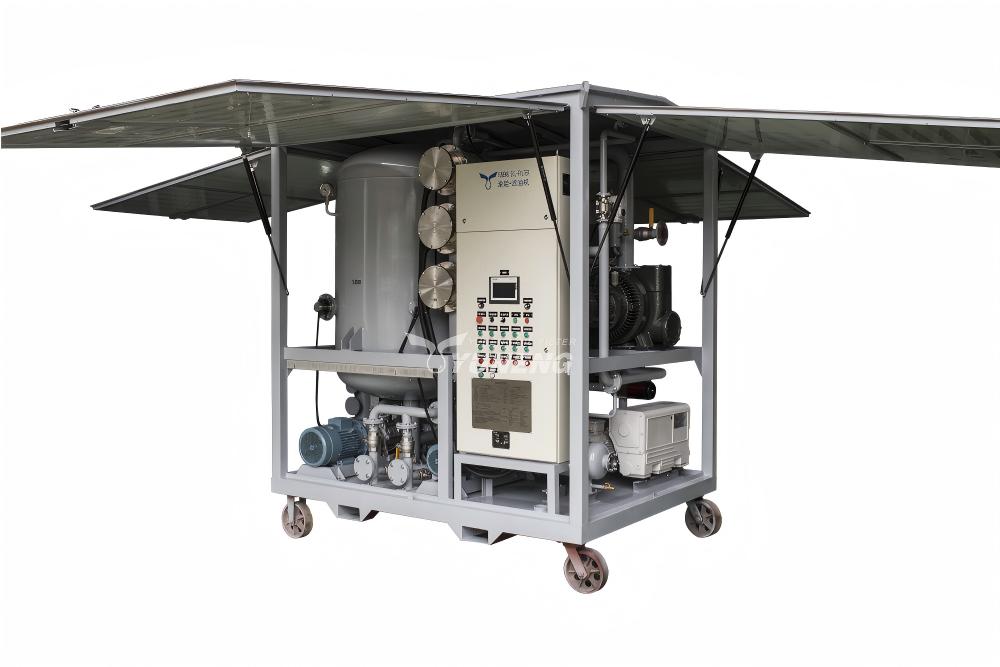
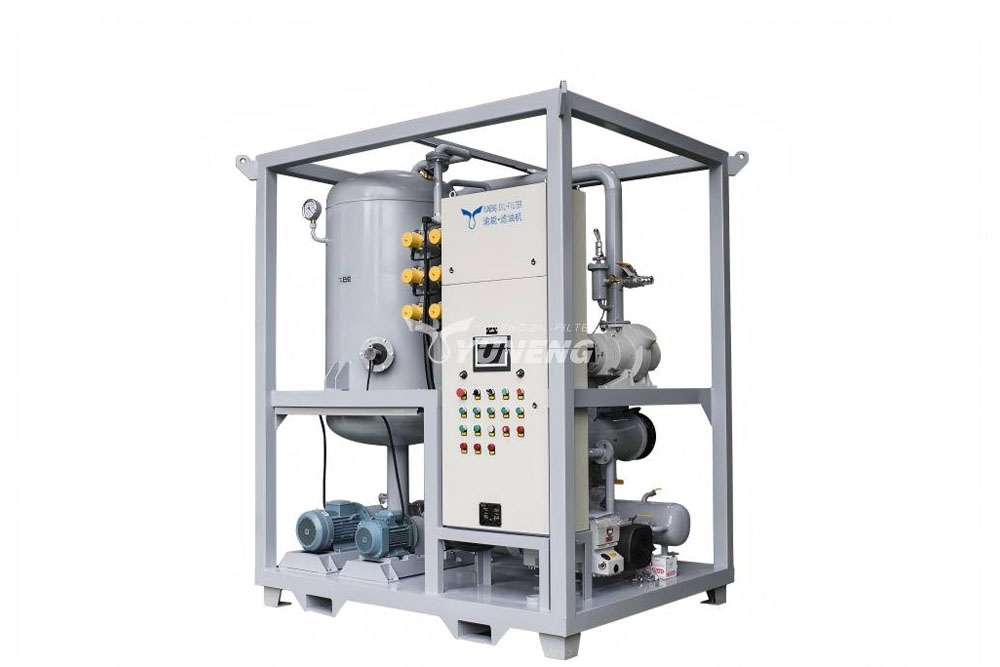
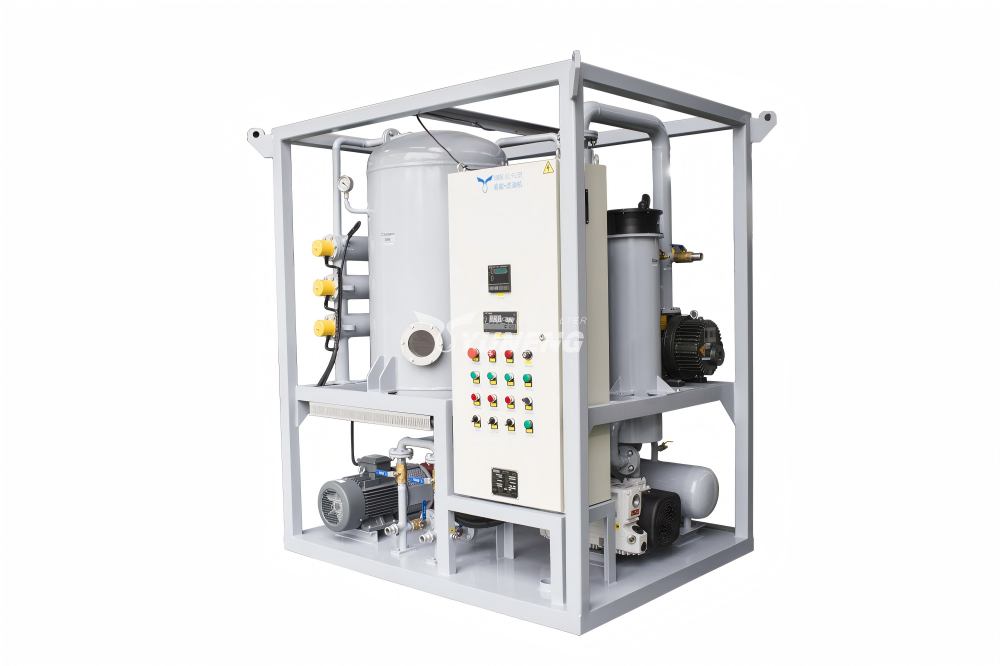
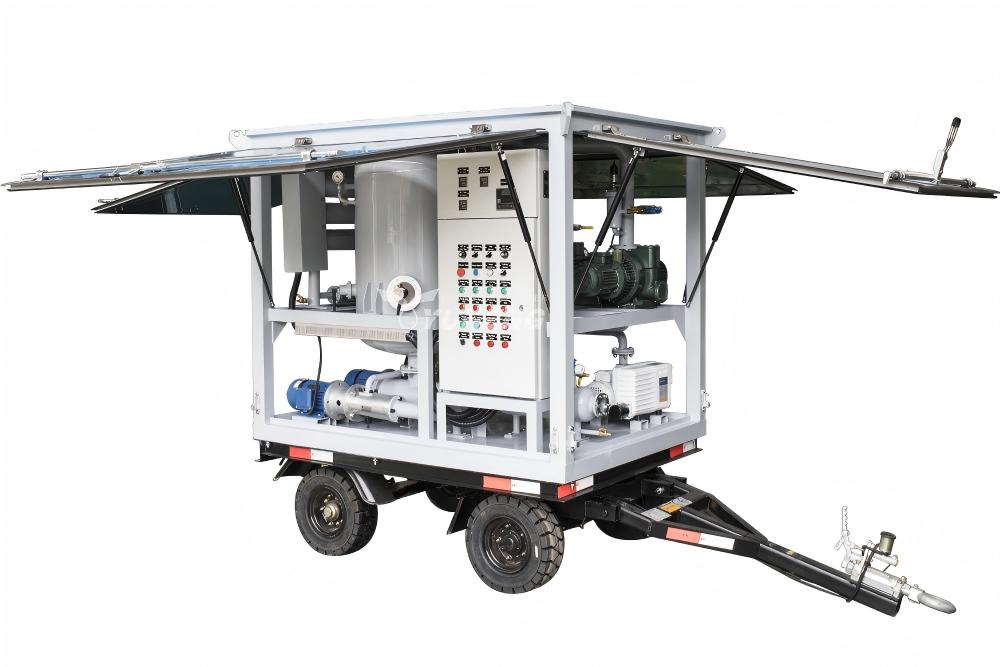
The oil is purified by a high vacuum transformer oil purifier using heat, Deep Vacuum, and Mechanical Filtration. The whole process is based on basic physics and not on chemical additives. So the oil keeps its original properties.
Phase 1: Controlled Heating
The purification cycle starts with pumping the contaminated oil into the system’s heating unit. You can’t just dump cold oil in a vacuum chamber and expect it to dry well.
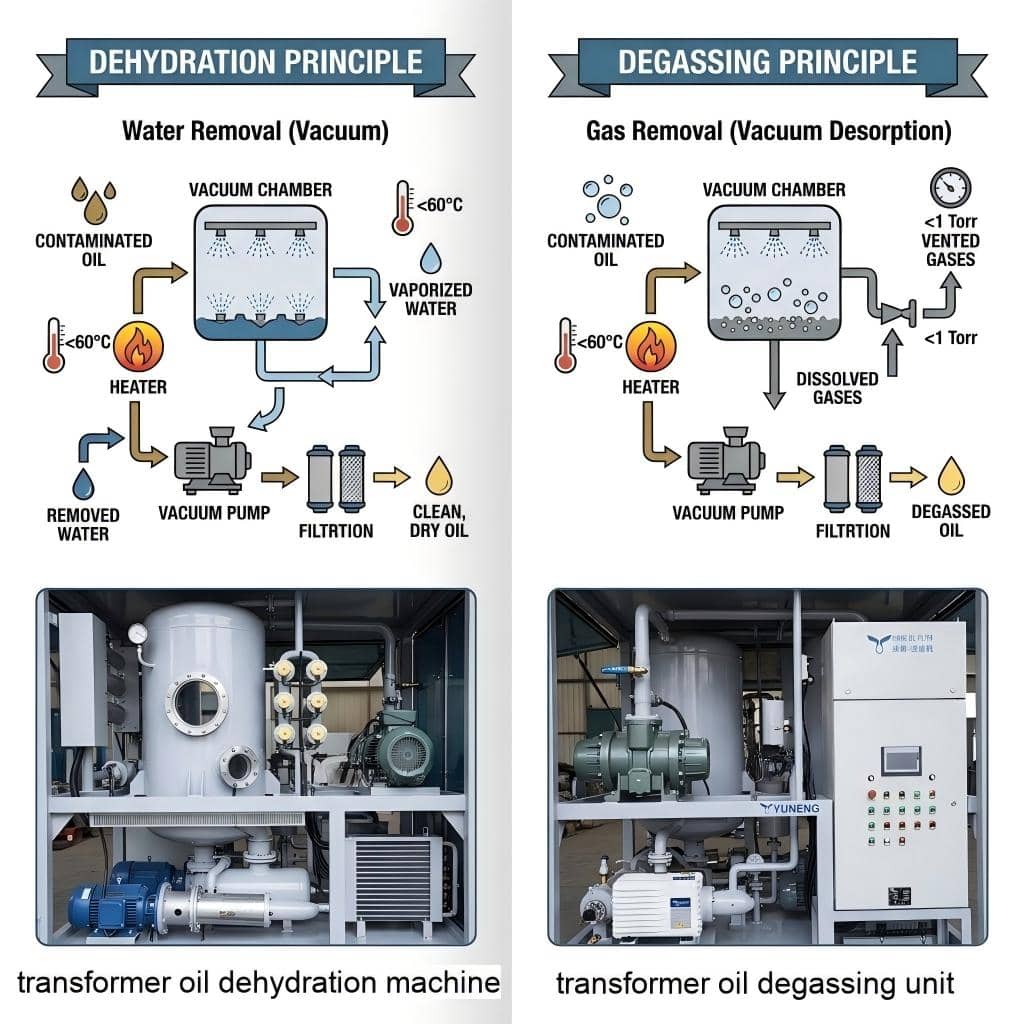
The heater heats the oil to a certain temperature range, typically between 45°C and 65°C. Heating the oil is important for two reasons:
- Reduces viscosity: By lowering the viscosity, the oil becomes thinner and can flow more freely and easily break up in the next stage.
- It increases the kinetic energy: When the molecules of water in the oil are heated up, they come closer to their vaporization point, and this greatly speeds up the process of vacuum separation.
To avoid localized overheating, which would crack the oil molecules and ruin the batch, the system has to use low-watt-density heaters.
Phase 2: Vacuum Dehydration and Degassing
Once the oil is at the right temp it enters the vacuum chamber. This chamber is the core of the transformer oil purifier. The chamber is evacuated to a deep vacuum using a rotary vane vacuum pump and a Roots booster pump, typically to below 133 Pascals (1 Torr).
Thermodynamics tells us that the boiling point of a liquid is a function of the surrounding atmospheric pressure. Drawing a vacuum pulls the boiling point of water down to room temperature or lower. The oil is already at 60°C, and the water in the oil immediately vaporizes.
Then the machine tries to maximize the surface area of the oil in the chamber so that every drop of water can escape. There are two common designs used for this :
- Spray Nozzles: The system sprays the oil into the chamber in a mist.
- Coalescing Elements / Raschig Rings: The oil passes down structured towers and spreads out in an extremely thin film.
As the mist or thin film passes through the vacuum, dissolved gases and water vapour are released from the liquid oil.
Phase 3: Vapor Extraction and Condensation
The vacuum pump continues to suck the separated water vapour and gases out of the chamber. The mixture flows through a cooling condenser. Here, the water vapour condenses back to liquid water and is collected in a receiver tank for drainage. Other non-condensable gases, such as air and combustible fault gases, are safely vented from the system.
Phase 4: High-Precision Particle Filtration
The oil is then collected at the bottom of the vacuum chamber, after dehydration and degassing. The dry, gas-free oil is pushed through a sequence of mechanical filters by the discharge pump to retain solid impurities like carbon dust, metal particles, and sludge.
This multi-stage filtration setup is typical of most industrial systems:
- Primary Filter: Captures large particles from 10-50 microns.
- Secondary Filter: Captures medium-sized debris to 5 microns.
- Fine Filter: Special micro-fibre cartridges trap microscopic particles of 1 micron or less.
Core Mechanisms: Vacuum Dehydration vs. Degassing
To understand in detail how a transformer oil purifier deals with different types of pollution in the oil, it is better to understand the physical laws involved. The transformer oil purifier does not treat water, gas, and solid dirt in the same way. Rather, the machine runs the fluid through separate subsystems that each target a particular contaminant based on its physical properties.
The table below shows the structure of a modern transformer oil purifier and how it isolates and removes these different hazards in a normal processing cycle.
| Contaminant Type | Primary Removal Method | Core Physical Principle | Technical Goal inside the Purifier |
| Free & Dissolved Water | Vacuum Vaporization | Dropping chamber pressure lowers the boiling point of water, forcing it to flash into steam at low temperatures. | Reduces total water content down to less than 5 ppm to restore oil dielectric strength. |
| Dissolved Fault Gases | Vacuum Desorption | Low partial pressure inside the vacuum chamber forces dissolved gases out of the liquid solution. | Lowers total gas content below 0.1% to prevent internal arcing and gas pocket build-up. |
| Solid Micro-Particles | Mechanical Filtration | Multi-stage microfiber filter elements physically trap carbon, metal flakes, and dust. | Achieves clean ISO cleanliness codes by removing abrasive paper and metal debris. |
Frequently Asked Questions
Q1. Does the transformer oil purifier remove natural inhibitors or additives in the oil?
A1: No. A standard vacuum transformer oil purifier is based solely on physical separation methods, i.e., heat, vacuum, and mechanical filtration. It does not employ chemical reactions or adsorbent clays that may strip naturally occurring beneficial oxidation inhibitors in the oil.
Q2: What is the lowest moisture content a high-vacuum purifier can achieve?
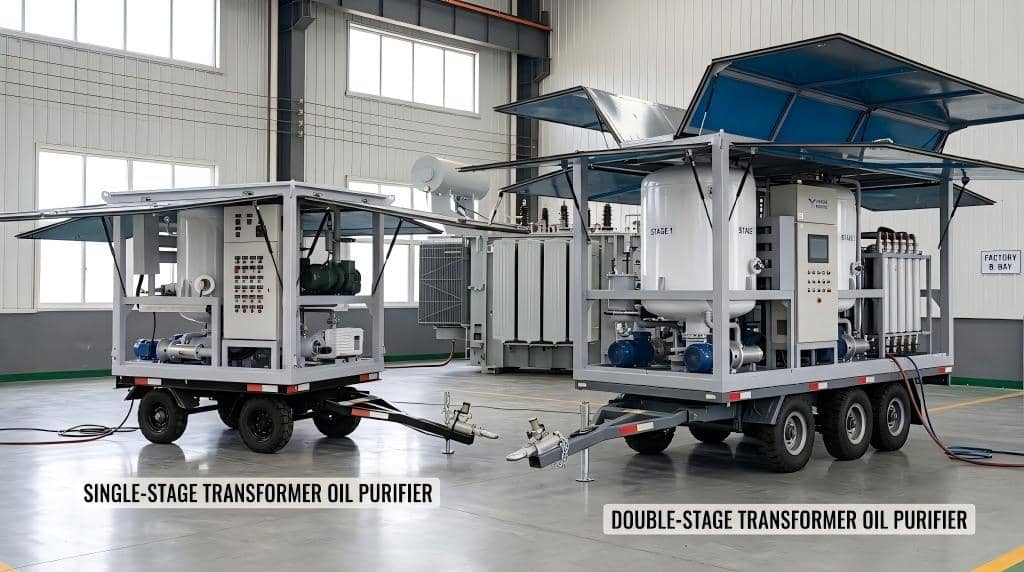
A2: A good quality double-stage vacuum purifier can take the moisture content from a high level down to less than 5 ppm (parts per million). At the same time, it can reduce the gas content from approximately 10% down to less than 0.3% by volume.
Q3:Can transformer oil be purified online, with the transformer energized?
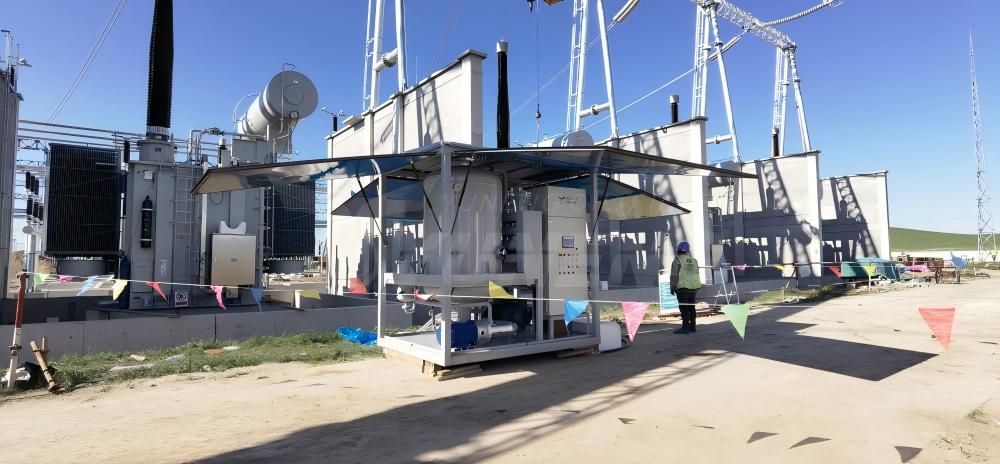
A3: Yes, but online purification requires special safety equipment. The transformer oil purifier should include automatic oil level controllers, flow control valves, and moisture sensors to ensure that the machine does not accidentally drain the transformer or introduce air bubbles into the live tank.
Q4: Why not just heat the oil to 100°C to boil off the water without using a vacuum?
A4: Transformer oil heating to 100 °C and over will result in quick oxidation under air influence. This breaks up the hydrocarbons, forms sludge, increases the acid value, and permanently damages the oil quality. If you use a vacuum cleaner, you can safely get rid of water at much lower temperatures.