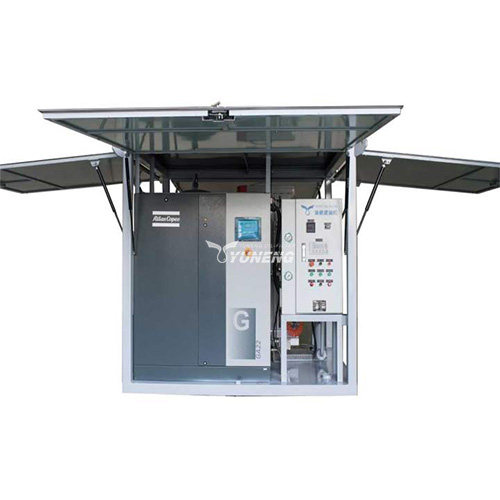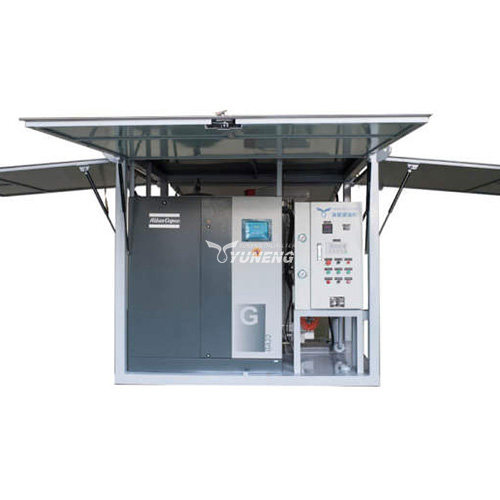
Dry Air Generator Applications Throughout the Transformer Lifecycle
Table of Contents
Moisture control is generally accepted as being the single most important factor in determining the operational reliability, performance efficiency, and total life of high voltage power transformers. Utility engineers tend to think of moisture management in terms of active maintenance or processing. Moisture, however, is not an episodic problem but an omnipresent threat that attends every phase of a transformer’s life, from factory manufacture to final decommissioning and retirement. During the whole life cycle, transformers are subjected to different environmental conditions, mechanical stresses, and operational requirements that expose the internal cellulose insulation systems to atmospheric humidity.
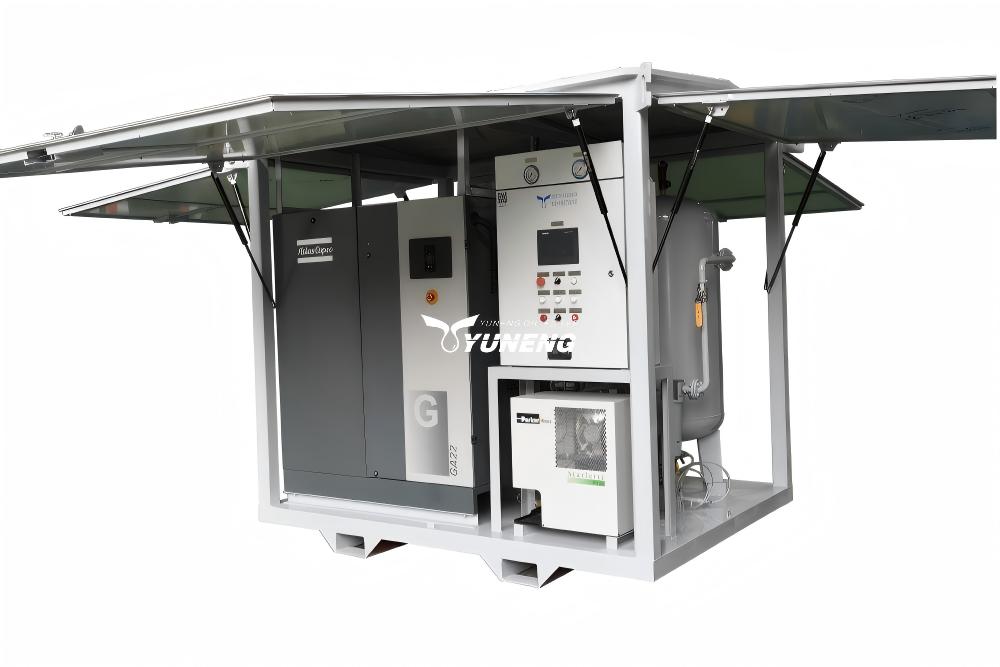
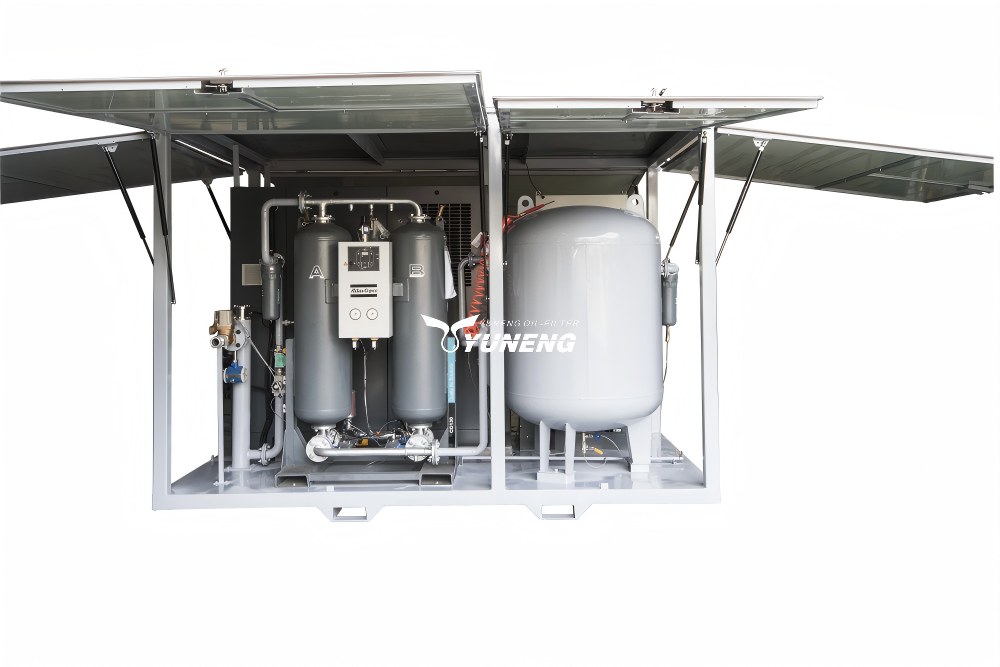
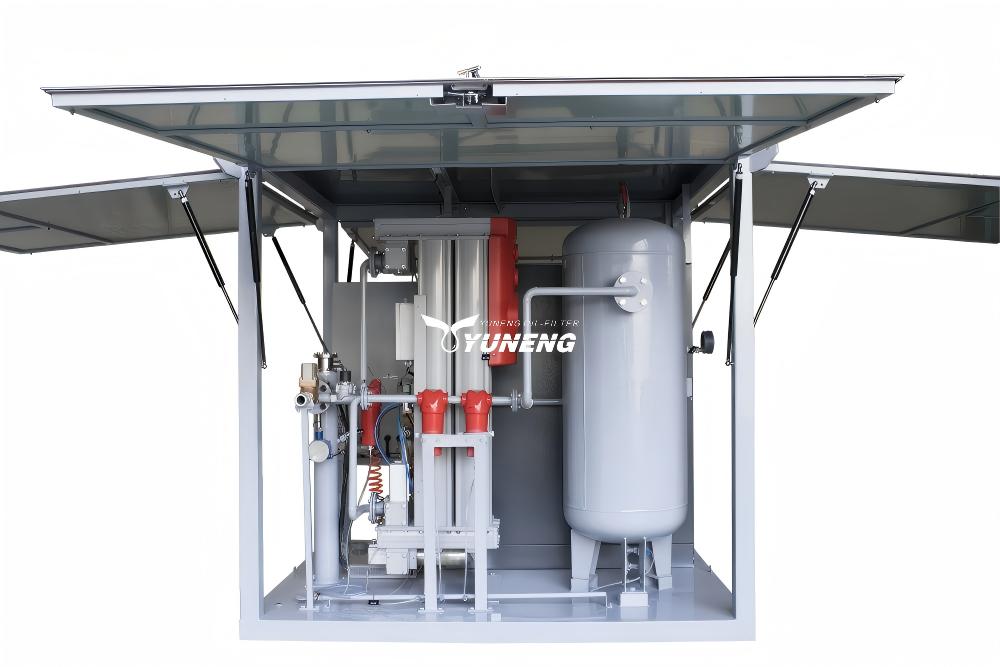
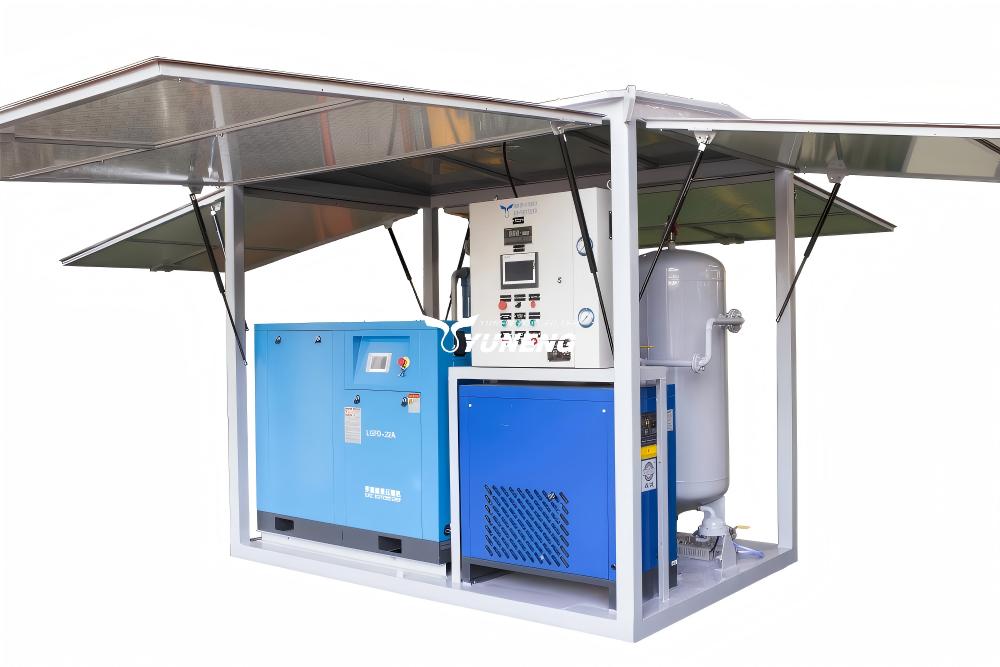
To counter this ever-present degradation mechanism, state-of-the-art dry air generators provide a continuous, reliable source of ultra-low-dew-point air. Inside the transformer tank, a special transformer dry air generator keeps the positive pressure and removes residual humidity, thus keeping the cellulose insulation completely dry. This eliminates partial discharges, suppresses insulation ageing and maximises grid reliability. This comprehensive guide explores the multifaceted applications of dry air generators across all ten stages of the transformer lifecycle, detailing why advanced transformer maintenance equipment is indispensable for modern power grids.
Why Moisture Control Is Critical Throughout the Transformer Lifecycle
Power transformers are very dependent on the use of cellulose-based paper and pressboard insulation impregnated with mineral or synthetic insulating oil. Cellulose is extremely hygroscopic and aggressively draws moisture from the ambient environment. To develop a successful asset management strategy, it is necessary to understand how moisture enters a transformer and what damage it can cause.
How Moisture Enters a Transformer
In the course of service, moisture penetrates into the internal environment of a power transformer by several ways:
- Opening the tank: When the main tank is opened for maintenance, inspections, or component installation, ambient air rushes in and immediately exposes the dry internal insulation to atmospheric humidity.
- Ambient humidity: High relative humidity of the surrounding air can quickly contaminate exposed insulation surfaces, especially in tropical or coastal substations.
- Exposure to rain: Unexpected rain or high-moisture weather events during erection at site or emergency repairs bear a serious risk of direct ingress of water.
- Long transport: In long transport phases, temperature changes induce internal breathing cycles that draw humid air past seals or temporary shipping covers.
- Oil replacement: Draining and replacing insulating oil will expose the active parts to atmospheric moisture if proper dry air blanketing is not maintained.
- Temperature cycling: Daily and seasonal thermal loading causes the transformer to breathe, sucking ambient air through the conservator breathers in case of neglect in desiccant maintenance.
- Maintenance activities: Bushing replacement, OLTC servicing, and gasket replacement are routine work that provide clear opportunities for entry of moisture.
Effects of Moisture
When moisture enters the cellulose matrix, it sets off a chain of damaging physical and chemical reactions:
- Lower dielectric strength: Free water and dissolved moisture drastically reduce the breakdown voltage of the insulating oil and paper. This increases the risk of electrical flashover at high electrical stress.
- Cellulose insulation ageing: Moisture speeds up the thermo-chemical degradation (hydrolysis) of cellulose paper, breaking down the polymer chains and permanently removing the mechanical tensile strength of the material.
- Partial discharge: Local concentrations of moisture distort the distribution of electric fields and cause early partial discharges which erode solid insulation, over time.
- Reduced transformer life: A 2% increase in paper moisture can reduce a power transformer’s life by 50%, making a 40-year asset into a 20-year liability.
- Higher maintenance costs: Accelerated ageing leads to more frequent oil purification, expensive on-site drying processes or early transformer replacement, putting tremendous pressure on utility capital budgets.
Transformer Lifecycle Timeline: Factory Manufacturing → Factory Acceptance Testing (FAT) → Transportation & Storage → Site Installation & Assembly → Vacuum Drying & Oil Filling → Routine Maintenance → Major Overhaul & Retrofit → Emergency Repairs → Decommissioning & Retirement.
Stage 1 — Manufacturing & Factory Testing
The moisture defense journey begins long before a transformer reaches a substation—it starts directly on the factory floor during active manufacturing and rigorous testing.
During Core and Coil Assembly
As technicians construct the active part of the transformer, cellulose insulation is continuously exposed to ambient workshop air. To prevent moisture absorption during prolonged assembly windows, advanced transformer drying systems are utilized to blanket the active parts. Continuous dry air flushing is maintained during:
- Winding assembly: Protecting delicate copper or aluminum conductor wrappings from ambient humidity.
- Active part exposure: Shielding stacked core laminations and core-coil assemblies during multi-day fabrication processes.
- Insulation installation: Ensuring pressboard barriers, spacers, and cylinder wrappings remain at absolute minimum moisture levels prior to tanking.
- Tank assembly: Maintaining a pristine internal atmosphere as the active part is sealed inside the main transformer tank.
Benefits: Utilizing a high-performance dry air generator during manufacturing prevents initial moisture absorption, drastically reduces subsequent factory drying time in heated vacuum ovens, and ensures superior baseline product quality before high-voltage testing.
Factory Acceptance Test (FAT)
Before leaving the manufacturing facility, transformers undergo stringent Factory Acceptance Testing. Dry air plays a vital supporting role during specialized diagnostic evaluations, ensuring that internal humidity does not compromise high-voltage test results. Reliable transformer moisture protection supports critical test procedures including:
- Insulation resistance testing: Ensuring polarization index (PI) and insulation resistance values meet strict IEEE/IEC standards without moisture-induced skewing.
- Induced voltage tests: Preventing internal partial discharges during high-stress excitation testing.
- Pressure testing: Maintaining stable internal conditions while validating mechanical tank integrity.
Recommended Equipment: The YUNENG GF Series Dry Air Generator is specifically engineered for factory environments, delivering stable, continuous dry air with ultra-low dew points to satisfy rigorous manufacturing quality control requirements.
Stage 2 — Transportation and Storage
Transportation and long-term storage represent two of the most frequently overlooked yet high-risk stages in a transformer’s operational lifecycle.
During Transportation
Large power transformers frequently embark on complex logistics journeys spanning several weeks or months, involving rail, barge, ocean freight, and heavy-haul highway transport. During overseas shipping, extreme temperature swings between day and night cause internal air to expand and contract. Without proper intervention, this breathing action pulls moisture-laden marine air directly into the transformer.
To neutralize this threat, transformers are shipped with a continuous positive pressure of dry air supplied by a portable unit or maintained via dedicated nitrogen/dry air blanketing systems. Continuous dry air supply during transit ensures:
- Preventing breathing moisture: Positive internal pressure ensures that any minor seal leakage results in dry air escaping outward rather than humid air entering inward.
- Preventing condensation: Eliminating dew point crossover points stops water droplets from forming on metallic structures and cellulose insulation surfaces.
- Protecting cellulose insulation: Preserving dry insulation integrity throughout punishing multi-modal transit routes.
Long-Term Storage
Substation construction delays, phased grid expansion projects, or strategic emergency reserve stocking often require transformers to sit idle in outdoor or unconditioned warehouse storage for extended periods. Applications during storage include spare transformers, project delay holding areas, and long-term staging yards. Continuous operation of a dedicated transformer dry air generator during storage actively prevents:
- Rust and corrosion: Protecting internal metallic surfaces, core frames, and control cabinets from atmospheric oxidation.
- Insulation degradation: Stopping silent, cumulative moisture accumulation in stored winding assemblies.
- Internal condensation: Neutralizing diurnal temperature fluctuations that drive moisture migration into pressboard barriers.
Stage 3 — Installation & Site Assembly
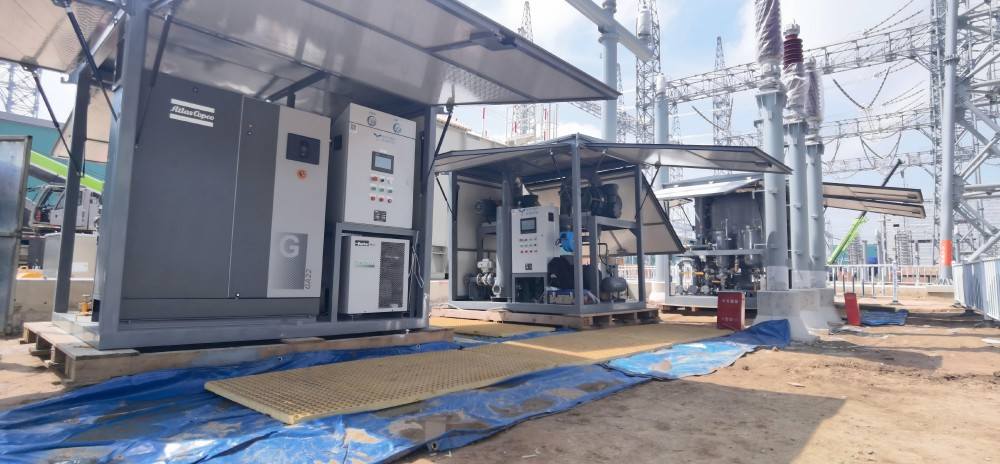
Site installation and erection represent the largest application area for field-deployed dry air generators. When a massive power transformer arrives at a substation, it must be partially disassembled for transport clearance, requiring extensive site-level assembly work.
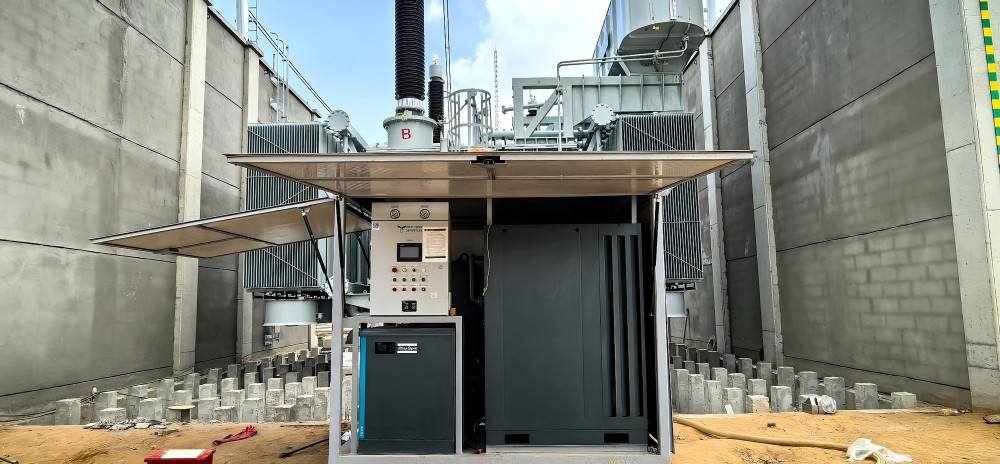
Typical site operations that expose internal insulation include opening the transformer tank, installing high-voltage bushings, mounting cooling radiators, attaching the main oil conservator, and executing complex high-voltage cable terminations. During all of these operations, skilled technicians operate a robust transformer dry air generator to flood the transformer tank and maintain a continuous positive internal pressure.
Benefits: Maintaining a positive outflow of ultra-dry air blocks humid ambient air from entering the tank, drastically reduces foreign particle contamination, and ensures compliance with strict utility installation standards and IEEE/IEC site erection guidelines.
Stage 4 — Vacuum Drying Before Oil Filling
Once site mechanical assembly is fully complete, the transformer must undergo rigorous processing to remove any residual moisture absorbed during site erection before insulating oil is introduced. This requires a synergistic workflow combining deep vacuum pumping and high-purity dry air injection.
The Advanced Processing Workflow
- Step 1 (Vacuum Pumping): A heavy-duty vacuum pumping system evacuates ambient air and loose moisture vapor from the sealed transformer tank.
- Step 2 (Dry Air Breaking Vacuum): Instead of breaking the vacuum with untreated atmospheric air, the vacuum is gently broken using ultra-dry air from a specialized transformer drying system.
- Step 3 (Vacuum Pumping Again): A secondary deep vacuum cycle is executed to extract the moisture that was mobilized and driven to the surface by the dry air injection.
- Step 4 (Oil Filling): Insulating oil is introduced under vacuum conditions to ensure complete impregnation of the cellulose insulation.
- Step 5 (Oil Circulation): Oil is circulated and filtered to eliminate microscopic particulates and dissolved gases.
Why Alternating Vacuum and Dry Air Works: Deep vacuum alone can sometimes have difficulty removing deeply bound moisture from thick cellulose pressboard barriers due to evaporative cooling effects. A thermal and vapor-pressure catalyst is formed by installing a dry air generator between hoover cycles to transfer heat and to drive moisture trapped in the solid insulation matrix out with maximum thermodynamic efficiency.
Stage 5 — Transformer Oil Filling
The introduction of insulating oil is a delicate milestone where electrical and chemical properties are locked in. Throughout oil injection, filtration, circulation, and regeneration processes, a dry air generator maintains a protective gas blanket above the oil surface in the conservator and main tank.
Benefits: Maintaining ultra-low humidity throughout the oil filling process prevents freshly conditioned, moisture-free oil from immediately absorbing atmospheric water vapor from the headspace. This guarantees optimal initial dielectric strength and long-term chemical stability.
Stage 6 — Routine Maintenance
Power transformers require periodic scheduled maintenance throughout their operational lifespans to verify mechanical and electrical integrity. Routine maintenance activities frequently expose internal components to ambient air, including:
- Bushings replacement and testing
- On-load tap changer (OLTC) inspection and servicing
- Gasket and seal replacements
- Internal inspection of tap changers and inspection windows
Whenever the tank is opened or breached during routine upkeep, deploying a portable transformer dry air generator keeps moisture away from vulnerable cellulose insulation. Recommended models such as the GF-100, GF-200, and GF-360 provide scalable airflow rates tailored to the specific volume of the transformer compartment being serviced.
Stage 7 — Major Transformer Overhaul
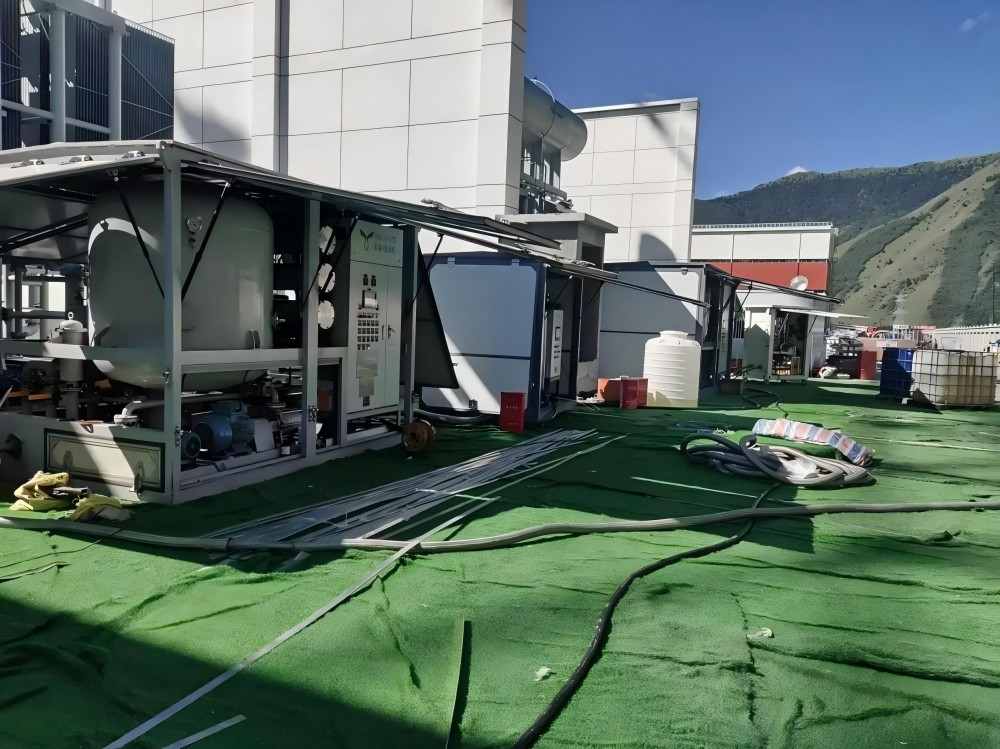
When a large power transformer undergoes a major overhaul—which may last several days or even several weeks—internal active parts are heavily exposed to the environment. Major overhauls typically involve active part lifting, internal winding inspection, major insulation replacement, and complete mechanical reassembly.
During these extended overhaul windows, a dry air generator must operate continuously to maintain a safe working environment inside and around the transformer tank.
Benefits: Providing a stable, ultra-low dew point air supply guarantees continuous moisture protection during multi-week overhauls, eliminating overnight moisture absorption and significantly improving overall maintenance quality and asset longevity.
Stage 8 — Emergency Repairs
Unexpected transformer failures resulting from lightning strikes, external short circuits, oil leakage, bushing flashovers, or transportation accidents require rapid emergency response. When maintenance crews must open a faulted transformer in the field under harsh weather conditions, time is of the essence.
A rapid-response dry air generator allows utilities to quickly provide positive pressure moisture protection, eliminate secondary internal contamination, reduce expensive outage downtime, and safely and efficiently continue emergency repair operations.
Stage 9 — Transformer Upgrades and Retrofit Projects
Retrofit and upgrade projects to modernise older power grids often involve complex transformer retrofit and upgrade projects, such as replacing mechanical OLTCs with vacuum tap changers, upgrading porcelain bushings to composite polymer bushings, installing advanced fiber-optic temperature sensors or retrofitting online dissolved gas analysis (DGA) monitoring systems.
These engineering changes require you to cut, weld, drill or open access ports. During these invasive modification projects, a reliable transformer dry air generator minimises internal contamination and ingress of moisture.
Stage 10 — Transformer Decommissioning and Retirement
Transformers need particular attention during decommissioning and retirement, even at the end of a long operational life. There are environmental and corrosion risks during temporary storage before scrapping, during multi-modal transport to recycling facilities, during structural dismantling, and during bulk oil recovery.
Decommissioning using a dry air generator decreases internal metal oxidation and corrosion, allowing for safer handling, cleaner oil recovery, and environmentally responsible recycling of the core and winding materials.
How Dry Air Generator Works Together with Other Transformer Maintenance Equipment
A successful transformer maintenance program relies on an integrated ecosystem of specialized equipment. No single machine can accomplish complete lifecycle care on its own.
Dry Air Generator (Moisture Prevention)
↓
Vacuum Pumping System (Deep Dehydration)
↓
Vacuum Oil Purifier (Particle & Gas Removal)
↓
Oil Regeneration Plant (Chemical Restoration)
↓
Transformer Successfully Returned to Service
These systems are not substitutive but complementary. A dry air generator stops moisture from getting into the tank during open-tank work and transit; vacuum pumping systems remove moisture from solid insulation; oil purifiers take out dissolved gases and particulates; and oil regeneration plants remove polar contaminants and acids from ageing oil. Together they provide a defensive shield for utility assets that can’t be penetrated.
Why Utilities Choose YUNENG Dry Air Generators
Power utilities, electrical contractors, and transformer manufacturers worldwide rely on YUNENG for advanced moisture protection solutions. Key competitive advantages include:
- Stable ultra-low dew point performance: Consistently delivering air with dew points down to -70°C for the most sensitive UHV transformer applications.
- Continuous dry air supply for long-duration projects: Engineered for rugged, round-the-clock field operation without thermal degradation or desiccant exhaustion.
- Integrated multi-stage filtration system: Removing oil aerosols, dust, and microscopic particulates to deliver ISO-compliant ultra-clean air.
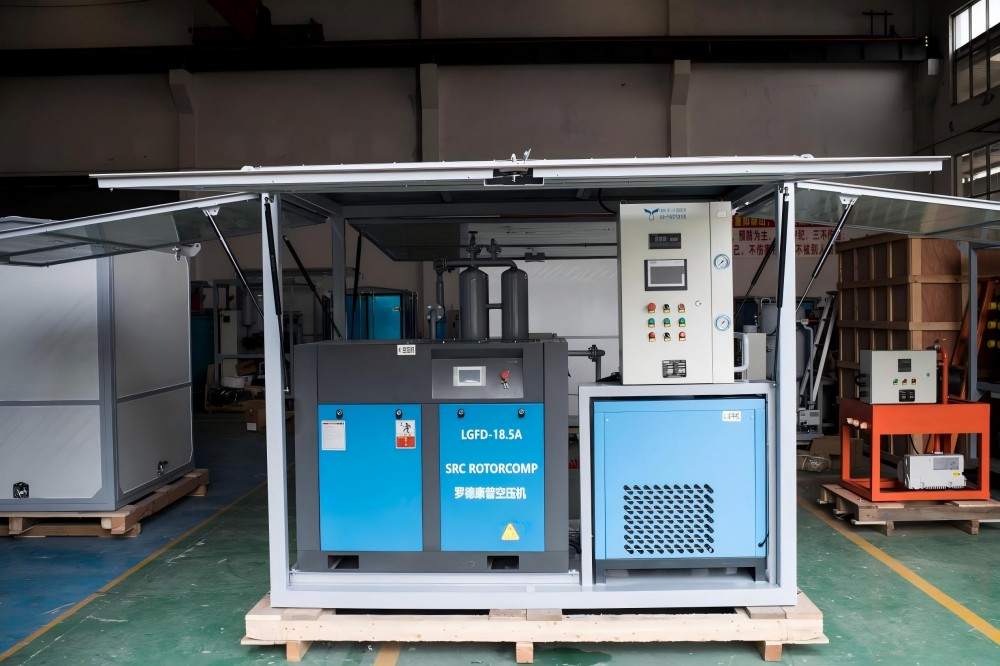
- Reliable PLC-based automatic control: Featuring intuitive touch-screen interfaces, automated regeneration cycles, and real-time dew point monitoring.
- Compact and portable design for field maintenance: Weatherproof enclosures and heavy-duty caster wheels or lifting lugs for effortless substation deployment.
- Multiple airflow capacities for different transformer sizes: Ranging from compact portable units to high-capacity industrial systems.
- Compatible with YUNENG vacuum pumping and oil purification systems: Providing seamless integration across a complete suite of substation maintenance equipment.
- Proven performance worldwide: Trusted in major utility grids, power plants, and HVDC converter stations across the globe.
Frequently Asked Questions
1. Why is dry air needed during transformer installation?
Transformer insulation is extremely hygroscopic. Opening the tank on site exposes dry cellulose paper to ambient humidity. A dry air generator maintains positive pressure inside the tank, blocking humid air and preventing moisture contamination that could cause premature electrical failure.
2. Can a dry air generator replace nitrogen cylinders?
Yes, and with significant operational advantages. While nitrogen cylinders require continuous replacement, logistical coordination, and pose asphyxiation safety hazards in enclosed spaces, a dry air generator continuously extracts ambient air, purifies it, removes moisture down to extreme dew points, and supplies unlimited dry air safely on demand.
3. What dew point is recommended for transformer maintenance?
For standard maintenance and site installation, a pressure dew point of -50°C is generally recommended. For high-voltage, extra-high-voltage (EHV), and ultra-high-voltage (UHV) transformers, stringent specifications require dew points of -60°C to -70°C to ensure absolute insulation security.
4. How long should dry air be supplied after opening a transformer?
Dry air should be supplied continuously throughout the entire duration that the transformer tank or inspection hatches remain open. A positive outward flow of dry air must be maintained until the tank is completely resealed or evacuated prior to oil filling.
5. Can dry air generators be used together with vacuum pumping systems?
Absolutely. In fact, alternating between deep vacuum cycles and dry air vacuum breaking is the industry’s most effective method for extracting deeply bound moisture from thick cellulose pressboard insulation prior to oil impregnation.
6. Which YUNENG model is suitable for large power transformers?
For large power transformers and major overhauls requiring high airflow rates and ultra-low dew points, the YUNENG GF-360 or custom high-capacity systems are recommended. For routine maintenance and smaller distribution transformers, the GF-100 and GF-200 models provide ideal portability and performance.
7. How does dry air improve transformer insulation reliability?
By preventing moisture ingress, dry air preserves the high dielectric breakdown strength of oil and paper, suppresses partial discharge activity, and halts moisture-accelerated thermal aging (hydrolysis) of cellulose polymer chains, thereby doubling or tripling operating lifespan.
8. Is a dry air generator necessary during transformer transportation?
Yes. Large transformers shipped over long distances experience diurnal temperature swings that cause internal breathing. Continuous dry air blanketing during transit prevents moisture accumulation and condensation inside the sealed tank.
9. Can one dry air generator support multiple transformers?
Depending on the airflow capacity of the unit and the specific operational requirements, high-capacity dry air generators can be manifolded or sequentially deployed to support multiple smaller bays or maintenance staging operations simultaneously.
10. How should a dry air generator be maintained for long-term performance?
Routine maintenance involves inspecting and replacing particulate and oil-aerosol pre-filters, monitoring compressor health, verifying automatic desiccant regeneration cycles (thermal swing or pressure swing adsorption), and periodically calibrating the digital dew point sensor.