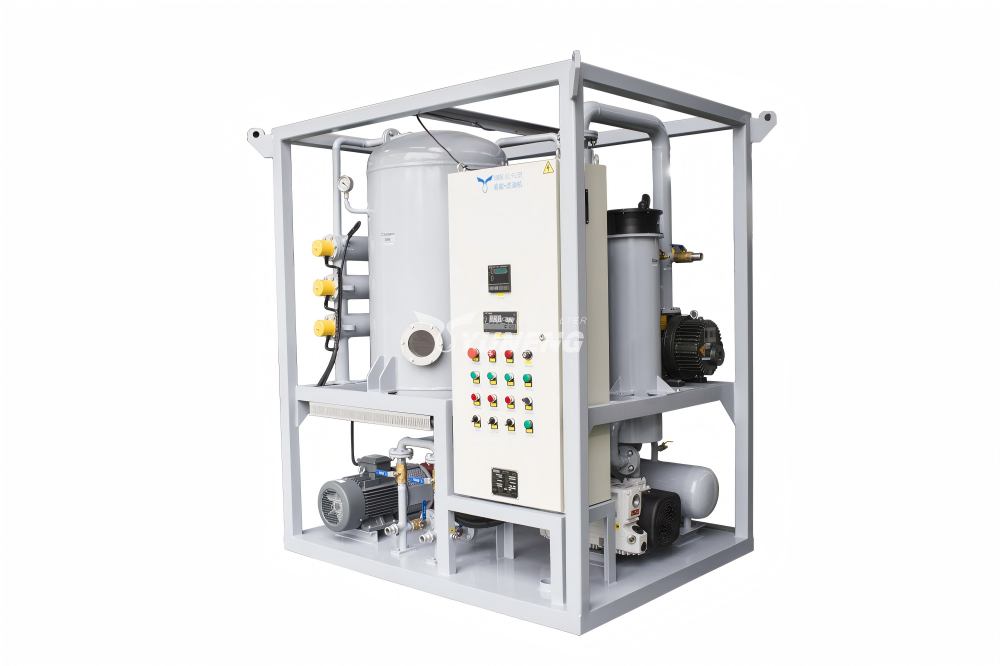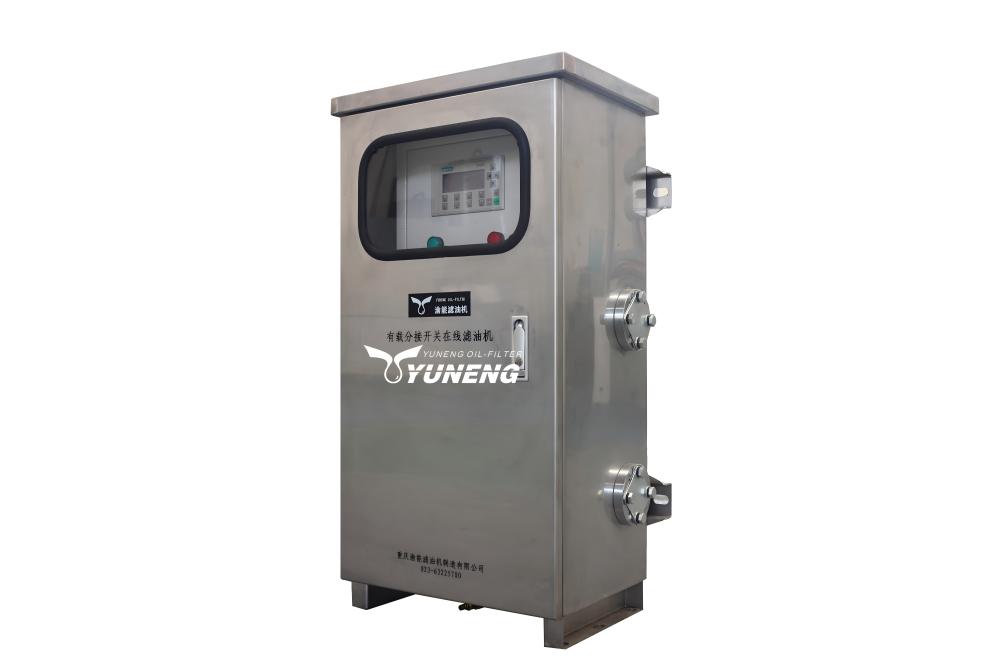
Choosing Transformer Oil Purifier Capacity: 3000 LPH or 6000 LPH?
Oil Purification & Vacuum Technology Expert
Table of Contents
As manufacturers of industrial oil purification plants, the engineering team at Chongqing YUNENG Oil Purifier Manufacturing Co., Ltd. regularly fields a crucial question from asset managers and substation engineers: “Should we invest in a 3000 LPH or a 6000 LPH vacuum transformer oil purifier?”
Choosing the wrong capacity can result in either unacceptable maintenance downtime during critical outages or unnecessary capital expenditure paired with severe power supply strain on-site. This content will break down the precise technical, logistical, and operational parameters to determine the exact flow rate your utility or facility requires.
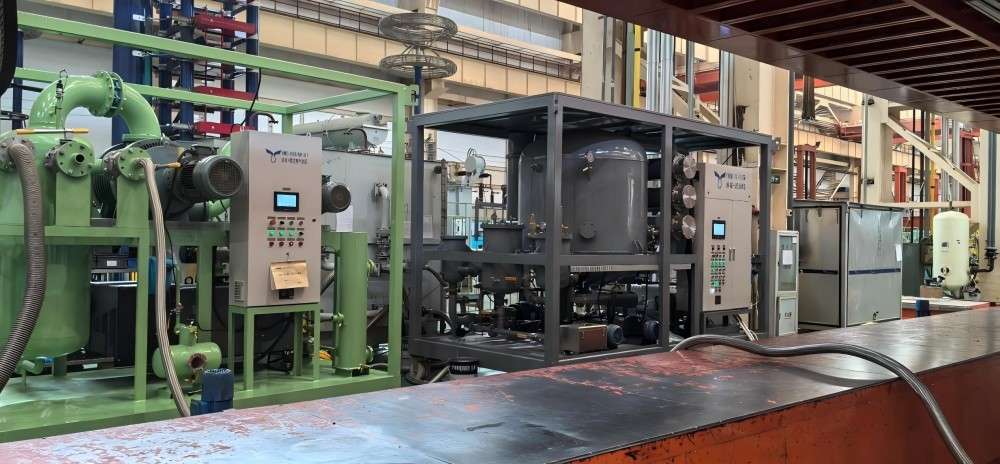
Technical Specification Comparison Between 3000LPH and 6000LPH Transformer Oil Purifier
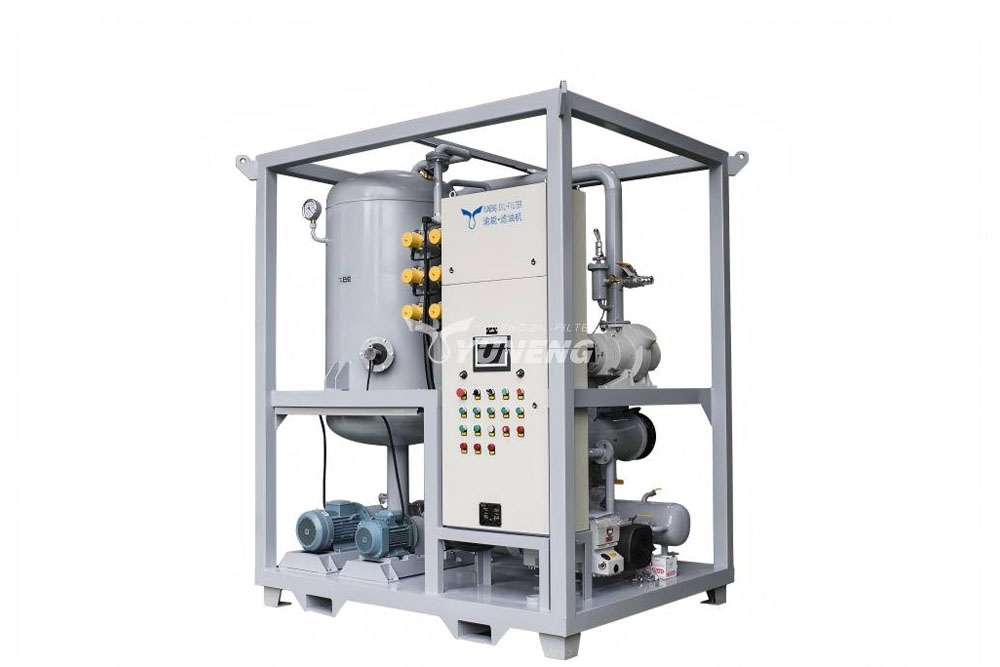
To establish an engineering baseline, let us analyze how flow capacity dictates the internal components, power distribution, and processing capabilities of our YUNENG ZJA series high-vacuum double-stage transformer oil purifiers.
| Technical Parameter | ZJA-3 (3000 LPH) | ZJA-6 (6000 LPH) |
| Volumetric Flow Rate | 3,000 Liters / Hour (50 L/min) | 6,000 Liters / Hour (100 L/min) |
| Recommended Transformer Rating | 1 MVA to 15 MVA (Distribution/Medium Power) | 15 MVA to 100+ MVA (Transmission/Main Step-Up) |
| Total Electrical Heating Power | 30 kW to 45 kW (Segmented Control) | 60 kW to 90 kW (Multi-Stage Interlocked) |
| Total System Power Consumption | ~38 kW to 55 kW | ~72 kW to 110 kW |
| Vacuum Pump Combination | Rotary Vane Backing Pump + Roots Blower | Heavy-Duty Double-Stage System (Roots + Multiple Vane) |
| Working Vacuum Level | ≤5Pa | ≤5 Pa |
| Treated Oil Breakdown Voltage (BDV) | ≥70 kV (IEC 60156) | ≥70kV |
| Residual Moisture Content | ≤5 ppm | ≤5 ppm |
| Residual Gas Content | ≤0.3% by volume | ≤0.3% by volume |
Total Oil Volume & The “Turnover Rate” Formula
From an operational engineering perspective, a purifier’s throughput must be scaled to the total oil volume of your largest asset. The universal industry benchmark dictates that a transformer oil purification plant should be capable of cycling the entire oil volume of the transformer 2 to 3 times within an 8-to-10-hour maintenance shift.
This multi-pass cycling is mandatory because vacuum degradation of moisture occurs via a dilution and equilibrium process; you are continuously mixing purified oil back into the transformer tank during offline or online recirculation.

When to Select the 3000 LPH (ZJA-3) Capacity:
If your substation network consists primarily of distribution transformers, industrial furnace transformers, or wind/solar farm step-up substations with oil capacities ranging between 5,000 and 15,000 liters, the 3000 LPH unit is your optimal choice.
- Example: A 10,000-liter transformer processed via a 3000 LPH unit will achieve 2 complete cycles in approximately 6.6 hours of net run time, fitting perfectly inside a standard one-day maintenance window.
When to Select the 6000 LPH (ZJA-6) Capacity:
For transmission-grade substations handling large power transformers (30 MVA to 100+ MVA), the oil volumes swell to 25,000 to 50,000 liters.
- Attempting to use a 3000 LPH machine on a 40,000-liter asset would require nearly 27 hours of continuous operation for 2 passes. These risks extended to expensive grid downtime.
- Upgrading to a 6000 LPH machine cuts that operational timeline down to 13.3 hours, ensuring that the transformer can be successfully degassed, dehydrated, and re-energized over a weekend shutdown.
Voltage Rating & Vacuum Degassing Kinetics
The required purity threshold of insulation oil scales exponentially with the operating voltage (kV) of the transformer. High-voltage (≥110 kV) and ultra-high-voltage (≥220 kV) networks require exceptionally low dissolved gas levels (DGA) and moisture levels to prevent dielectric breakdown across tight internal clearances.
The 3000 LPH Dynamics: Typically configured with a standard single-stage or balanced two-stage vacuum system, this plant is engineered to restore oil to excellent operational parameters (≥70kV). It is perfectly optimized for sub-transmission networks up to 66 kV.
The 6000 LPH Dynamics: Because 6000 LPH units are predominantly deployed on 110 kV, 220 kV, or 400 kV power transformers, YUNENG equips these plants with an advanced Double-Stage High-Vacuum System featuring a powerful Roots Blower backing pump combination. The increased volumetric displacement of the vacuum system ensures that even at a massive flow rate of 100 L/min, the oil film exposed within our three-dimensional flash evaporation chamber undergoes rapid, deep degasification. This brings residual water content down to ≤5 ppm and improves the breakdown voltage to ≥70 kV in a single pass under optimal thermal conditions.
Site Infrastructure Constraints: Heating Power and KVA Capacity
A critical mistake made during procurement is focusing entirely on the oil flow rate while ignoring the site’s available electrical infrastructure. Transformer oil purification relies on thermodynamics; vacuum distillation cannot occur efficiently unless the oil is heated to its kinetic window of 50℃ to 70 ℃.
The Thermal Challenge: To heat 6,000 liters of oil per hour by a temperature differential (ΔT) of 40 ℃ requires immense thermal energy. A 6000 LPH purifier requires between 60 kW and 90 kW of pure heating power, bringing the total machine startup load closer to 110 kW when factoring in the vacuum and discharge oil pumps.
The Engineering Solution: If you are working in remote regions, mountain-based wind farms, or older industrial plants where the auxiliary power panels or mobile diesel generators cannot output more than 60−70 kW of power, you must opt for the 3000 LPH system. The 3000 LPH unit features a scaled-down 30 kW or 45 kW heater, keeping the total maximum power demand around 45-55 kW, making it significantly more adaptable to restrictive field power supplies.
Mobility, Form Factor, and Enclosure Engineering
The physical footprint of the plant affects its transport logistics across different terrains.
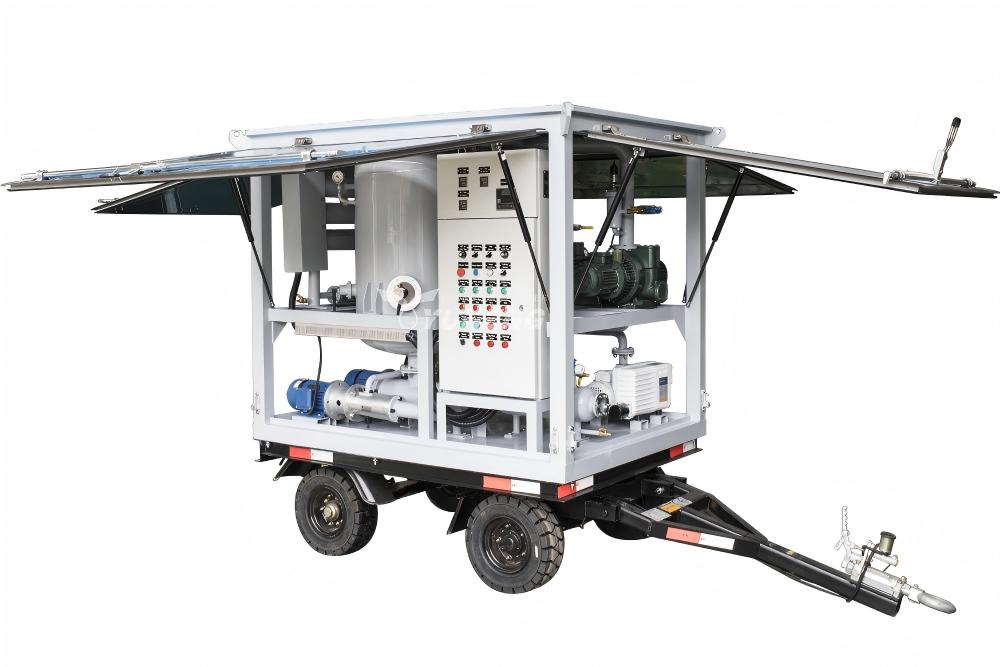
YUNENG ZJA-3 (3000 LPH): Offers a highly compact footprint. It can be easily integrated onto a light, single-axle mobile trailer or pushed manually inside indoor substation basements on heavy-duty casters. It is the preferred choice for service contractors who require quick, agile deployment across urban centers.
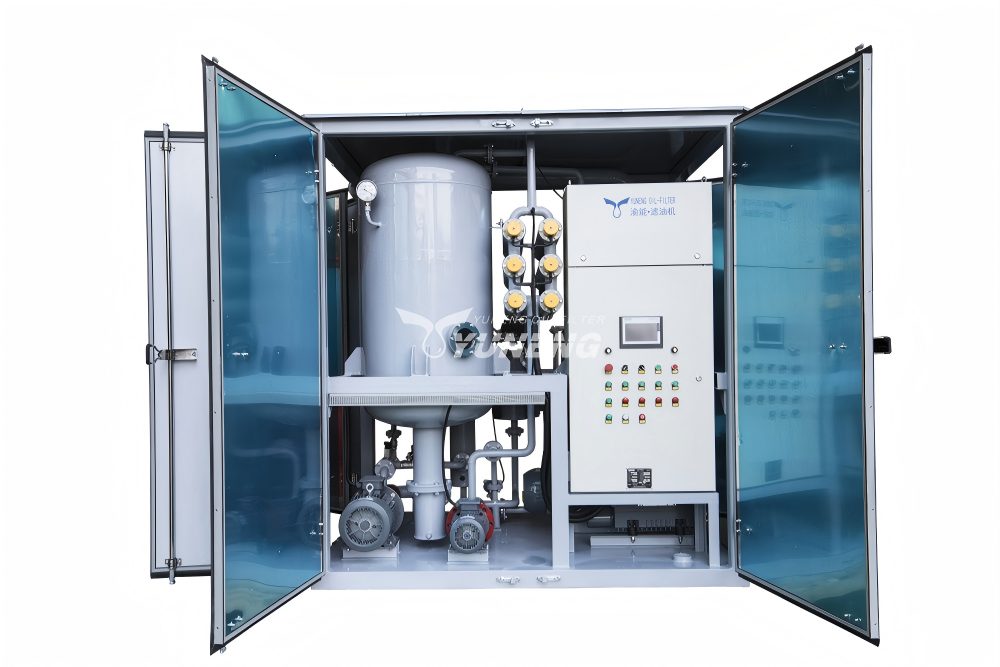
YUNENG ZJA-6 (6000 LPH): Due to the physical size of the dual vacuum chambers, larger condenser systems, and substantial multi-stage heating tanks, this system features a heavier chassis. It is ideally suited for dual-axle, road-worthy trailer mounting with a fully enclosed, weatherproof, and lockable canopy. It can also be built as a fixed, stationary plant next to large generator step-up (GSU) units at thermal, hydro, or nuclear power stations.
The Engineer’s Decision Checklist
To finalize your engineering specification review, choose your YUNENG plant based on the following criteria:
Select the YUNENG 3000 LPH (ZJA-3) if:
- Your maximum individual transformer oil volume is under 20,000 Liters.
- The operating voltages of your assets are primarily 66 kV or lower.
- Available on-site auxiliary power or generator capacities are limited to <60 kW.
- You require maximum agility, a small physical footprint, and easy indoor maneuvering.
Select the YUNENG 6000 LPH (ZJA-6) if:
- You routinely maintain large power transformers containing 25,000 to 50,000+ Liters of oil.
- Your grid assets operate at critical high-voltage transmission levels (110 kV to 400 kV).
- Your maintenance windows are extremely tight, demanding a high turnover rate to minimize outage penalties.
- The site power network or your mobile generation fleet can comfortably sustain a continuous load of >100 kW.
Technical Support & Customization
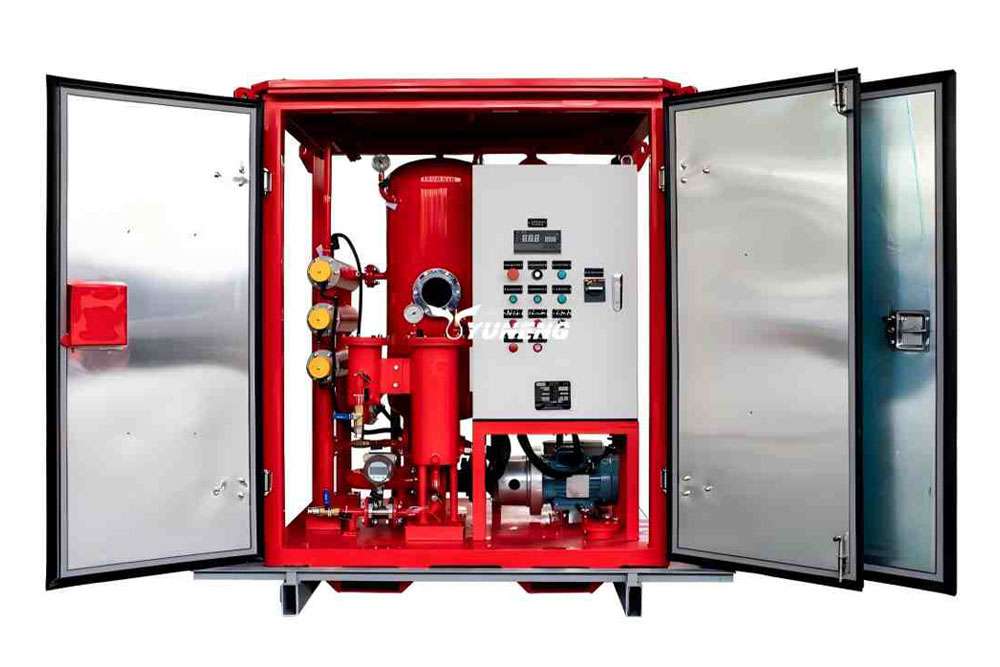
At Chongqing YUNENG, we recognize that every substation presents unique challenges. Our 3000 LPH and 6000 LPH units can be customised with PLC automated control systems, online moisture-in-oil sensors (PPM meters), digital flow meters, and fully explosion-proof (ATEX zone-rated) components for hazardous petrochemical environments.
For exact blueprints of equipment sizing, specific component datasheets, or a commercial quotation, please contact the YUNENG engineering sales office through official communication channels.
Frequently Asked Questions (FAQs)
Q1. Can I use a 3000 LPH oil purifier on a 50,000 litre transformer?
A1: Yes, but it is very inefficient. With a 3000 LPH machine, performing the industry standard 2 to 3 full passes on a 50,000-liter volume would have required more than 33 hours of continuous operation. For assets of this size, a 6000 LPH or 9000 LPH system is required to safely complete the process in a standard maintenance shutdown window.
Q2: Can YUNENG ZJA series do online (energised) filtration?
A2: Yes. Automated oil level synchronisation control system can also be provided for 3000 LPH and 6000 LPH models. The system uses electronic and infrared sensors, with the flow rates of the inlet and outlet perfectly balanced, so that oil level fluctuations inside the transformer are prevented, enabling the purification to be performed in a safe live-line way and under the proper regulatory protocols.
Q3: What is the highest inlet moisture that these purifiers can handle to get ≤3 ppm?
A3: YUNENG ZJA systems are designed to handle high initial water contamination levels up to 50 ppm to 100 ppm. However, for severe emulsification or free water, multi-pass recirculation or a dedicated coalescing pre-filter is necessary to efficiently reduce the residual moisture to the target specification of ≤3 ppm.