How to Verify Transformer Oil Filtration & Oil Regeneration Results After Treatment

Oil Purification & Vacuum Technology Expert
Table of Contents
Completing a transformer oil filtration cycle does not automatically mean the treatment has been successful. The effectiveness of filtration should be demonstrated through measurable changes in oil condition and compliance with the required quality criteria. This article explains how to verify transformer oil filtration results after treatment using a structured before-and-after testing approach. Rather than focusing on why transformer oil needs filtration, the emphasis here is on establishing a reliable baseline, repeating comparable tests, interpreting changes in BDV, moisture, particle contamination and other properties, and deciding whether the treated oil is ready for service or requires further treatment.
Why Post-Filtration Testing Is Essential
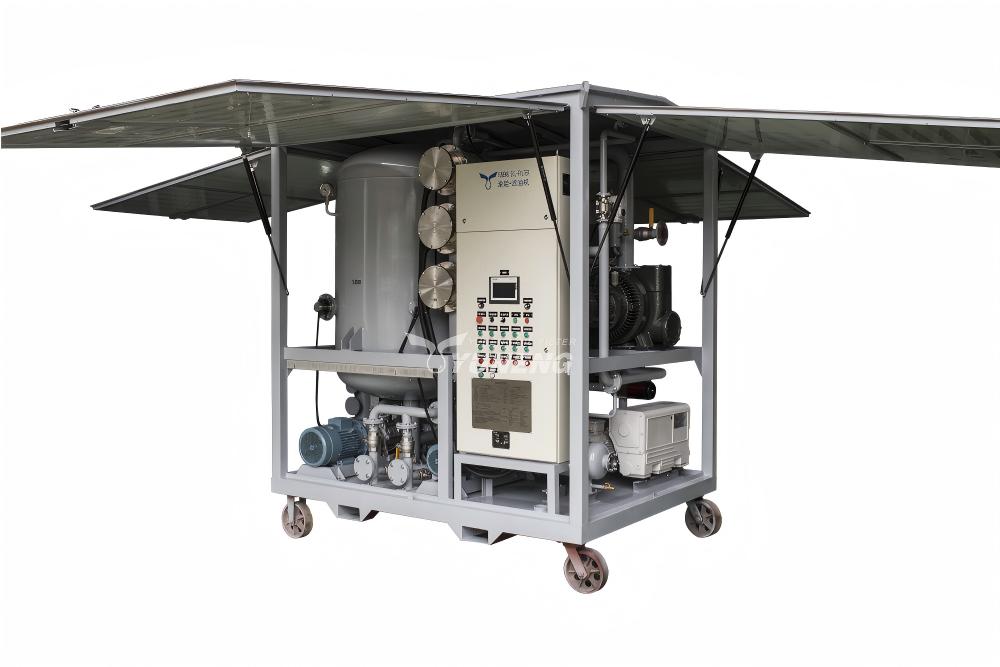
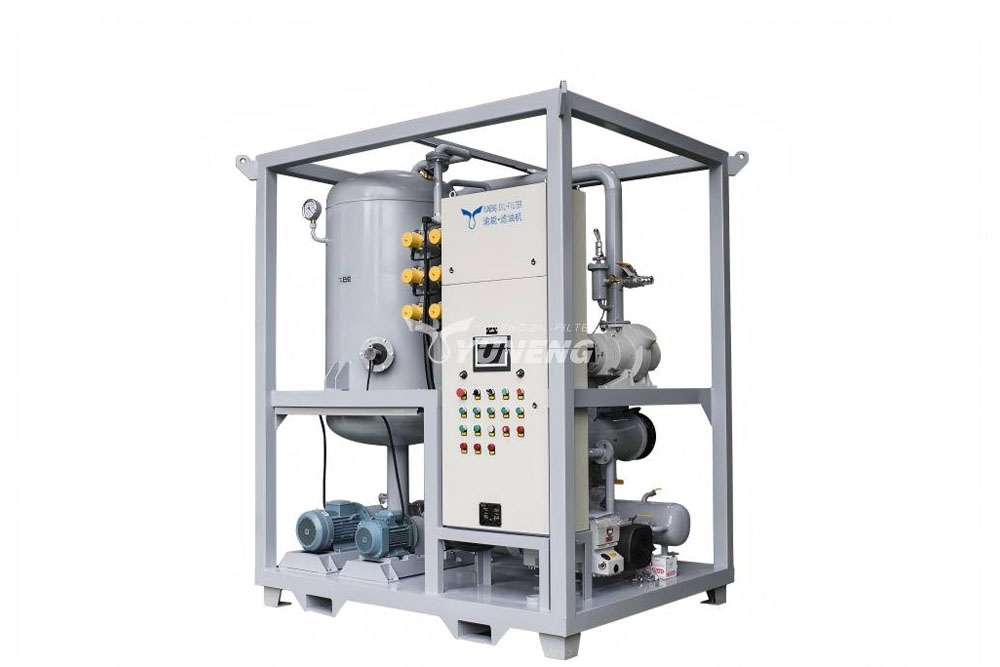
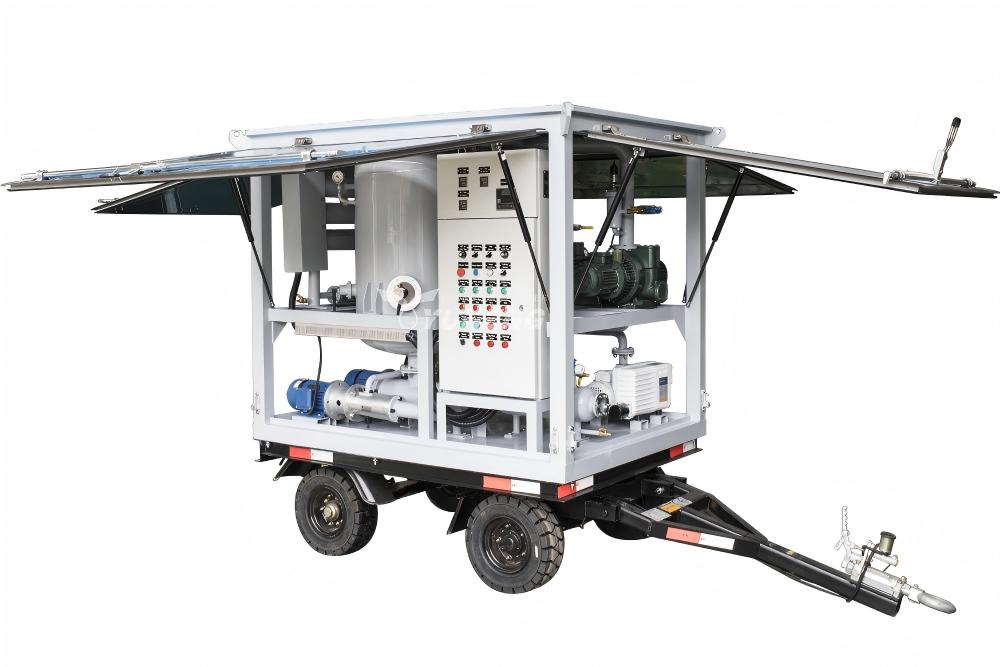
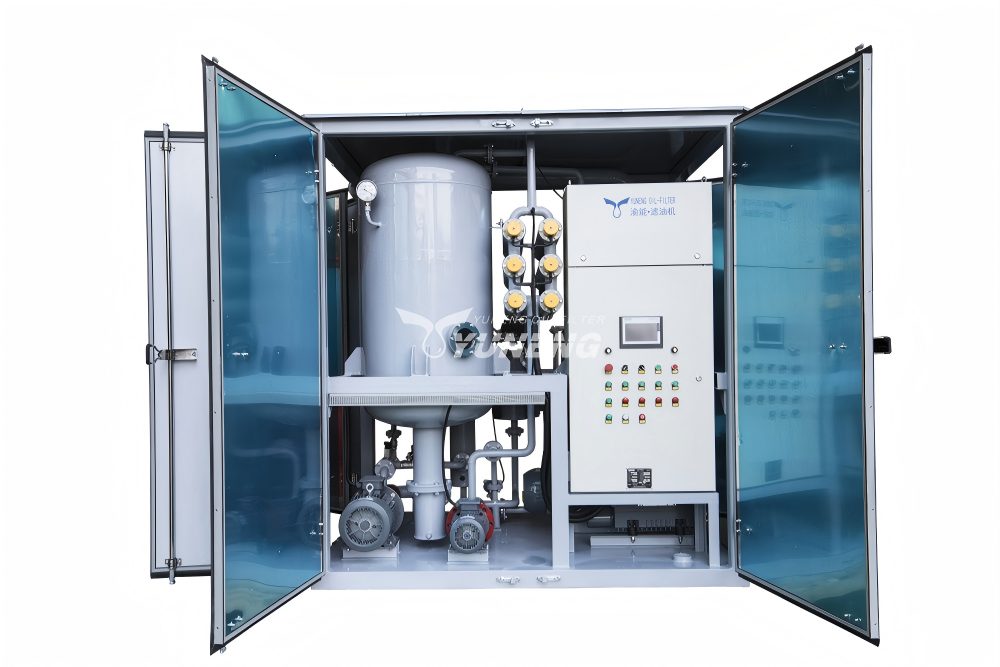
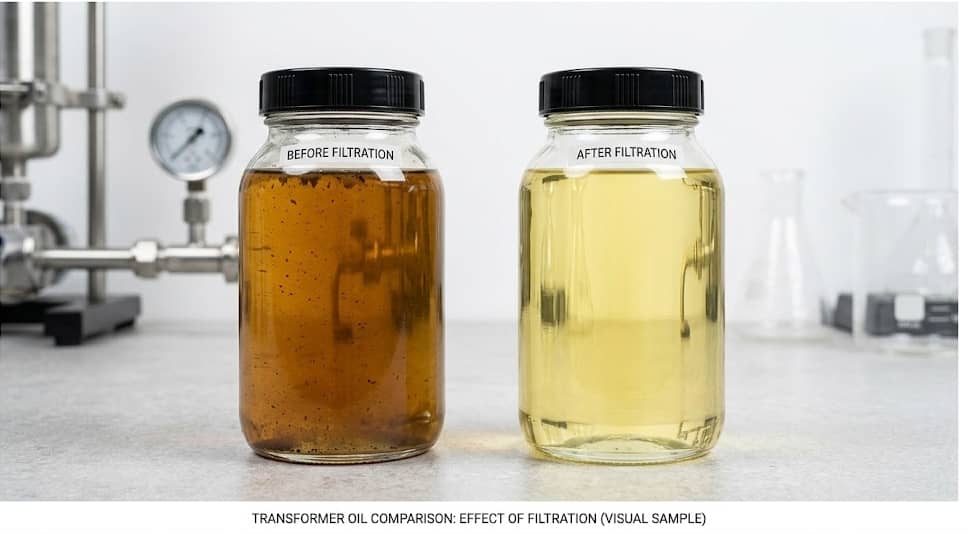
Transformer oil filtration is a treatment process, while oil testing provides the evidence needed to determine whether that treatment achieved its intended result. A transformer oil purifier may complete a specified operating cycle, but operating time alone cannot demonstrate that the oil has reached the required condition. The actual result depends on the initial contamination level, oil volume, equipment configuration, treatment conditions, sampling quality, and the type of contamination being addressed.
Post-filtration testing serves three main purposes:
- Confirm measurable improvement
- Determine whether the treated oil meets the required quality level
- Decide whether additional treatment is necessary
For example, suppose an oil sample has a low BDV and elevated moisture before treatment. After filtration, the BDV increases and moisture decreases substantially. This provides measurable evidence that the treatment has improved the oil’s physical and dielectric condition. However, improvement alone does not always mean the oil is ready for service. The final results must also be compared with the applicable specification or project acceptance requirement.
This creates an important distinction:
Treatment effectiveness is measured by improvement; treatment acceptance is determined by whether the final condition meets the required criteria.
Therefore, the verification process should not end when the filtration machine stops. It should continue through representative sampling, laboratory testing, data comparison, and final acceptance.
Establish a Reliable Pre-Treatment Baseline
A meaningful post-filtration assessment begins before the purifier is started. The pre-treatment oil sample establishes the baseline against which the treated oil will be evaluated. Without a reliable baseline, it becomes difficult to determine how much the oil condition actually changed.
The baseline should include the tests relevant to the oil’s condition and the purpose of treatment. Depending on the application, this may include:
- Breakdown voltage (BDV)
- Moisture content
- Particle contamination
- Dielectric dissipation factor
- Resistivity
- Acidity or TAN
- Interfacial tension
- Appearance and color
- DGA, when fault diagnosis or gas condition is relevant
Sampling consistency matters
The pre- and post-treatment samples should be collected using comparable procedures. Engineers should pay attention to:
- Sampling location
- Sampling container cleanliness
- Sampling equipment
- Sample handling
- Oil temperature
- Exposure to ambient air
- Time between treatment and testing
For example, comparing a carefully collected pre-treatment sample with a poorly handled post-treatment sample can produce misleading conclusions even if the filtration process itself was effective. The objective is therefore not simply to collect two samples, but to create two comparable measurement points.
A useful record should include:
| Item | Before Treatment | After Treatment |
| Sampling point | Recorded | Same or equivalent |
| Oil temperature | Recorded | Recorded |
| BDV | Test result | Test result |
| Moisture | Test result | Test result |
| Particle count | Test result | Test result |
| Other relevant tests | Test result | Test result |
| Treatment conditions | — | Recorded |
This baseline approach makes the verification process more transparent and repeatable.

Which Oil Test Results Should Be Compared After Filtration?
Not every oil property responds in the same way to filtration. The most useful verification strategy is to select indicators that correspond to the treatment objective.
1. Breakdown Voltage
BDV provides information about the dielectric strength of the treated oil. An increase after treatment can indicate improved electrical cleanliness, particularly when moisture or suspended contaminants were contributing to the original deterioration.
However, BDV should be interpreted as part of the overall test set rather than as the only acceptance parameter. YUNENG’s existing content already addresses the specific reasons why BDV may remain low after filtration, so this article focuses instead on using BDV as a before-and-after verification parameter.
2. Moisture Content
A reduction in moisture provides direct evidence that the treatment has removed water from the oil when dehydration is part of the filtration process. The comparison should use the same testing method and appropriate sample handling conditions.
3. Particle Contamination
Particle testing is particularly useful when the treatment objective is to improve oil cleanliness. A meaningful reduction in particle concentration indicates that the filtration stages have removed a portion of the suspended solid contamination.
4. Dielectric Dissipation Factor and Resistivity
These parameters can provide additional information about the electrical condition of the oil. They are useful when engineers want to determine whether the improvement extends beyond a simple increase in BDV.
5. Acidity, IFT and Other Chemical Indicators
These parameters should be treated differently. If the main objective is physical filtration, a limited change in TAN or IFT does not necessarily indicate filtration failure. Chemical aging and oxidation are different forms of oil deterioration and may require regeneration rather than conventional filtration. This distinction prevents engineers from using inappropriate indicators to judge a treatment process.
How to Interpret BDV, Moisture, and Particle Results After Filtration
For most filtration verification programs, BDV, moisture, and particle contamination provide a practical core dataset. The key is to evaluate the direction and magnitude of change, rather than looking at the final number in isolation.
1. BDV: Did dielectric strength improve?
If BDV increases consistently after treatment, this indicates an improvement in dielectric performance. For example:
- Before: 42 kV
- After: 71 kV
The numerical improvement is significant, but the final value should still be evaluated against the applicable project or equipment requirement. A larger increase is not automatically proof of a better process if the sampling conditions or testing methods were inconsistent.
2. Moisture: Was water contamination reduced?
For a process that includes vacuum dehydration, moisture should generally decrease after treatment. For example:
- Before: 35 ppm
- After: 5 ppm
This demonstrates measurable moisture reduction. However, engineers should avoid establishing a universal pass/fail moisture value without considering transformer voltage class, oil type, operating condition, applicable standards, and manufacturer requirements.
3. Particle Count: Did oil cleanliness improve?
Particle testing can provide a more direct measurement of filtration performance than visual inspection. If particle levels decline after treatment, the result provides evidence that suspended solid contamination has been physically removed.
A useful comparison should record:
- Particle concentration
- Relevant particle-size ranges
- Sampling conditions
- Testing method
- Before/after difference
The three indicators can then be evaluated together.
For example: BDV ↑ + Moisture ↓ + Particle Count ↓ is a strong indication that the treatment has improved the physical and dielectric condition of the oil. The important point is that verification should be based on multiple consistent measurements, not a single improved value.
How to Evaluate Filtration & Regeneration Results Against Oil Quality Requirements
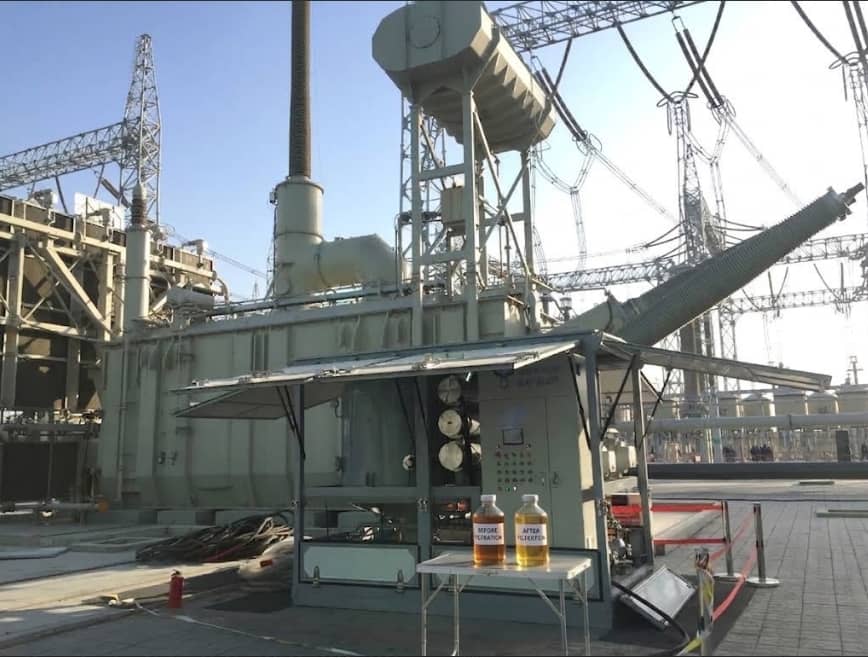
A successful treatment should satisfy two different questions:
Question 1: Did the oil improve?
This is determined by comparing pre-treatment and post-treatment results.
Question 2: Is the final oil condition acceptable?
This is determined by comparing the post-treatment results with the applicable quality requirements.
These two questions should not be confused. For example:
| Before | After | Interpretation |
| Poor | Improved but still outside target | Additional treatment may be required |
| Poor | Improved and within target | Treatment may be accepted |
| Poor | Little change | Investigate treatment effectiveness |
| Mixed | Some parameters improve, others remain abnormal | Review treatment objective and oil condition |
The acceptance criteria may depend on:
- Transformer voltage class
- Oil type
- New oil or in-service oil
- Commissioning requirements
- Maintenance requirements
- Transformer manufacturer’s specifications
- Applicable IEC, ASTM, IEEE or project requirements
YUNENG’s existing maintenance-decision content already discusses the broader choice between filtration, regeneration and replacement. Click here to read more.
What If Transformer Oil Quality Does Not Improve After Filtration?
When post-treatment results show insufficient improvement, the first step should not be to automatically run the purifier again. The result should be reviewed systematically.
First, verify the test result
Check whether:
- The correct test method was used
- The test equipment was properly prepared
- The sample container was clean
- The sample was representative
- The pre- and post-treatment samples were comparable
Second, review the treatment objective
A transformer oil filtration system is primarily intended to address contaminants that its treatment stages are designed to remove. For example, if the original problem is particulate contamination, particle reduction should be an important measure of success.
If the oil’s dominant problem is chemical aging, simply extending mechanical filtration may not produce a proportional improvement.
Third, compare the individual indicators
Consider whether:
- BDV improved
- Moisture decreased
- Particle contamination decreased
- Chemical indicators remained relatively unchanged
- The final results reached the required target
A situation in which BDV and moisture improve while TAN remains unchanged should not automatically be classified as filtration failure. It may simply indicate that the treatment successfully addressed physical contamination while chemical aging remains.
Fourth, determine the next action
The next step may be:
- Continue treatment
- Adjust the treatment process
- Conduct additional testing
- Evaluate regeneration
- Investigate the transformer or oil system
- Consider replacement in severe cases
The decision should be based on the remaining abnormal indicators, rather than the assumption that more filtration is always the answer.
How Many Times Should Transformer Oil Be Retested After Filtration?
There is no universal number of post-treatment tests that applies to every transformer. The appropriate testing frequency depends on the purpose of the treatment, transformer condition, oil volume, initial contamination, and applicable acceptance requirements.
A practical verification program can include several stages.
1. Initial Post-Treatment Test
This test determines whether the filtration process produced the expected improvement. The key indicators should be compared directly with the pre-treatment baseline.
2. Stabilization or Circulation Test
Where required by the operating procedure, the oil may be circulated or allowed to stabilize before another representative sample is taken. This is particularly useful when the treatment involves large oil volumes or when the oil has been circulated through the transformer and associated equipment.
3. Final Acceptance Test
The final test should confirm that the oil meets the applicable requirements before the transformer is returned to service or the maintenance activity is formally closed.
The important principle is consistency: Use comparable sampling and testing procedures each time so that changes in the results reflect oil condition rather than differences in measurement technique.
Repeated testing should also have a purpose. The goal is not to produce more laboratory data, but to establish sufficient evidence that the treated oil has reached a stable and acceptable condition.
Transformer Oil Filtration Verification Checklist
A structured checklist can make post-filtration verification easier for maintenance teams and service engineers.
Step 1 — Record the Pre-Treatment Baseline
Document the initial:
- BDV
- Moisture
- Particle contamination
- Relevant dielectric properties
- Other condition indicators required for the application
Step 2 — Record the Treatment Conditions
Document the relevant operating information, such as:
- Oil volume
- Treatment duration
- Flow rate
- Oil temperature
- Vacuum operating condition
- Number of circulation cycles
- Filter configuration
These records provide useful context when interpreting the final results.
Step 3 — Collect a Representative Post-Treatment Sample
Use a controlled sampling procedure and avoid introducing new contamination during collection.
Step 4 — Repeat the Relevant Tests
Use the same or equivalent testing methods used for the baseline wherever practical.
Step 5 — Compare Before and After Results
Focus on:
- What changed?
- How much did it change?
- Is the change consistent with the treatment objective?
Step 6 — Compare the Final Results With the Applicable Requirements
Determine whether the treated oil is suitable for its intended service condition.
Step 7 — Decide the Final Action
Use the following logic:
- Results improved + requirements met → Treatment can be accepted
- Results improved + requirements not met → Additional treatment or investigation
- Little measurable improvement → Review sampling, testing and treatment conditions
- Physical indicators improve but chemical degradation remains → Evaluate whether regeneration is more appropriate
This approach turns filtration verification from a subjective judgment into a documented engineering process.
FAQs
Q1. Should improved test results always be considered successful filtration?
No. Improvement shows that the treatment had an effect, but the final oil condition must also meet the applicable quality requirements for the transformer and its operating condition.
Q2. Why should pre-filtration and post-filtration oil samples be tested under comparable conditions?
Consistent sampling locations, containers, handling, and test methods reduce measurement differences and make the before-and-after results more reliable.
Q3. What should be done if transformer oil improves but still fails the required quality level?
Review the filtration conditions and test results, then determine whether additional filtration, further investigation, or regeneration is more appropriate based on the remaining contamination or oil degradation.
Q4. How many times should transformer oil be tested after filtration?
At minimum, establish a pre-treatment baseline and perform a post-treatment test. A further verification test may be needed after circulation or stabilization before final acceptance.