Why Is Transformer Oil BDV Still Low After Filtration?

Oil Purification & Vacuum Technology Expert
Table of Contents
Dielectric breakdown voltage (BDV) is the ultimate test of transformer oil quality in power utility operations and heavy industrial electrical maintenance. If electrical testing shows poor BDV, standard operating procedure is to immediately purify the oil to restore dielectric strength and protect critical high-voltage assets. But it is a common and frustrating situation for electrical engineers and maintenance technicians when the transformer oil BDV is still low after the filtration cycle is over and it does not meet the required operational thresholds.
This phenomenon often leads to misplaced skepticism regarding the effectiveness of oil purification equipment. In reality, filtration does not always guarantee an immediate or significant BDV improvement because BDV is governed by multiple interacting physical and chemical variables—including dissolved moisture, microscopic suspended particles, dissolved gases, and advanced oil aging byproducts. When transformer oil BDV fails to recover after treatment, it is a definitive diagnostic signal that the actual contamination source has not been fully addressed by the specific purification method applied.
The key to solving this engineering challenge is to move beyond superficial ‘plug-and-play’ filtration habits. This comprehensive guide reviews the reasons why transformer oil BDV remains low after filtration, establishes a solid diagnostic approach, offers practical corrective actions, and clarifies exactly when standard filtration should be replaced by advanced oil regeneration.
What Does Low Transformer Oil BDV Mean?
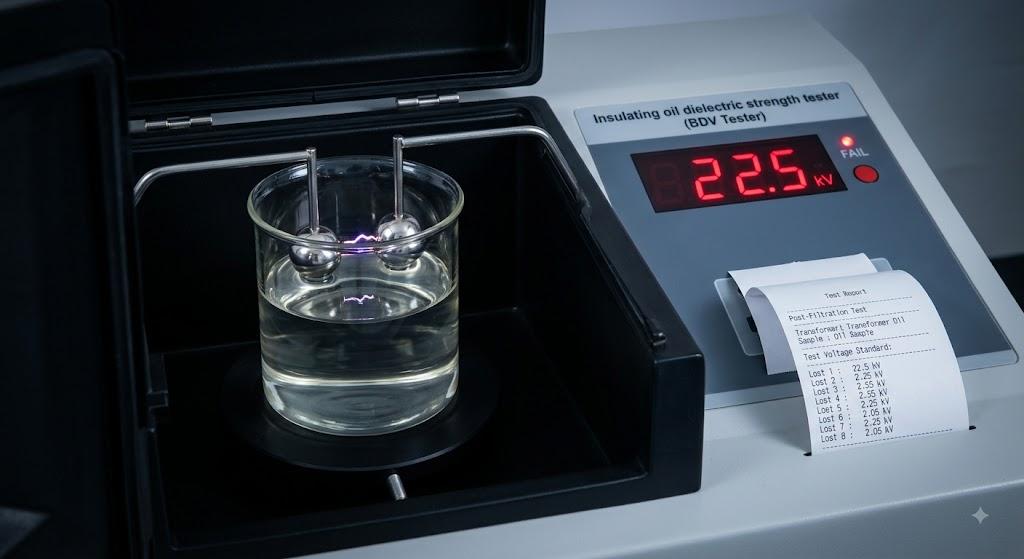
Breakdown Voltage (BDV) measures the maximum electrical stress insulating oil can withstand under specified test conditions without electrical arc-over or structural failure. In high-voltage power transformers operating under immense thermal and electrical loads, oil dielectric strength is the primary defense against internal short circuits, partial discharges, and catastrophic equipment failure. A high BDV ensures that the insulating liquid maintains its integrity under transient surges and continuous operational stress.
If the BDV is less than acceptable IEC 60422 guidelines and applicable utility specifications, it means that dielectric barriers in the oil have been compromised. The main factors which cause a decrease in the transformer oil BDV are:
- Moisture: Both dissolved and free water molecules drastically reduce dielectric strength by aligning in electric fields and facilitating conductive pathways.
- Suspended Particles: Metallic dust, carbon particles, and dust act as bridges for electrical arcs across electrode gaps during testing.
- Dissolved Gases: Hydrogen, acetylene, and moisture-laden vapor pockets lower the ionization threshold of the liquid medium.
- Fibers and Other Contaminants: Cellulose fibers shed from solid insulation absorb moisture and dramatically accelerate dielectric breakdown.
- Oil Aging and Oxidation Products: Polar compounds, organic acids, sludge, and soluble decay products increase conductivity and polarity.
It is vital that BDV never be assessed in isolation. An oil sample may have sufficient BDV under certain laboratory conditions, but may have high acidity, high dissolved moisture or advanced soluble oxidation by-products that will compromise long-term transformer reliability. For a full condition assessment, correlation of BDV with moisture, Interfacial Tension (IFT), Total Acid Number (TAN) and Dissolved Gas Analysis (DGA) is required.
Why Is Transformer Oil BDV Still Low After Filtration?
When post-treatment oil analysis reveals that BDV remains inadequate, the underlying cause generally falls into one of nine distinct engineering categories. Identifying the exact bottleneck is essential for corrective action.
1. Moisture Has Not Been Completely Removed
The water in the transformer oil exists in two states: free water (droplets and suspended emulsions) and dissolved water (moisture molecules absorbed directly into the hydrocarbon matrix). Simple particulate filtration or coarse media strainers are effective at capturing free water droplets, but not at removing dissolved moisture with conventional particle filtration.
The phase boundary from liquid oil to vapour requires fine thermal energy and high vacuum conditions for dissolved water to pass through. If the purification system does not have enough vacuum dehydration ability or temperature control, the water remains dissolved in the oil and continues to suppress BDV even after several passes.
2. The Filter Cannot Remove Dissolved Contaminants
There is a fundamental operating difference between particle filtration and the removal of molecular-level contamination. Standard particulate filters—even those rated down to 1 micron or sub-micron levels—are designed solely to capture solid suspended matter.
They cannot remove dissolved organic acids, soluble varnish precursors, polar oil degradation byproducts, or microscopic colloidal contaminants. Very fine particulate filtration does not automatically provide better dehydration or chemical purification. If polar decay products remain suspended or dissolved in the fluid, they absorb moisture and promote ionic conduction, keeping BDV depressed at all times.
3. The Oil Purifier Is Operating at the Wrong Temperature
Purification is a critical operational variable in oil temperature. Higher temperature means lower viscosity, which directly increases the moisture diffusion and water separation rate under vacuum.
- Risks of insufficient heating: When oil is processed at low ambient temperatures, high viscosity traps moisture within the fluid matrix and vacuum degassing and dehydration are inefficient.
- Risks of over-heating: In contrast, over-heating oil (generally above 65°C to 70°C) can accelerate thermal oxidation, damage additive packages and create more polar contaminants.
It is critical to keep the temperature inside the vacuum chamber to a moderate and carefully controlled level, typically controlled within 45°C–60°C depending on oil condition and treatment objectives., such that maximum moisture can be liberated through the vacuum, but without damaging the fluid.
4. The Vacuum Level Is Insufficient
Vacuum dehydration and degassing work by reducing the ambient pressure above the surface of the oil. This lowers the boiling point of water and allows for rapid evaporation at lower operating temperatures.
If the vacuum pump of the purifier is worn out, contaminated with moisture, or is working with reduced volumetric displacement, the effective chamber vacuum will be insufficient. Air leakage through bad flange gaskets, loose pipe fittings, or bad valve seals will destroy the vacuum gradient. Operators have to watch the vacuum gauges constantly during operation to keep the deep-vacuum conditions (usually below 50 Pa or 0.5 mbar).
5. Filtration Flow Rate Is Too High
A common misconception among field operators is that a higher flow rate (Liters Per Hour – LPH) equates to superior cleaning efficiency. In practice, higher throughput often reduces treatment dwell time.
Water molecules and dissolved gases will not have sufficient residence time to flash off into the vacuum space, and particulate media will not be able to effectively capture fine contaminants, if the oil rushes through the vacuum dehydration chamber and filter vessels too quickly. Flow rates must be carefully matched to oil viscosity, contamination severity and equipment design specifications.
6. The Oil Is Re-Contaminated After Filtration
Transformer oil is highly hygroscopic and takes up the ambient moisture from the surrounding air. BDV will drop almost immediately after treatment if freshly purified oil is pumped into dirty storage tanks, dirty hoses or contaminated pipelines, or if the containers are left open and exposed to humid atmospheric conditions.
Furthermore, improper sampling techniques—such as drawing samples through wet sample valves or using non-certified glass bottles—frequently yield deceptively low BDV test results even when the bulk oil inside the transformer is clean.
7. The Transformer Itself Is Still Introducing Moisture
Treating only the circulating oil while ignoring the transformer internal structure is a futile exercise. A massive quantity of moisture is typically trapped within the solid cellulose paper and pressboard insulation inside the transformer tank.
Paper and oil keep a dynamic balance of moisture. Moisture leaching out of the damp paper insulation is rapidly absorbed by the 100% dry oil circulated through the transformer until equilibrium is re-established. Thereafter, oil BDV will fall shortly after the treatment without a thorough hot-oil circulation, drying, or vapour phase processing of the transformer.
8. The Transformer Oil Is Severely Aged
Organic acids, peroxides, asphaltics and sludge are produced as the insulating oil ages. High acidity, low Interfacial Tension ( IFT ), heavy sludge accumulation. Chemical degradation of hydrocarbon molecules themselves.
Filtration and vacuum dehydration are physical separation processes only. They cannot change chemical composition or reverse molecular ageing. The chemical deterioration of the oil leads to oil characteristics that cannot be reinstated by physical filtration alone and hence requires oil regeneration by experts.
9. The Filtration Equipment Is Not Properly Selected or Maintained
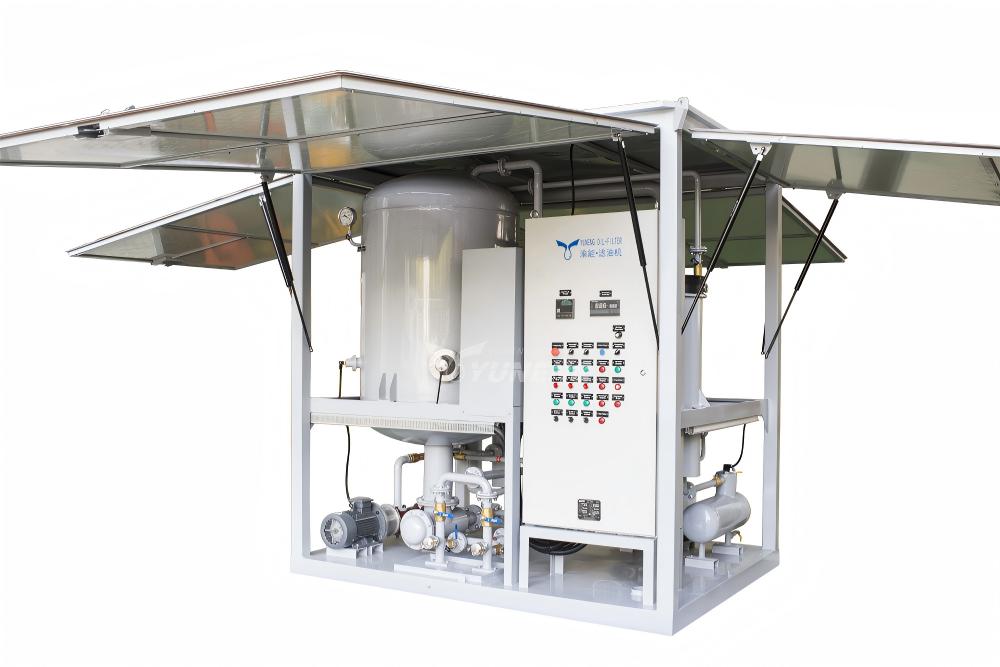
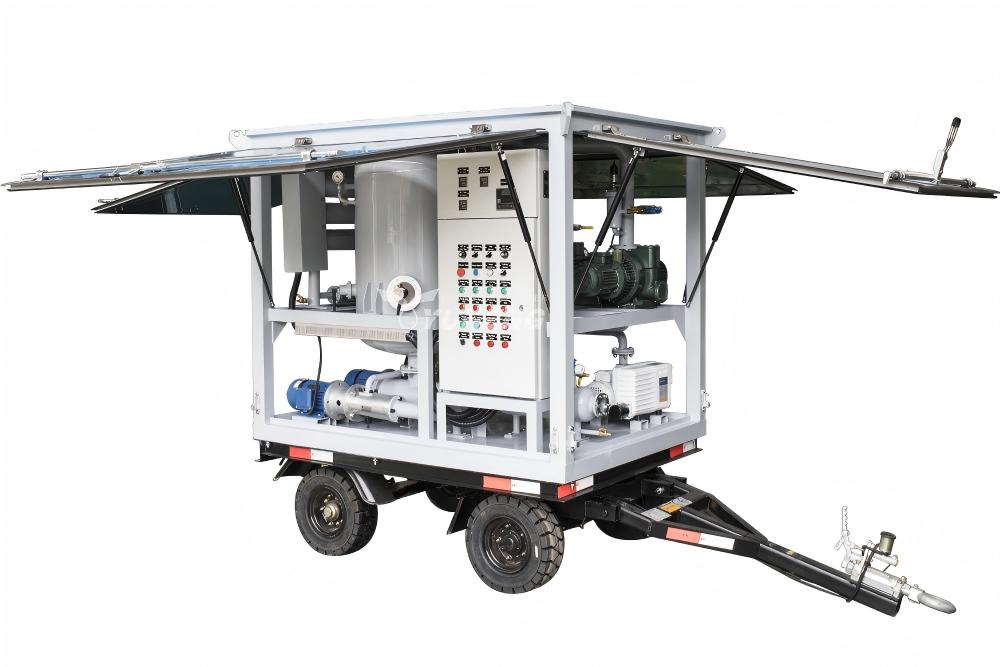
The capabilities of the oil purification machinery dictate the quality of the output. Using a basic portable cart equipped only with coarse particulate filter bags will never resolve a moisture or dissolved gas issue.
Saturated filter elements, damaged internal coalescer stages, choked vacuum traps, and worn pump seals severely degrade equipment performance. Utilizing a high-performance double-stage vacuum transformer oil purifier equipped with multi-stage precision filtration and advanced molecular degassing columns is essential for demanding industrial applications.
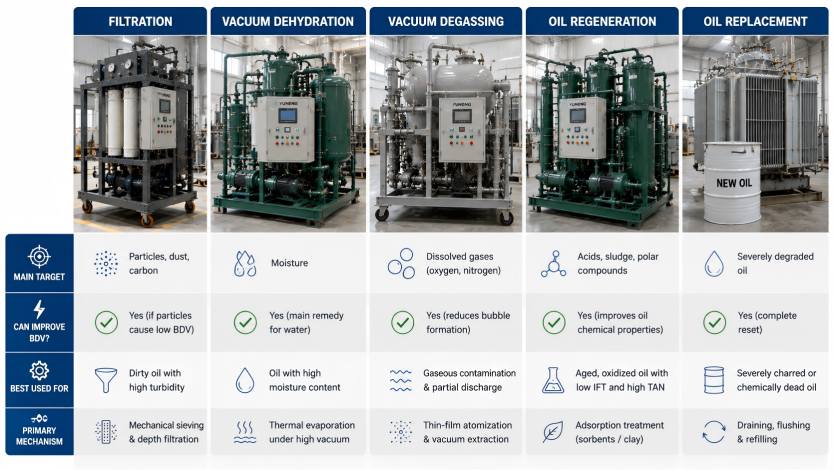
Filtration vs. Vacuum Dehydration vs. Regeneration
To avoid the widespread misconception that filtration equals complete transformer oil purification, maintenance engineers must understand the distinct functional roles of different treatment technologies. The comparison matrix below outlines their specific targets and capabilities:
| Treatment Method | Main Target | Can Improve BDV? | Best Used For | Primary Mechanism |
| Particle Filtration | Solid suspended particles, dust, carbon | Yes (if particles cause low BDV) | Dirty oil with high turbidity | Mechanical sieving & depth filtration |
| Vacuum Dehydration | Free and dissolved moisture | Yes (primary remedy for water) | Oil with high moisture content | Thermal evaporation under high vacuum |
| Vacuum Degassing | Dissolved oxygen, nitrogen, and combustible gases | Yes (reduces bubble formation) | Gaseous contamination & partial discharge | Thin-film atomization & vacuum extraction |
| Oil Regeneration | Acids, sludge, polar compounds, soluble decay products | Yes (improves oil chemical properties) | Aged, oxidized oil with low IFT and high TAN | Adsorption treatment using Fuller’s earth/special sorbents |
| Oil Replacement | Irrecoverably degraded oil & carbonized fluid | Yes (complete reset) | Severely charred or chemically dead oil | Total draining, flushing, and refilling |
How to Diagnose Low BDV After Transformer Oil Filtration
If post-treatment testing indicates that BDV has not met target specifications, engineers should follow a systematic, step-by-step diagnostic sequence to isolate the failure mechanism rather than blindly repeating treatment cycles:
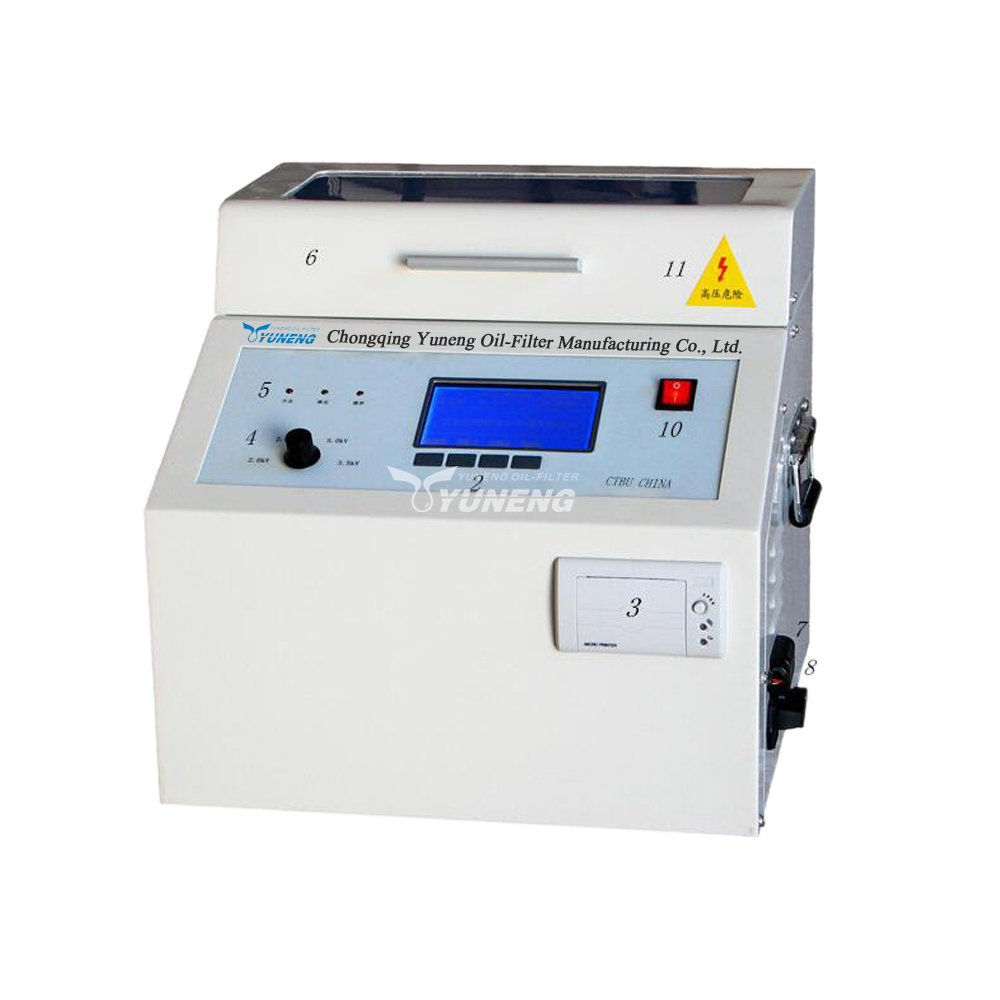
Step 1: Retest BDV with Calibrated Equipment: Verify that the low BDV reading is not an artifact of testing error, contaminated test cell electrodes, or incorrect gap spacing (standard ASTM D1816 / IEC 60156 protocols).
Step 2: Test Moisture Content (ppm): Quantify dissolved water using Karl Fischer titration (ASTM D1533). If moisture exceeds 15–25 ppm depending on voltage class, dehydration is incomplete.
Step 3: Check Particle Contamination Levels: Perform particle count analysis (ISO 4406) to determine if fine suspended debris or carbon fines remain in suspension.
Step 4: Check Acidity / Total Acid Number (TAN): Measure TAN (ASTM D974). An acid number exceeding 0.1 mg KOH/g indicates chemical aging that filtration cannot fix.
Step 5: Check Interfacial Tension (IFT): Measure IFT (ASTM D971). Low IFT (< 25 mN/m) signals high concentrations of polar soluble contaminants and oil degradation.
Step 6: Review Dissolved Gas Analysis (DGA): Analyze dissolved fault gases to ensure electrical or thermal faults inside the transformer are not actively generating combustible gases and carbon.
Step 7: Inspect Purification Equipment & Operating Parameters: Audit vacuum levels, heater output temperatures, flow rates, filter differential pressures, and seal integrity.
Step 8: Determine Corrective Intervention: Based on diagnostic findings, select the appropriate remediation path: extended vacuum dehydration, fine filtration, or full oil regeneration.
What Should You Check on the Transformer Oil Purifier?
To assist engineers in auditing equipment performance and demonstrating rigorous engineering expertise without turning promotional content into an overt sales pitch, the following practical checklist outlines key operational parameters to inspect on any transformer oil purifier:
- Oil Inlet Temperature: Ensure incoming oil is within optimal operating range (typically 40°C–50°C).
- Outlet Temperature: Verify heater performance and ensure oil exiting the heater chamber is maintained at 50°C–60°C without localized overheating.
- Vacuum Level in Chamber: Confirm that the working vacuum is maintained below 50 Pa (0.5 mbar) for effective moisture flash-off.
- Oil Flow Rate (LPH): Check that actual throughput matches equipment rating and is not excessively high for heavily contaminated oil.
- Filter Differential Pressure (DP): Monitor inlet and outlet pressure gauges across particle filter stages; high DP indicates saturated filter elements requiring replacement.
- Filter Element Condition: Inspect primary and secondary filter cartridges for clogging, rupture, or bypass.
- Vacuum Pump Performance: Check vacuum pump oil clarity, gas ballast operation, and pumping speed.
- System Air Leakage: Inspect sight glasses, valve stems, flange connections, and hose clamps for air ingress.
- Heating System Interlocks: Verify that low-flow heating protection cut-offs are functioning correctly to prevent oil scorching.
- Oil Circulation Time & Passes: Calculate total volume turnover to ensure sufficient cumulative passes through the dehydration chamber.
- Final BDV & Moisture Verification: Take mid-stream and post-treatment samples to validate actual quality improvement.
How to Improve Transformer Oil BDV After Filtration
When troubleshooting persistently low BDV, implementing targeted operational enhancements will dramatically improve treatment efficacy:
1. Optimize Vacuum Dehydration
Ensure the vacuum system achieves deep-vacuum conditions. Maintain oil temperature strictly between 50°C and 60°C to facilitate rapid moisture migration, and extend treatment duration by operating in a closed-loop recirculation mode until moisture levels drop below 10 ppm.
2. Reduce Re-Contamination Risks
Utilize hermetically sealed stainless steel storage tanks and dedicated, dry, clean hoses. Minimize oil exposure to humid ambient air by blanketing storage headspace with dry nitrogen where applicable.
3. Increase Treatment Cycles When Necessary
Rather than attempting to force high volumes of oil through a purifier in a single pass, configure the system for multiple continuous passes. Repeated circulation through a well-tuned vacuum dehydration and fine filtration circuit yields superior dielectric results.
4. Consider Regeneration for Chemically Aged Oil
When oil exhibits high TAN, low IFT, dark coloration, and persistent low BDV despite prolonged vacuum dehydration, recognize that mechanical filtration has reached its limit. Transition immediately to chemical regeneration.
How Many Filtration Cycles Are Needed to Restore Transformer Oil BDV?
A frequently asked question in substation maintenance is: “How many filtration cycles or passes are needed to fully restore transformer oil BDV?” Experienced engineers understand that there is no universal number of passes. The required volume turnover depends heavily on several interacting variables:
- Initial BDV and Contamination Severity: Oil starting at 15 kV requires substantially more passes than oil starting at 45 kV.
- Initial Moisture Concentration: Higher dissolved ppm levels require extended vacuum residence time.
- Total Oil Volume vs. Purifier Capacity: A 6000 LPH oil purification machine treating a 60,000-liter transformer requires a minimum of 3 to 4 complete volume turnovers (10 to 15 hours of continuous recirculation) to achieve stable equilibrium.
- Vacuum System Efficiency: High-performance double-stage vacuum systems achieve target BDV much faster than single-stage units.
Because conditions vary widely, relying solely on treatment time is a dangerous practice. Maintenance personnel must draw intermediate oil samples between cycles, test BDV and moisture in a mobile laboratory, and continue circulation only until asymptotic quality stabilization is achieved.
When Should You Stop Filtration and Choose Regeneration?
Knowing when to abandon physical filtration and upgrade to chemical regeneration prevents wasted labor and protects high-value power transformers. The decision matrix below provides clear diagnostic guidelines:
| Test Result Profile | Underlying Problem | Recommended Treatment | Engineering Rationale |
| Low BDV + High Moisture (>30 ppm) | Dissolved & free water contamination | Vacuum Dehydration | Thermal vacuum extraction removes moisture effectively. |
| Low BDV + High Particle Count | Solid particulate and carbon contamination | Multi-stage Fine Filtration | Precision filter elements trap suspended matter. |
| Low BDV + Dissolved Combustible Gases | Electrical/thermal faults generating gases | Vacuum Degassing | Thin-film vacuum chamber strips out dissolved gases. |
| Low BDV + High TAN (>0.1 mg KOH/g) | Advanced oil oxidation and acid formation | Oil Regeneration | Specialized Fuller’s earth adsorption removes acids and polar compounds. |
| Low BDV + Low IFT (<25 mN/m) | Polar soluble decay products and varnish | Oil Regeneration | Restores interfacial tension by stripping soluble contaminants. |
| Multiple Severe Indicators (Sludge + High TAN + Low BDV) | Advanced chemical aging and sludge formation | Regeneration or Complete Replacement | Restores dielectric properties or prevents imminent transformer failure. |
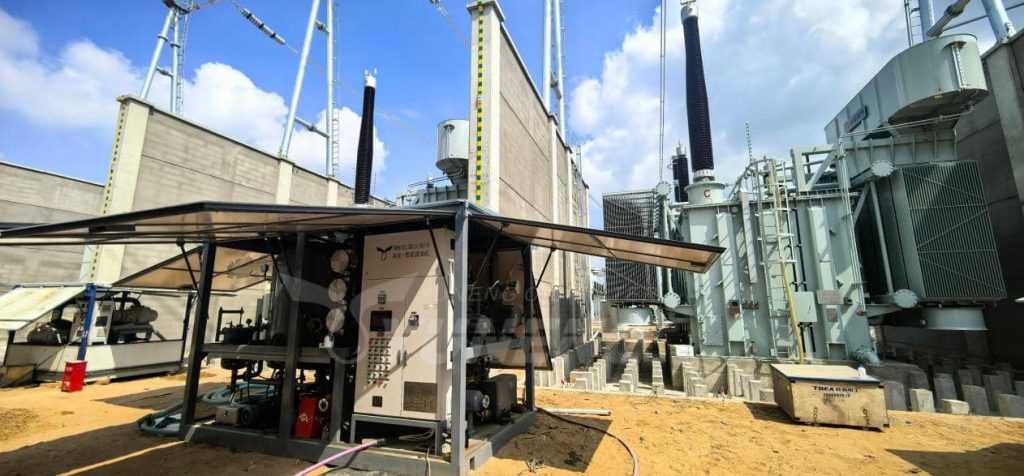
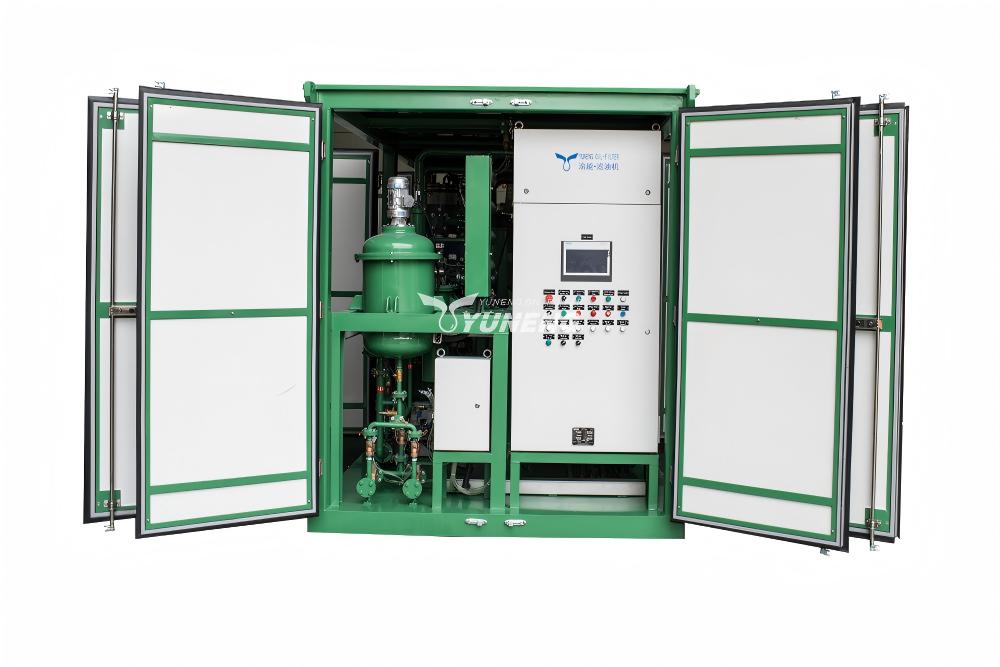
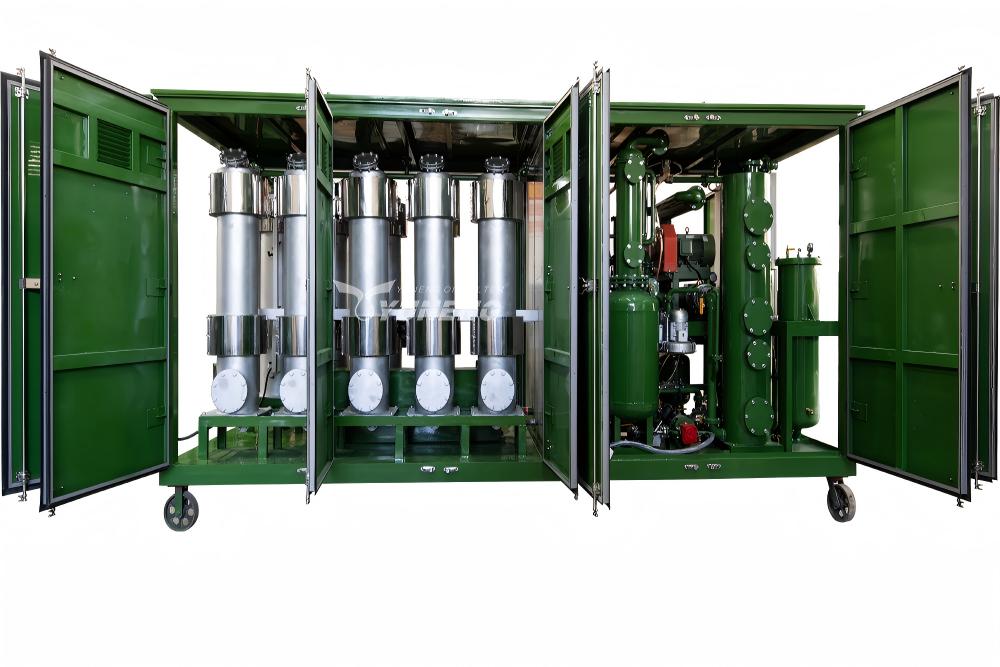
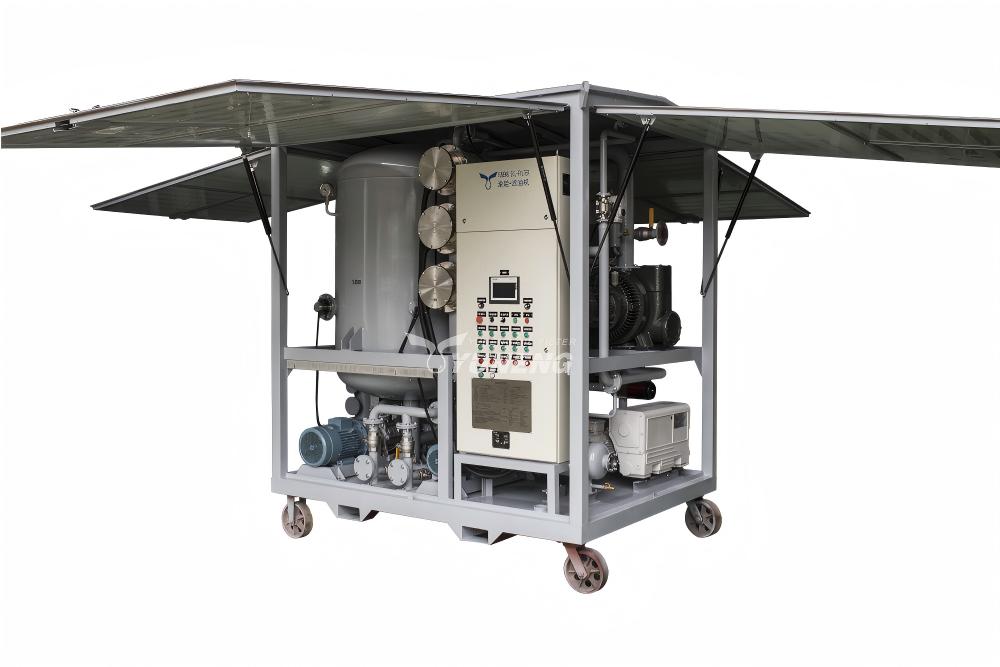
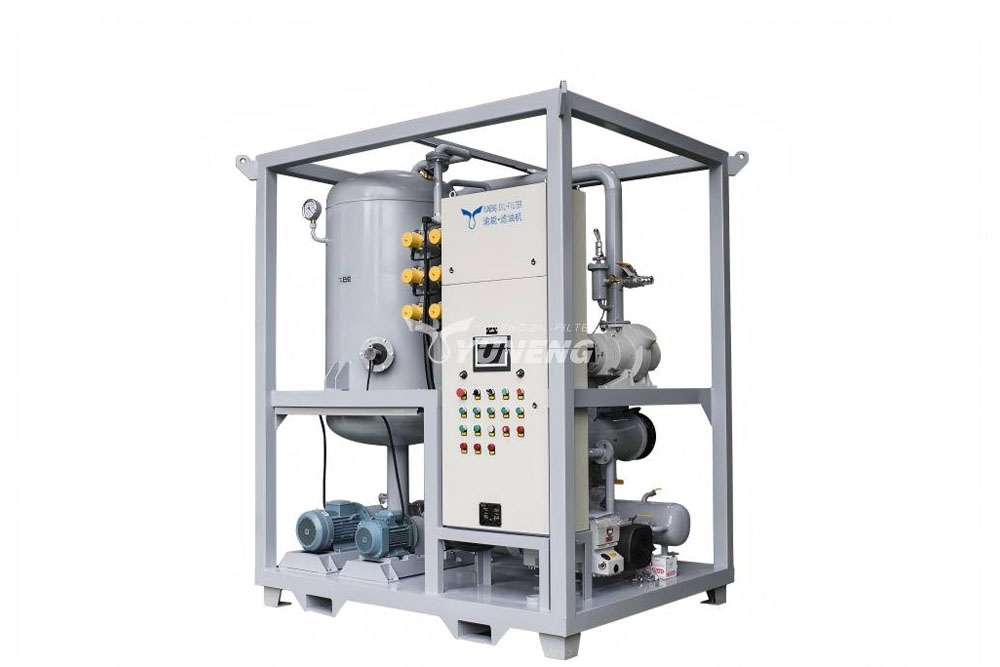
How YUNENG Transformer Oil Purifiers Help Improve BDV
Rather than relying on generic filtration equipment, solving persistent dielectric challenges requires purpose-built engineering solutions. YUNENG transformer oil purifiers are engineered around specific contamination problems to ensure maximum BDV restoration:
- Multi-stage filtration for particulate contamination: YUNENG systems use progressive multi-stage filter arrays (coarse, fine and micro-glass fibre elements) that progressively remove solid particulates, carbon dust and cellulose fibres down to 1 micron without affecting flow.
- Vacuum dehydration for dissolved and free moisture: Equipped with advanced duplex high-vacuum separation chambers and large-surface-area atomization technology, YUNENG purifiers rapidly break water-oil emulsions and strip dissolved moisture down to < 5 ppm.
- Vacuum degassing for dissolved gases: Specialized multi-stage vacuum degassing columns remove dissolved oxygen, nitrogen, and fault gases, eliminating bubble formation and preventing partial discharges under high electrical stress.
- Controlled heating for efficient moisture removal: The intelligent PID-controlled dual-group heating systems maintain the precise oil temperature (45°C–65°C) and low surface-watt density, which prevent thermal degradation and enable high rates of water evaporation.
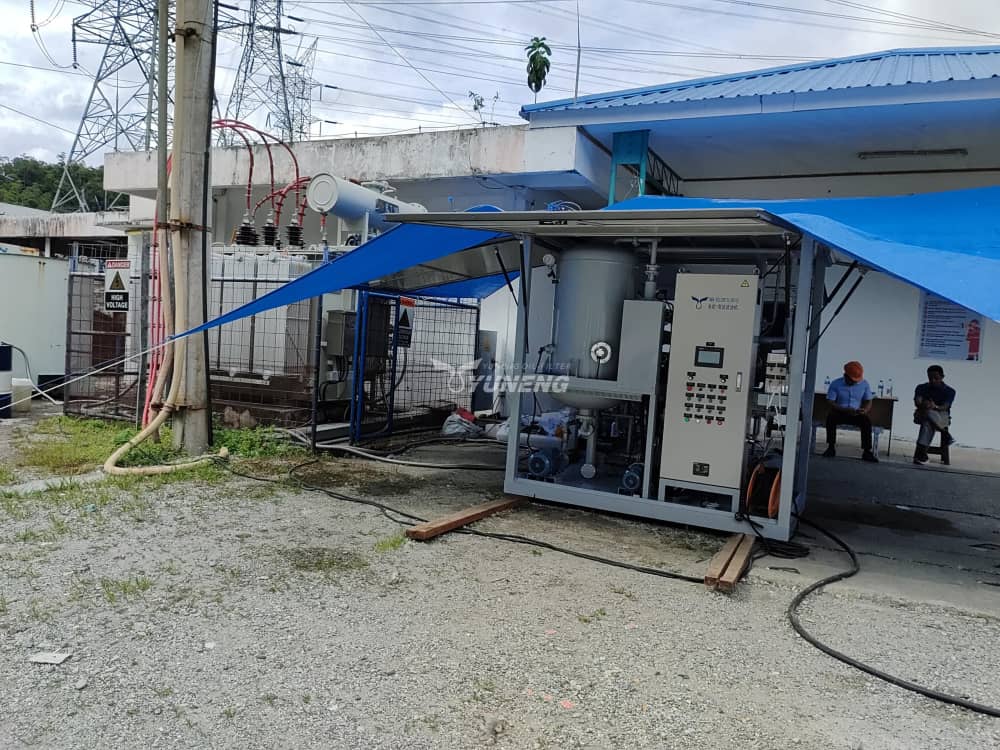
- Continuous oil circulation for on-site treatment: Designed for heavy-duty industrial field service, YUNENG purifiers support unattended 24/7 continuous operation for on-site transformer oil reclamation.
- Different capacities for different transformer oil volumes: Available in compact portable units for distribution transformers and high-capacity dual-stage systems for massive power grid transformers.
Frequently Asked Questions
Why does transformer oil BDV remain low after filtration?
Standard particle filtration only removes solid debris. If dissolved moisture, polar acids, or microscopic colloidal contaminants remain in the oil, BDV will stay low.
Can filtration alone increase transformer oil BDV?
Only if solid suspended particles are the sole cause of contamination. If moisture or acidity is present, vacuum dehydration and chemical regeneration are required.
How does moisture affect transformer oil BDV?
Water molecules align in electrical fields and bridge electrode gaps, drastically lowering the voltage threshold required for an electrical arc to occur.
How long does it take to improve transformer oil BDV?
Treatment time depends on oil volume, initial contamination, and purifier flow rate. Typically, circulating the total oil volume 3 to 4 times (4 to 12 hours) is required.
How many times should transformer oil be filtered?
There is no fixed number; oil should be circulated continuously in a closed loop until laboratory tests confirm stable target BDV and moisture levels.
Can a vacuum oil purifier remove dissolved water?
Yes. High-vacuum dehydration utilizes thermal energy and deep vacuum (below 50 Pa) to vaporize and extract dissolved water molecules effectively.
What should I test if BDV remains low after purification?
Test for moisture (Karl Fischer ppm), acidity (TAN), interfacial tension (IFT), particle count, and dissolved gases (DGA).
When should transformer oil be regenerated instead of filtered?
Regeneration is necessary when oil exhibits high acidity, low IFT, dark coloration, sludge, and persistently low BDV that physical filtration cannot resolve.