Transformer Oil Regeneration Decision Tree: When to Filter, Regenerate, or Replace

Oil Purification & Vacuum Technology Expert
Table of Contents
A dilemma faces every substation manager or electrical maintenance engineer when the routine oil sampling reports arrive from the laboratory. Should the insulating oil be subjected to continuous online filtration, complete standard oil regeneration, or entire oil replacement? The operation of high-voltage equipment requires accurate decisions. Wrong diagnosis may lead to catastrophic dielectric breakdown, and overmaintenance results in unnecessary expenditures.
In the practice of engineering, the final maintenance action plan cannot be dictated by a single diagnostic parameter. Instead, the technical teams need to conduct a multi-variable comprehensive evaluation with Breakdown Voltage (BDV), moisture content, Total Acid Number (TAN), Interfacial Tension (IFT), colour scale, sludge accumulation, and Dissolved Gas Analysis (DGA). The use of only one metric (moisture, BDV) for asset life-extension decisions creates a high operational risk for the system. In this long paper, an engineering-grade decision tree for transformer oil regeneration is presented, aiming to optimise asset performance, tight conformance to international standards (IEC 60422 / IEEE C57.106), and find a trade-off in maintenance cost.
Part 1. Step One — Evaluate Basic Oil Condition
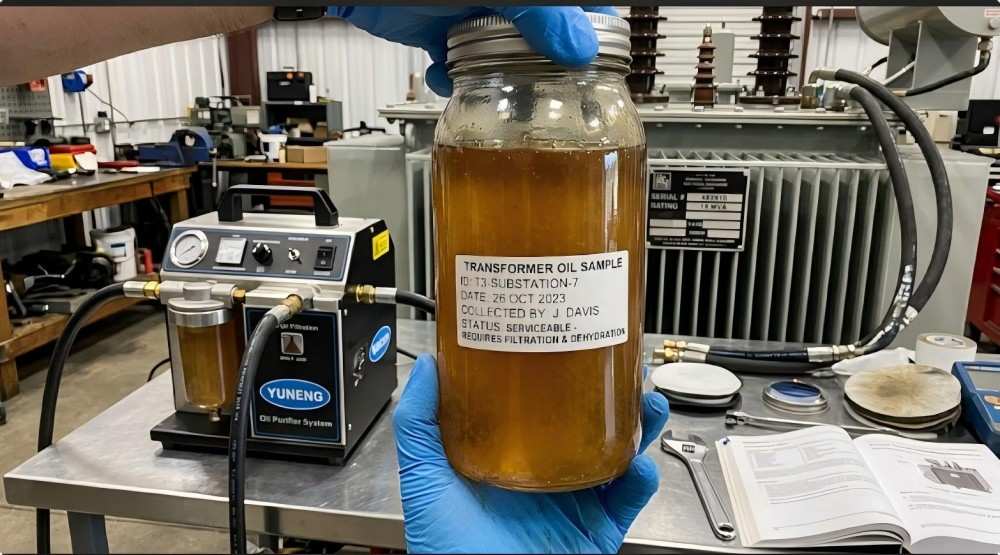
The foundation of effective insulating oil maintenance rests upon standard laboratory screening. Before triggering any thermodynamic or chemical intervention, engineers must verify basic physical, chemical, and electrical performance thresholds. The table below outlines standard industrial grading criteria utilized to identify early chemical degradation, moisture ingress, or acute dielectric breakdown threats.
| Test Item | Normal Limits | Warning Threshold | Critical Threshold |
| Breakdown Voltage (BDV) | > 60 kV | 40 – 60 kV | < 40 kV |
| Moisture Content | < 10 ppm | 10 – 30 ppm | > 30 ppm |
| Acid Number (TAN) | < 0.03 mg KOH/g | 0.03 – 0.10 mg KOH/g | > 0.10 mg KOH/g |
| Interfacial Tension (IFT) | > 40 mN/m | 25 – 40 mN/m | < 25 mN/m |
| Dielectric Loss (Tan δ at 90°C) | Low (< 0.005) | Medium (0.005 – 0.020) | High (> 0.020) |
| Color Scale | Clear, Pale Yellow | Dark Amber | Black / Opaque |
| Sludge Accumulation | None | Slight / Suspended Particles | Heavy / Sedimented |
Part 2. The Comprehensive Maintenance Decision Tree
Maintenance procedures follow a logical elimination matrix to systematically isolate problems and map them to targeted fixes. The engineering execution path below provides a sound basis for testing, diagnostics and decision making of transformer oil:
Execute Comprehensive Oil Test (BDV, Moisture, TAN, IFT, DGA)
↓
Is Breakdown Voltage (BDV) Low? (< 50/60 kV)
↓ YES
Is Moisture Content High? (> 15-30 ppm)
↓ YES
Deploy Vacuum Oil Filtration System
↓
Perform Post-Filtration Lab Retest
↓
Has BDV Been Restored to Normal Limits?
↓ NO
Check Total Acid Number (TAN): Is TAN Elevated? (> 0.03 mg KOH/g)
↓ YES
Initiate Chemical Transformer Oil Regeneration Process
↓
Perform Comprehensive IEC / IEEE Retest
↓
Does the Treated Oil Meet Full IEC/IEEE Standards?
↓ NO
Complete Transformer Oil Replacement Required
Part 3. When Is Simple Transformer Oil Filtration Enough?
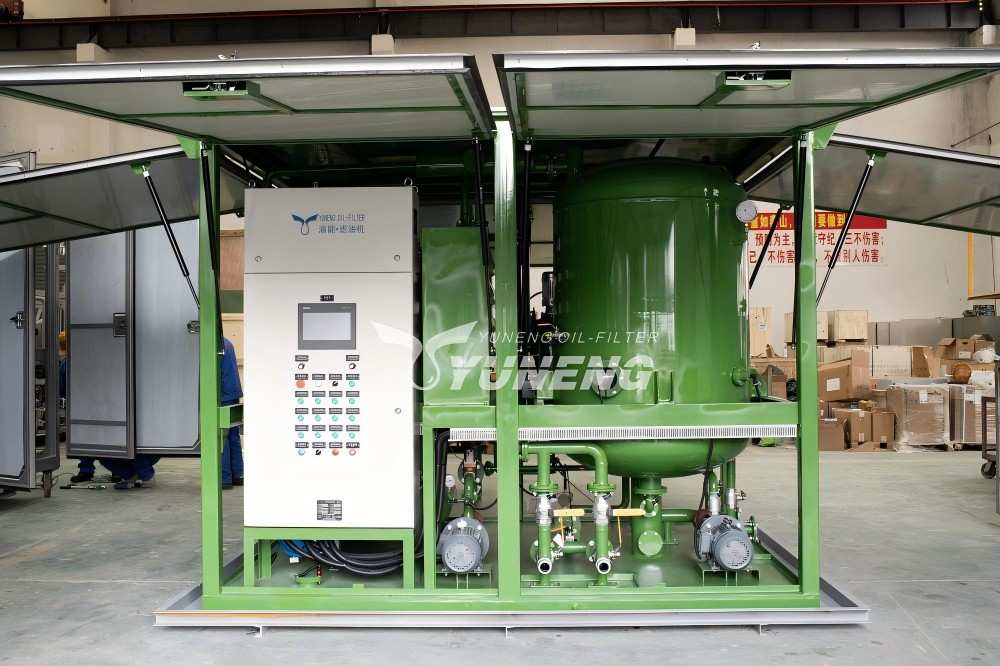
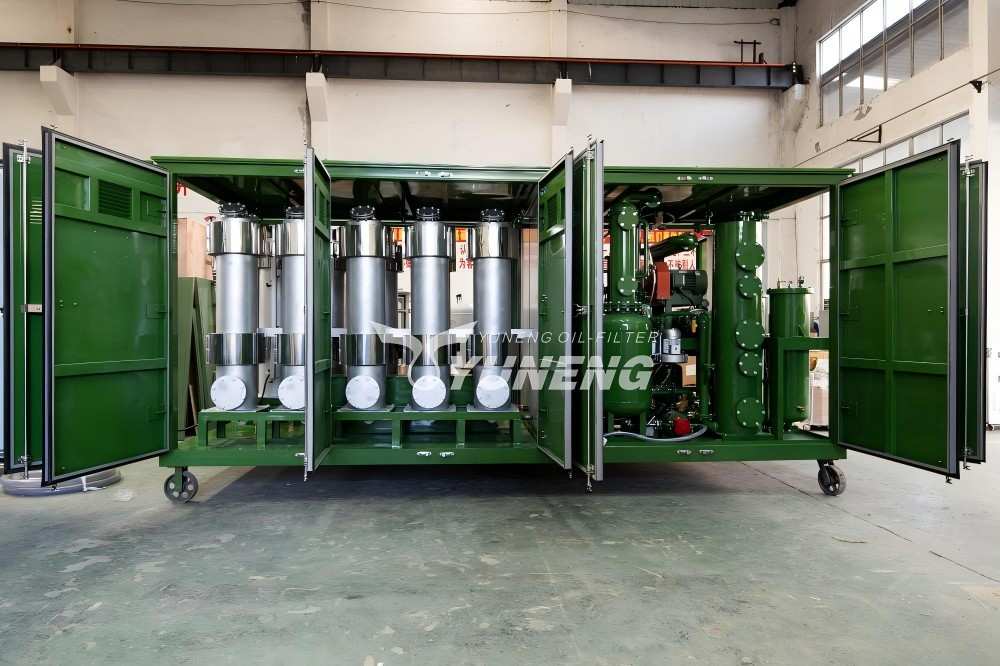
Standard transformer oil filtration represents a purely mechanical and thermodynamic conditioning process. It is highly effective for removing specific, non-bonded physical impurities but does not alter the underlying chemical molecular composition of the fluid. Double-stage vacuum oil purifiers operate by heating the oil, spreading it over a large surface area under vacuum to boil off dissolved moisture, and filtering out microparticles using particulate elements.
This process is the ideal, cost-effective remedy for standard physical contamination scenarios, such as when breakdown voltage drops exclusively due to external moisture ingress or atmospheric exposure during sampling. In these cases, the Total Acid Number (TAN) is normal (< 0.03 mg KOH/g), interfacial tension is high (> 38 mN/m), and there are no indications of advanced oxidation or sludge. Simple vacuum purification will effectively remove dissolved gases, unbound water, and suspended macro-particles. However, if the oil contains polar acids, these chemical molecules will pass through regular filtration unchanged, providing no long-term protection against chemical corrosion.
Part 4. When Should Transformer Oil Be Regenerated?
When insulating oil is subjected to prolonged high thermal loads and oxidation in the presence of copper and oxygen, it undergoes irreversible chemical breakdown. At this stage, simple physical purification is not effective, and a dedicated transformer oil regeneration plant is required. Chemical ageing (visible signs). Total Acid Number steadily increases. Fluid turns amber or dark brown in colour. Interfacial tension drops below 28 mN/m. Colloidal sludge in early stages.
Transformer oil regeneration utilizes specialized chemical filtration medium beds, typically filled with Fuller’s Earth, activated clay, or specialized molecular adsorption columns. As the degraded fluid passes through these columns, polar contaminants, dissolved organic acids, and suspended sludge particles bond to the active surface sites of the clay substrate via adsorption. This chemical extraction process restores the fluid’s original molecular properties, yielding several key benefits:
- Strips out corrosive fluid aging materials and prevents chemical attacks on paper insulation.
- Restores oil color from a dark amber back to a clear, pale yellow state.
- Drastically reduces dielectric loss (Tan δ) and returns interfacial tension to near-new values.
- Dissolves and removes early-stage sludge deposits settled within the core and windings.
Part 5. When Is Complete Oil Replacement the Better Option?
While chemical processing can restore heavily aged oils, specific technical thresholds dictate that a complete transformer oil replacement is the only safe and viable action. Attempting to regenerate fluid past these critical points poses operational risks and can lead to immediate re-contamination.
First, if heavy, solidified sludge has formed throughout the transformer core, cooling ducts, and active tank areas, fresh or regenerated oil will quickly dissolve these deposits and degrade again.
Second, fluid cross-contamination with incompatible compounds (e.g. silicone fluids, synthetic esters, or regulated Polychlorinated Biphenyls (PCBs > 50 ppm)) precludes standard regeneration due to risks of chemical cross-contamination.
Third, if the solid paper insulation is severely degraded (e.g., low levels of furfural or a Degree of Polymerisation value below 200-250), then the mechanical structural integrity of the transformer is compromised. The degraded solid insulation cannot be repaired by changing the oil.
At last, if the fluid continues to fail standard laboratory retests after vigorous treatment, the base hydrocarbon molecules have reached the end of their service life and must be replaced.
Part 6. Practical Decision Matrix
To help asset management teams quickly cross-reference laboratory results with specific maintenance actions, the following matrix pairs complex oil conditions with their appropriate technical remedies.
| Identified Oil Condition Parameter | Filtration | Regeneration | Replacement |
| High Dissolved Moisture Only | ✔ Recommended | ❌ Ineffective | ❌ Unnecessary |
| Elevated Dissolved Combustible Gases (DGA) | ✔ Recommended | ❌ Ineffective | ❌ Unnecessary |
| Low Breakdown Voltage (Isolated Parameter) | ✔ Recommended | ❌ Ineffective | ❌ Unnecessary |
| High Total Acid Number (TAN > 0.08 mg KOH/g) | ❌ Ineffective | ✔ Recommended | ❌ Unnecessary |
| Low Interfacial Tension (IFT < 26 mN/m) | ❌ Ineffective | ✔ Recommended | ❌ Unnecessary |
| Highly Oxidized, Dark Fluid (Color Scale > 4.0) | ❌ Ineffective | ✔ Recommended | ❌ Unnecessary |
| Heavy Internal Sludge Accumulation | ❌ Ineffective | ⚠️ Conditional | ✔ Recommended |
| Acute Polychlorinated Biphenyl (PCB) Contamination | ❌ Ineffective | ❌ Prohibited | ✔ Critical Action |
| End-of-Life Fluid Hydrocarbon Structural Collapse | ❌ Ineffective | ❌ Fails Retest | ✔ Critical Action |
Part 7. Lifecycle Cost and Operational Impact Analysis
Asset managers and procurement departments must balance technical requirements against the financial impact. You have to look at the total cost of ownership, the scheduled downtime, and the expected service life extension of each to compare.
| Maintenance Methodology | System Downtime | Direct Capital Outlay | Expected Extension of Oil Life |
| Vacuum Oil Filtration | Very Low (Can be performed online) | $ (Minimal Operating Expense) | Short-term (1 – 3 Years; focus on moisture control) |
| Chemical Oil Regeneration | Moderate (Online or brief scheduled outage) | $$ (Fraction of replacement cost) | Long-term (10 – 20 Years extension of fluid matrix) |
| Complete Fluid Replacement | High (Mandatory outage, core flushing) | $$$$ (Full oil cost + waste disposal fees) | Baseline (Resets timer to 0; high environmental impact) |
Part 8. Recommended Strategic Maintenance Workflow
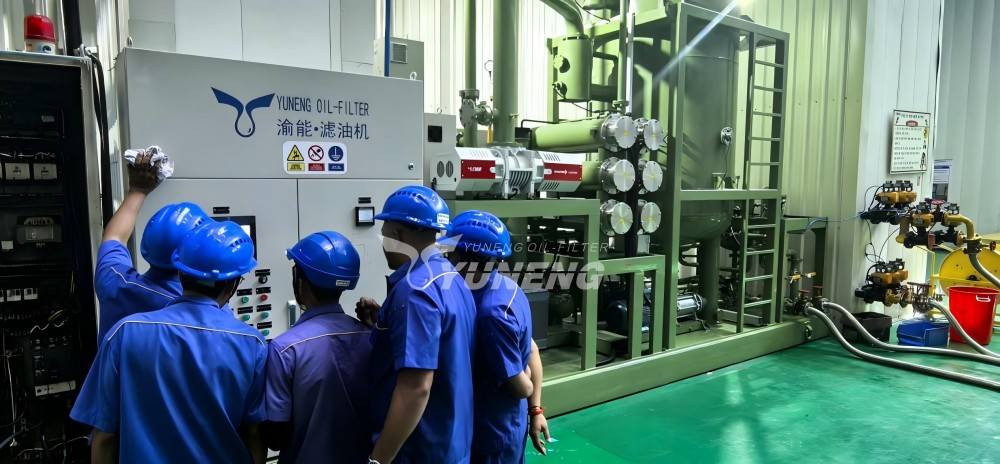
To maximize transformer longevity and reduce operational risk, industrial facilities should implement a structured lifecycle maintenance workflow:
1. Annual Routine Testing: Establish a baseline through regular laboratory testing of BDV, moisture, TAN, IFT, and DGA.
2. Proactive Moisture Control: Deploy vacuum filtration immediately if moisture levels rise or BDV drops, preventing water from migrating into the paper insulation.
3. Timely Chemical Intervention: Initiate oil regeneration as soon as the Total Acid Number exceeds 0.03 mg KOH/g or IFT drops below 30 mN/m. Treating the fluid early prevents sludge from depositing on the internal core.
4. Reserved Replacement: Limit complete oil replacement to extreme scenarios, such as PCB contamination, deep structural degradation, or when the paper insulation has reached its technical end of life.
Advanced Technical Solutions by YUNENG
For operations executing these maintenance strategies, selecting the right equipment is critical. Chongqing Yuneng Oil Purifier Manufacture Co., Ltd. designs and manufactures field-proven systems tailored for each stage of the decision tree:
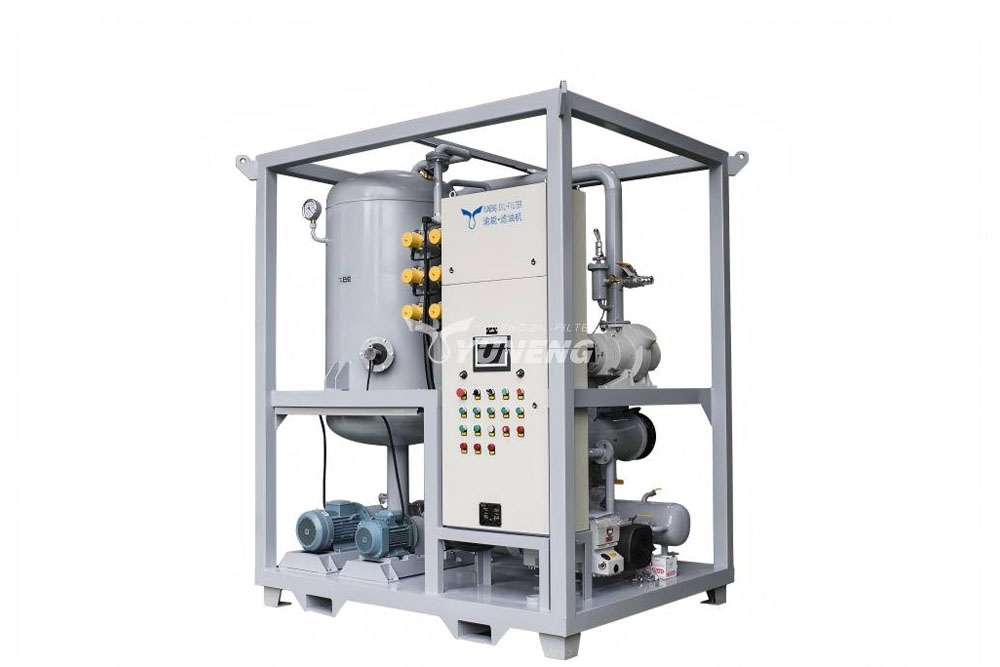
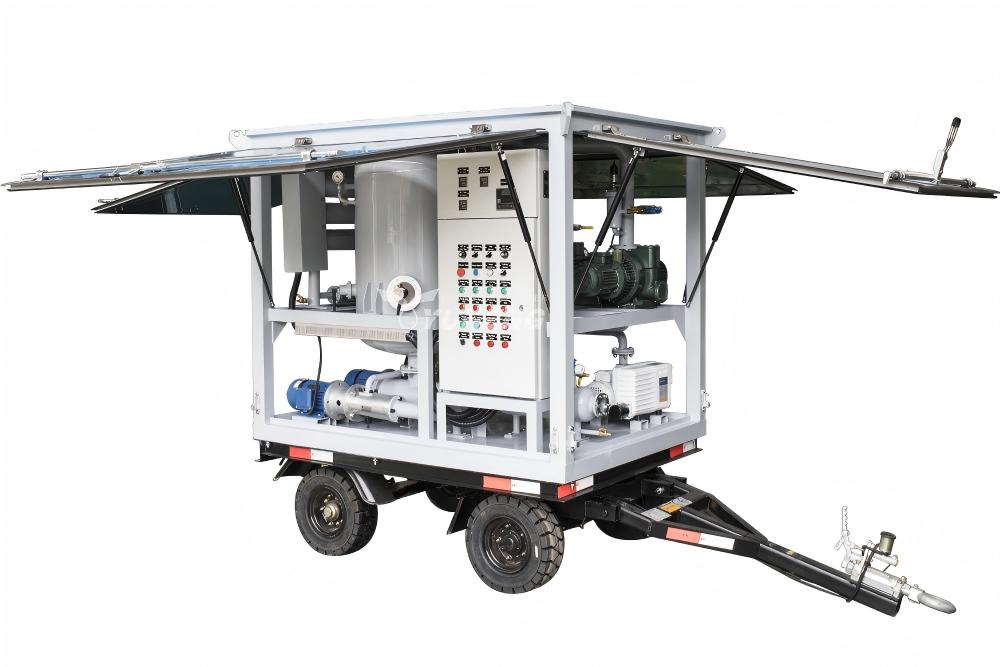
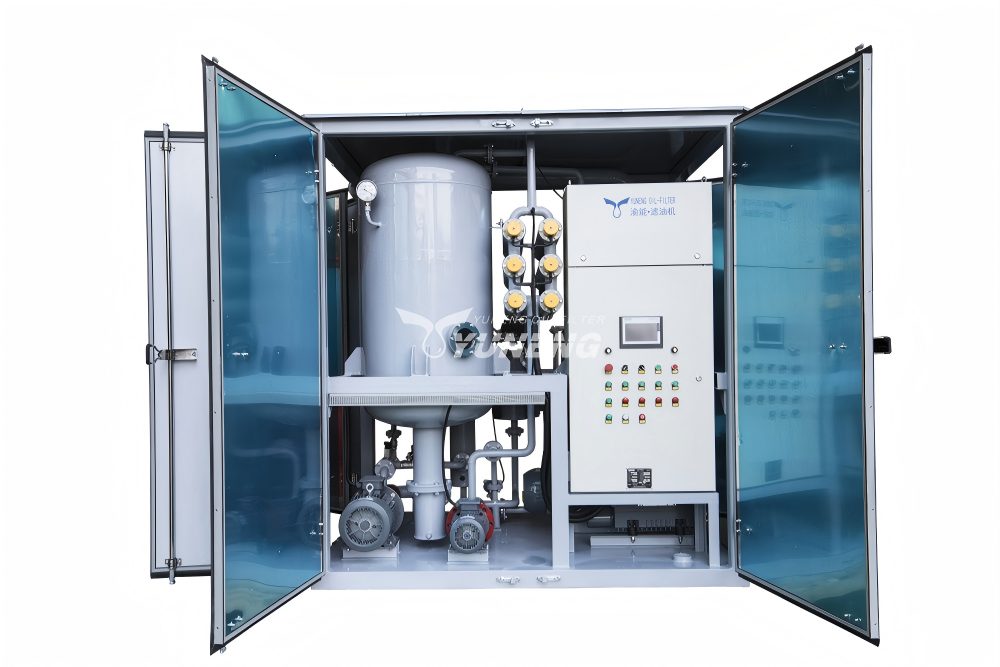
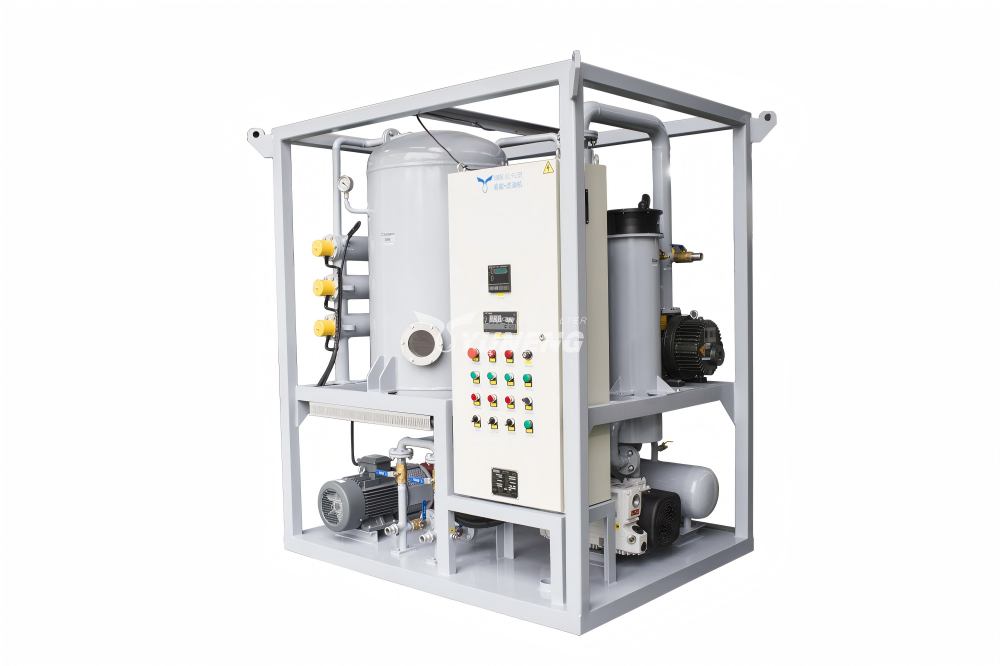
- For standard physical purification, the YUNENG ZJA Double-Stage Vacuum Transformer Oil Purifier provides high efficiency in stripping dissolved gases, moisture, and particulate matter, rapidly restoring breakdown voltage.
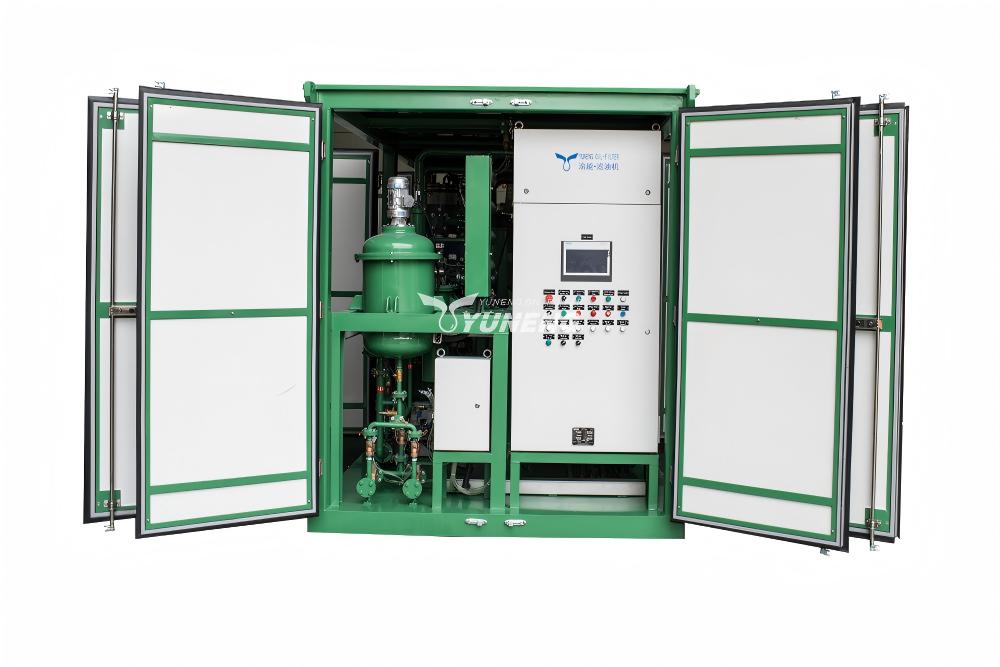
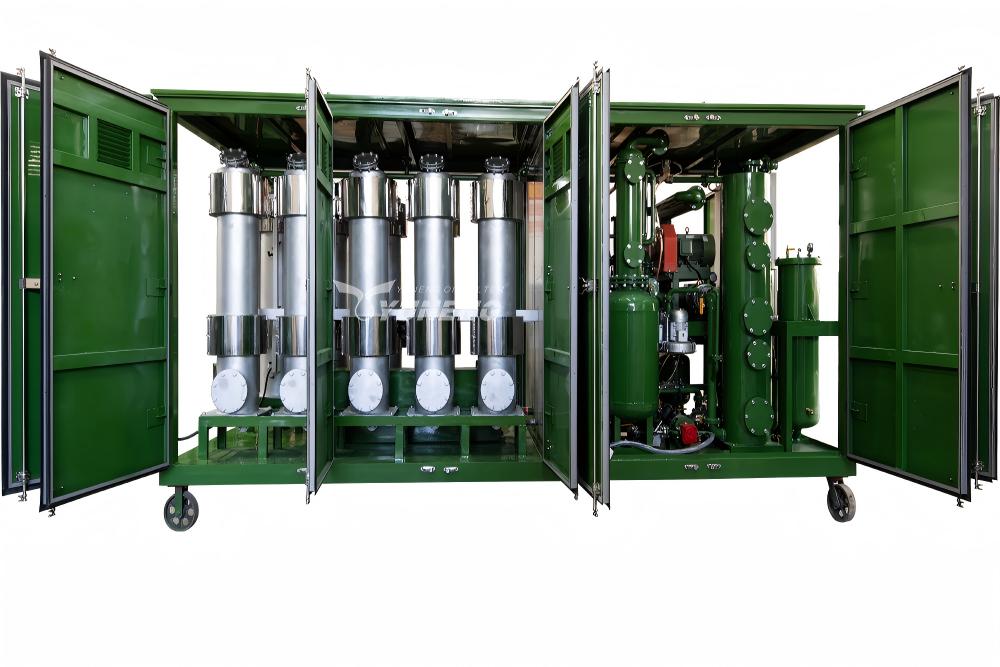
- For advanced aging and chemical degradation, the YUNENG YZS Transformer Oil Regeneration Machine uses an integrated chemical adsorption system to remove organic acids, oxidation byproducts, and sludge, fully restoring the oil’s chemical profile.
Integrating these targeted technical solutions into a regular maintenance program helps engineering teams prevent forced outages, lower lifetime asset costs, and ensure long-term grid reliability.