Why Does Transformer Oil Moisture Increase Again After Filtration?

Oil Purification & Vacuum Technology Expert
Table of Contents
Transformer oil filtration is widely used to remove water, suspended particles, sludge, and other contaminants that can reduce the insulating performance and service life of transformer oil. However, maintenance engineers sometimes encounter a confusing situation: the moisture content is low immediately after filtration, but increases again when the oil is tested several hours or days later.
Does this mean the transformer oil purifier failed?
Not necessarily.
In many cases, the increase is related to the complex moisture balance between transformer oil, cellulose insulation, temperature, and the surrounding environment. A filtration process can reduce moisture in circulating oil without immediately removing all moisture stored inside paper and pressboard insulation. As the transformer temperature changes, this moisture can migrate back into the oil. Other causes include incomplete dehydration, atmospheric moisture ingress, poor sealing, improper oil storage, contaminated equipment, and inconsistent sampling conditions.
Understanding these mechanisms is essential for selecting the right treatment method and determining whether the transformer needs another purification cycle, insulation drying, or inspection of its sealing and breathing system.
Why Can Moisture Return to Transformer Oil After Filtration?
Transformer insulation is not a simple oil-only system. A typical oil-immersed transformer contains mineral oil or ester fluid together with cellulose-based paper and pressboard insulation. Moisture can exist in several forms and locations:
- Free water
- Dissolved water in transformer oil
- Water absorbed by paper and pressboard
- Moisture associated with aging insulation materials
The important point is that removing moisture from the oil does not necessarily mean that moisture has been removed from the entire transformer insulation system.
Moisture Is Stored Mainly in Cellulose Insulation
Cellulose materials are hygroscopic, meaning they can absorb and retain significant amounts of moisture. During transformer operation, moisture continuously moves toward an equilibrium between the oil and solid insulation. When the oil is treated with a vacuum dehydration or transformer oil purification system, dissolved and free water can be removed from the oil. However, moisture remaining in the paper and pressboard can subsequently migrate back into the oil. This creates a common sequence:
Wet transformer insulation → oil purification → low oil moisture → moisture migration from insulation → higher oil moisture reading
Therefore, a higher moisture reading after treatment does not automatically prove that the purification equipment performed poorly.
Temperature Changes Cause Moisture Migration
Temperature is one of the most important factors affecting moisture distribution. As transformer temperature increases, the ability of oil to hold dissolved water changes, and moisture can migrate between the oil and cellulose insulation. During cooling, the moisture distribution can shift again. For this reason, two moisture measurements taken at different transformer temperatures may not be directly comparable.
For example, a transformer may show a low moisture value immediately after purification when the oil is at one temperature, then show a higher value after the transformer operates under load and reaches another temperature. This is why moisture testing should consider:
- Oil temperature
- Transformer operating condition
- Sampling location
- Sampling procedure
- Time between treatment and measurement
A moisture trend is generally more meaningful when measurements are taken under comparable conditions.
7 Common Reasons Transformer Oil Moisture Increases After Filtration
1. Moisture Migrates From Paper and Pressboard
One of the most common explanations is moisture migration from cellulose insulation into the oil. Transformer oil purification mainly treats the circulating liquid. If the paper and pressboard contain significant amounts of moisture, the oil may gradually absorb some of it after treatment. This is particularly important for:
- Older transformers
- Transformers exposed to humid environments
- Transformers with high insulation moisture
- Transformers that have experienced overheating or aging
- Equipment that has been opened during maintenance
In such cases, repeated oil filtration alone may provide only temporary improvement. The oil may be clean while the insulation system remains wet.
2. Transformer Temperature Changes After Treatment
The oil temperature during sampling can have a major influence on the measured moisture concentration. Immediately after purification, the oil may have a relatively stable moisture value. Once the transformer is energized or subjected to a higher load, its temperature increases and moisture redistribution can occur. This can produce an apparent increase in oil moisture.
A practical maintenance procedure should therefore record:
Moisture value + oil temperature + sampling time + transformer operating condition
Rather than comparing moisture values alone.
If the moisture reading changes but the sampling temperature also changed significantly, the result should be interpreted carefully before concluding that the oil has become contaminated again.
3. The Transformer Insulation Has a High Moisture Content
If the cellulose insulation is heavily moisture-laden, oil treatment may not be sufficient to achieve long-term moisture control. The problem can be understood as a reservoir effect.
The oil is treated and dried, but the wet insulation remains inside the transformer. Over time, moisture can move from the insulation into the oil until a new equilibrium is established. This is why severe transformer moisture problems may require more than oil purification.
Depending on the transformer condition, the maintenance strategy may include:
- Extended vacuum oil purification
- Repeated oil circulation
- Vacuum dehydration
- Transformer insulation drying
- Controlled heating and vacuum treatment
- Investigation of the source of moisture ingress
The appropriate method depends on transformer design, insulation condition, oil type, operating condition, and applicable maintenance procedures.
4. Moisture Enters From the Atmosphere
Not all moisture originates inside the transformer. A transformer can absorb moisture from the surrounding environment through its breathing system, seals, gaskets, valves, inspection openings, or other potential leakage points.
Particular attention should be paid to transformers operating in:
- Tropical climates
- Coastal environments
- High-humidity areas
- Heavy-rainfall regions
- Outdoor substations
- Frequently opened maintenance environments
A defective or poorly maintained breather can also increase moisture ingress. If moisture continues to increase after repeated purification, checking the transformer for external moisture entry is just as important as checking the oil purifier.
5. Oil Storage or Handling Introduces Moisture
Transformer oil can also become contaminated before it enters the transformer.
Common problems include:
- Open oil storage containers
- Poorly sealed tanks
- Wet transfer hoses
- Contaminated oil pumps
- Improper transportation
- Long exposure to humid air
- Inadequately dried storage tanks
For this reason, oil quality management should cover the entire handling chain:
Storage → Transportation → Filtration → Transfer → Transformer Filling → Maintenance
Even a high-performance transformer oil purifier cannot prevent moisture from entering the oil again after treatment if the downstream handling process is not controlled.
6. Filtration Does Not Always Mean Complete Dehydration
The term “filtration” can create confusion. Mechanical filtration primarily targets suspended particles and solid contaminants. Moisture removal is a different process that may require heating, vacuum dehydration, or other specialized treatment.
A basic filter element may remove:
- Dust
- Dirt
- Carbon particles
- Suspended solids
- Some sludge particles
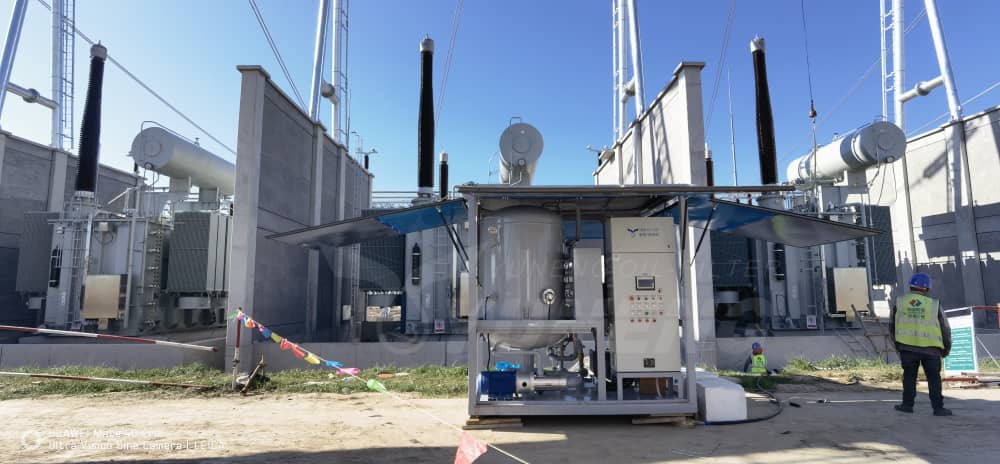
But it does not necessarily remove dissolved water. For serious moisture contamination, a vacuum transformer oil purifier is generally more appropriate because it combines controlled heating, vacuum treatment, degassing, and fine filtration. The distinction is important:
Particle filtration ≠ vacuum dehydration ≠ complete transformer drying
7. The Moisture Test Conditions Are Different
An apparent increase in moisture does not always represent a real increase.
The result can be affected by:
- Different sampling locations
- Different sampling containers
- Poorly sealed samples
- Exposure to humid air
- Different oil temperatures
- Different testing intervals
- Inconsistent sampling procedures
- Testing equipment or calibration conditions
Karl Fischer titration is commonly used for determining water content in insulating liquids, but the quality of the sample is critical. If a moisture result appears unexpectedly high, repeating the test using a controlled and consistent sampling procedure can help determine whether the increase is genuine.
Transformer Oil Filtration vs. Vacuum Dehydration: Why the Difference Matters
One of the most common misconceptions in transformer maintenance is treating filtration and dehydration as exactly the same process. They are not.
| Treatment Method | Suspended Particles | Free Water | Dissolved Water | Dissolved Gas | Cellulose Moisture |
| Conventional Filtration | ✓ | Limited | Limited/No | ✕ | ✕ |
| Vacuum Dehydration | Limited | ✓ | ✓ | ✓ | Indirect |
| Vacuum Oil Purification | ✓ | ✓ | ✓ | ✓ | Indirect |
| Transformer Insulation Drying | — | — | — | — | Directly targets insulation |
Vacuum oil purification is designed to address several contaminants simultaneously, while dedicated insulation drying is required when the cellulose system itself contains excessive moisture. For this reason, the correct treatment should be selected based on the actual contamination mechanism rather than simply choosing the strongest filter.
How Temperature Affects Transformer Oil Moisture Readings
Temperature should always be considered when interpreting moisture results. The oil-paper insulation system is dynamic. Water continuously distributes itself between the liquid and solid insulation depending on operating conditions.
A simplified relationship can be understood as:
Temperature changes → moisture distribution changes → measured oil moisture changes
This means that a transformer operating at a higher temperature may produce a different oil moisture reading from the same transformer under cooler conditions.
Why Moisture ppm Alone Is Not Always Enough
Water content is often reported in ppm, but ppm should be interpreted together with operating temperature and the condition of the insulation. For example, two transformers with the same measured water content may not necessarily have the same insulation risk if their operating temperatures and insulation conditions are different.
For professional transformer condition assessment, engineers may consider:
- Water content
- Oil temperature
- Relative saturation
- Insulation condition
- Transformer loading
- Oil type
- Operating history
The trend is often more useful than a single isolated measurement.
How to Determine Whether Transformer Oil Moisture Is Really Increasing
When moisture rises after purification, avoid immediately concluding that the equipment has failed. Use a systematic diagnostic approach.
Step 1: Record the Oil Temperature: Record the temperature at the time of every moisture test.
Step 2: Repeat the Moisture Test: If the result is abnormal, collect another properly sealed sample and repeat the test.
Step 3: Check the Sampling Procedure: Make sure the sample container, hose, valve, and sampling environment are dry and clean.
Step 4: Inspect the Breather and Sealing System: Check:
- Breather condition
- Silica gel condition
- Conservator system
- Gaskets
- Valves
- Seals
- Maintenance openings
Step 5: Evaluate Transformer Insulation Moisture: If oil moisture repeatedly returns to a high level, the transformer may have excessive moisture in its paper and pressboard insulation.
Step 6: Monitor the Moisture Trend: Instead of relying on one test, compare several measurements under similar conditions.
A useful diagnostic sequence is:
Moisture Increase → Check Temperature → Retest → Check Sampling → Inspect Moisture Ingress → Evaluate Insulation → Select Treatment
How to Prevent Moisture From Returning After Transformer Oil Filtration
Long-term moisture control requires more than simply running oil through a filter.
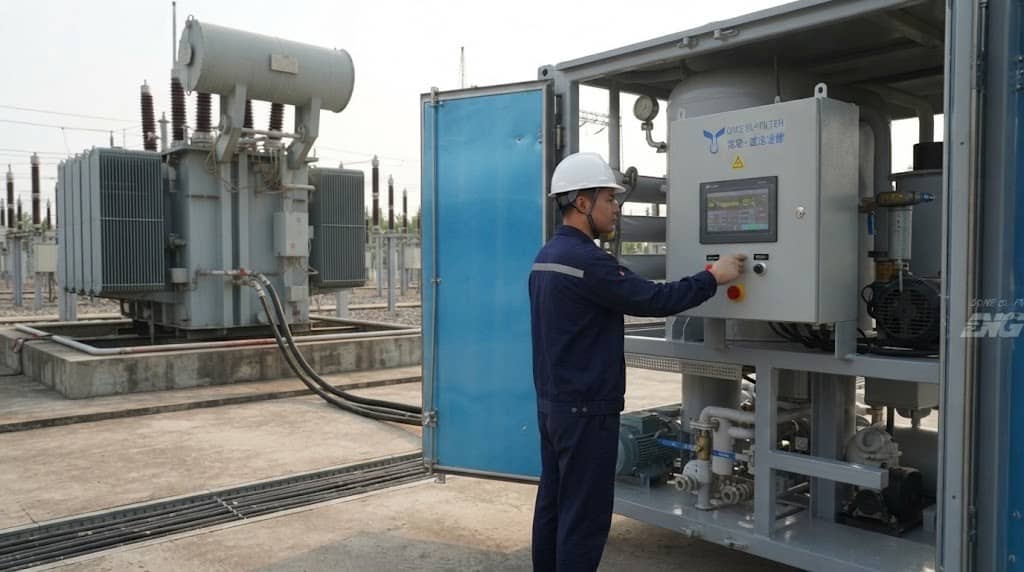
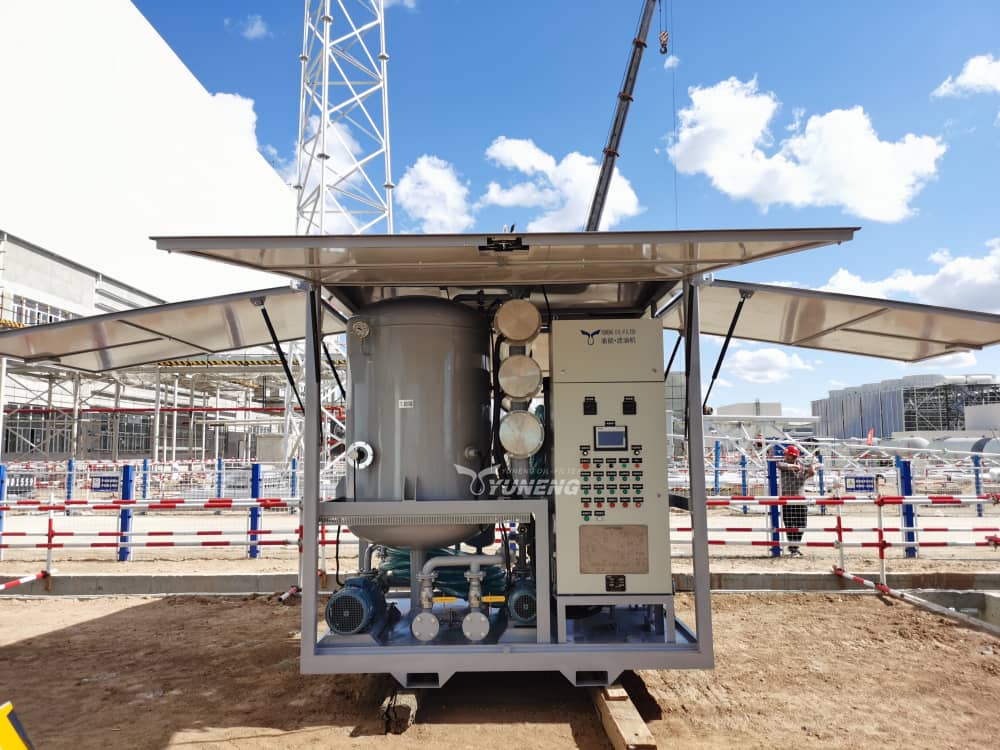
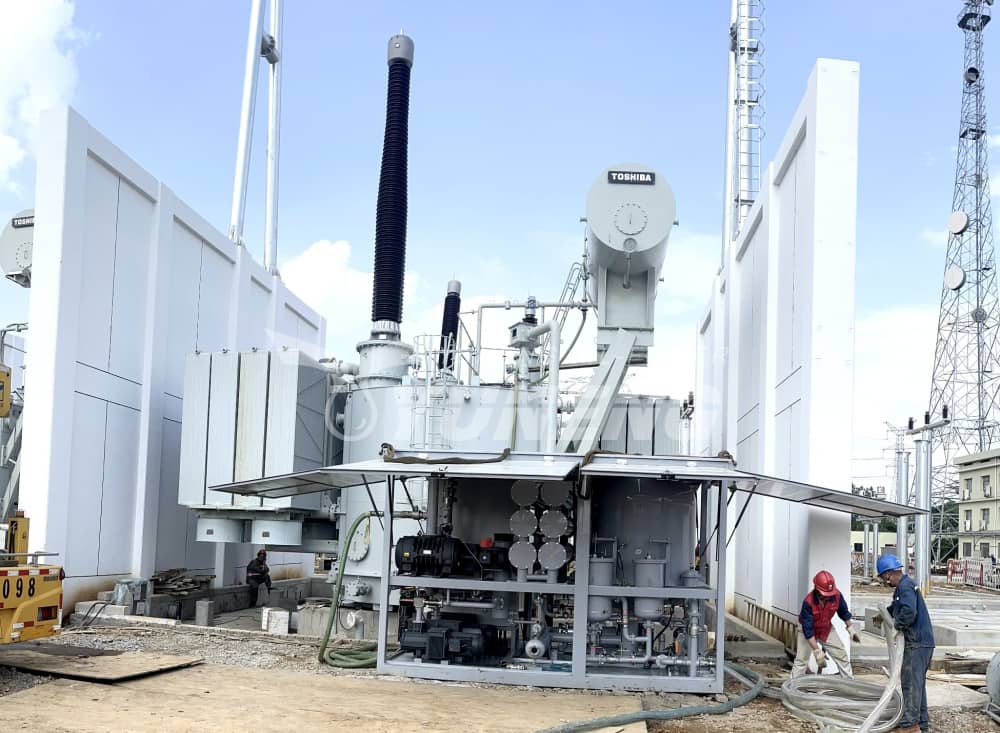
When moisture exists in dissolved form, vacuum dehydration is more appropriate than mechanical filtration alone. A vacuum purification system can use controlled heating and vacuum separation to remove moisture from the oil while also supporting degassing and fine particle filtration.
- Minimize Atmospheric Exposure
During oil transfer and transformer maintenance:
- Keep containers sealed
- Use clean and dry hoses
- Minimize open exposure
- Avoid unnecessary transformer opening
- Maintain proper transfer procedures
- Maintain the Breathing System
For conservator-type transformers, the breather and sealing system should be inspected regularly. A damaged breather or deteriorated seal can allow humid air to enter the transformer repeatedly, undermining the results of oil purification.
- Control Treatment Conditions
Effective dehydration depends on the complete process, including:
- Oil temperature
- Vacuum level
- Flow rate
- Residence time
- Filtration precision
- Number of circulation cycles
High flow rate alone does not guarantee effective moisture removal. The equipment must provide sufficient treatment conditions for the actual moisture level and transformer oil volume.
When Should You Run Transformer Oil Through the Purifier Again?
The decision should be based on test results and the underlying cause.
| Condition | Recommended Action |
| Slight moisture increase with changed temperature | Retest under comparable conditions |
| Moisture rises after several hours | Check moisture migration and insulation condition |
| Persistent high moisture | Consider additional vacuum dehydration |
| High moisture + low BDV | Perform comprehensive oil purification and testing |
| Continuous moisture increase | Inspect breather, seals, and moisture ingress |
| High insulation moisture | Consider transformer drying procedures |
| Oil remains contaminated with particles | Increase filtration or circulation treatment |
There is no single universal moisture threshold that determines the correct treatment for every transformer. Transformer voltage class, insulation system, oil type, operating temperature, equipment age, and applicable standards should all be considered.
Can Transformer Oil Filtration Completely Remove Moisture?
No. Transformer oil filtration should not automatically be considered equivalent to complete moisture removal.
There are three different moisture-related problems to distinguish:
1. Free Water:
Visible or suspended water can often be separated relatively easily through appropriate oil treatment.
2. Dissolved Water in Oil:
Dissolved moisture requires an effective dehydration process, commonly involving controlled heating and vacuum treatment.
3. Moisture Stored in Cellulose Insulation:
This is the most difficult problem because the moisture is not simply present in the oil. If the paper and pressboard remain wet, moisture can migrate back into the oil after purification.
This explains why an oil sample can initially meet a desired moisture level and later show a higher value.
Transformer Oil Moisture Troubleshooting Guide
| Symptom | Possible Cause | Recommended Check |
| Moisture rises immediately after treatment | Incomplete dehydration or poor sampling | Check purifier performance and retest |
| Moisture rises after several hours | Moisture migration | Check oil temperature and insulation condition |
| Moisture rises after transformer cooling | Oil-cellulose moisture redistribution | Compare readings at similar temperatures |
| Moisture remains consistently high | High moisture in insulation | Evaluate transformer drying requirements |
| Moisture continuously increases | External moisture ingress | Inspect breather and sealing system |
| Moisture fluctuates significantly | Temperature or sampling variation | Standardize sampling conditions |
| BDV remains low together with high moisture | Water and other contamination | Perform comprehensive oil purification and testing |
| Oil is clear but moisture remains high | Dissolved water | Consider vacuum dehydration |
Best Practices for Transformer Oil Moisture Control
For reliable long-term transformer oil condition management, follow these principles:
- Test transformer oil before treatment to establish baseline moisture, BDV, and other key parameters.
- Record oil temperature during sampling so results can be compared correctly.
- Use vacuum dehydration when dissolved moisture is present, rather than relying on mechanical filtration alone.
- Minimize exposure to humid air during oil storage, transfer, and transformer maintenance.
- Inspect the breather, conservator, seals, and gaskets if moisture continues to increase.
- Evaluate cellulose insulation moisture when oil moisture repeatedly returns after treatment.
- Monitor moisture trends over time instead of making decisions from a single measurement.
- Verify treatment effectiveness through before-and-after testing under comparable conditions.
FAQs
Q1: Why does transformer oil moisture increase after filtration?
The most common reasons are moisture migration from paper and pressboard insulation, temperature changes, incomplete dehydration, external moisture ingress, and inconsistent sampling conditions.
Q2: Can transformer oil absorb moisture from the air?
Yes. Transformer oil can exchange moisture with humid air, especially when exposed during storage, transfer, maintenance, or through a defective breathing or sealing system.
Q3: Does transformer oil filtration remove dissolved water?
Mechanical filtration alone is not designed to remove all dissolved water. Vacuum dehydration or a suitable vacuum oil purification process is generally required for effective dissolved-moisture removal.
Q4: Can moisture come back from transformer paper insulation?
Yes. Moisture stored in cellulose insulation can migrate back into the oil as the oil-paper system seeks a new moisture equilibrium.
Q5: Why does transformer oil moisture increase when temperature rises?
Temperature changes affect moisture distribution between oil and cellulose insulation and can change the amount of water present in the oil phase. Therefore, oil temperature should be recorded when comparing moisture measurements.
Q6: How do you remove moisture from transformer oil?
For significant moisture contamination, a vacuum dehydration or vacuum transformer oil purification system can remove dissolved and free water while also supporting degassing and particle filtration.
Q7: What is the difference between transformer oil filtration and dehydration?
Filtration primarily removes solid particles, while dehydration targets water in the oil. A modern vacuum transformer oil purifier can combine both functions in one treatment process.
Q8: How often should transformer oil moisture be tested?
Testing frequency depends on transformer age, voltage class, loading, environment, maintenance history, oil condition, and operating importance. Critical transformers should be monitored more closely.
Q9: Can high moisture damage transformer insulation?
Yes. Excessive moisture can reduce the dielectric strength of insulating oil and accelerate deterioration of cellulose insulation, increasing the risk of insulation failure and reducing transformer service life.
Q10: How can moisture be prevented from returning after purification?
The most effective strategy is to combine proper vacuum dehydration, controlled oil handling, moisture-tight sealing, breather maintenance, and regular condition monitoring.