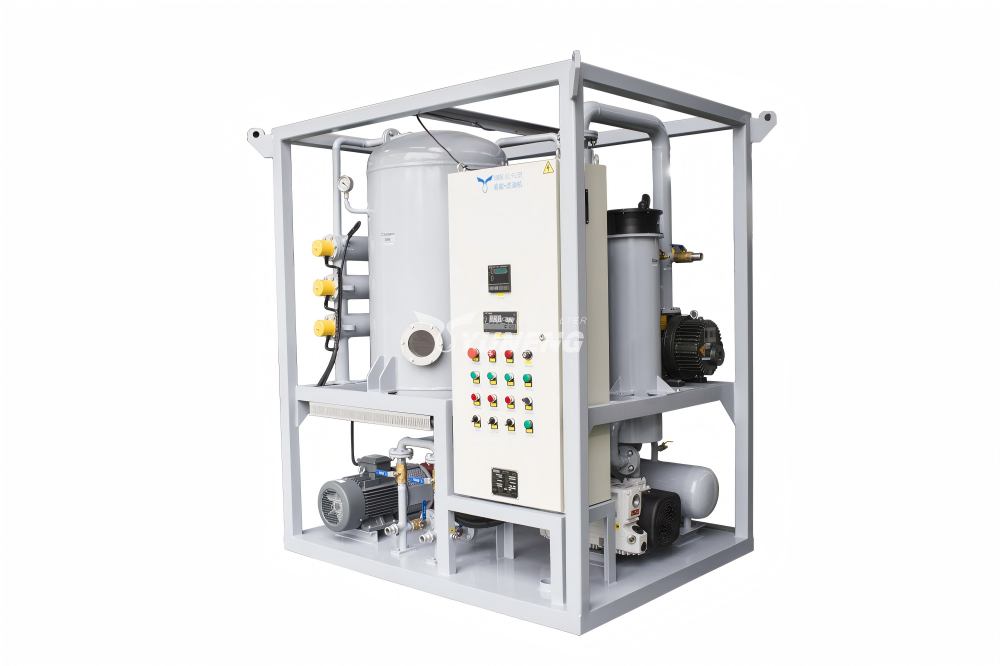
Why Your Transformer Oil Dehydration Machine Fails to Drop Below 30 ppm?

Oil Purification & Vacuum Technology Expert
Table of Contents
As a transformer maintenance engineer who has spent over a decade managing fleet reliability and substation fluid assets, I have seen almost every sub-optimal purification scenario imaginable. Recently, a fellow field engineer approached me with a highly specific, yet incredibly common technical bottleneck.
He was filtering a huge batch of insulation fluid, 20,000 litres of it. The transformer oil dehydration machine worked within solid nominal parameters: heating temperature of 65 °C, steady vacuum level of -0.098 MPa (approximately 20 mbar absolute pressure). The initial remediation was successful, dropping the moisture from a critical 65 parts per million down to 28 ppm. Then the bubble burst. No matter how many more times the machine was run, the moisture level would not change.
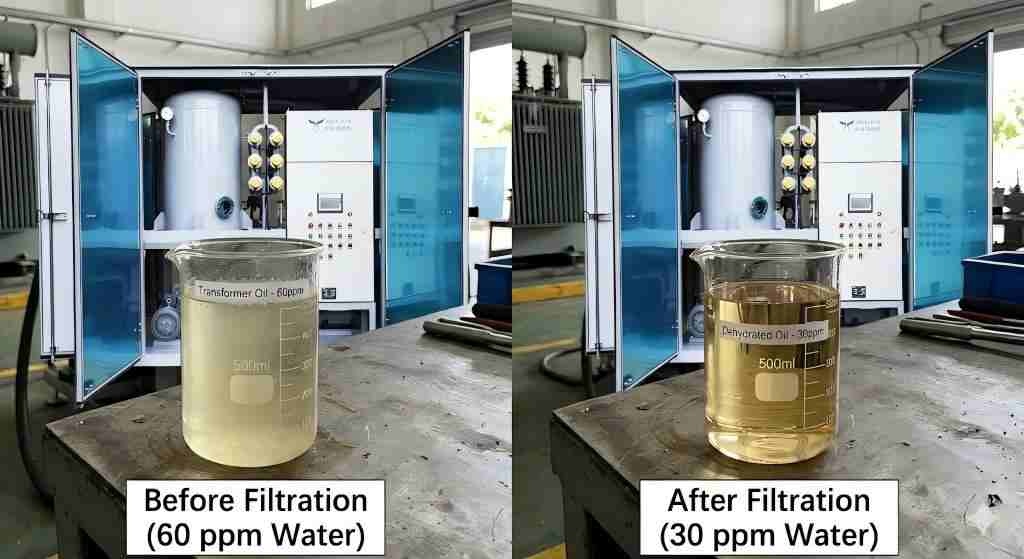
If you are currently facing this exact situation in the field, do not panic. Your machine is not necessarily broken. Instead, your oil purification process has hit a classic physical and chemical equilibrium. Let’s break down the engineering science behind this barrier and look at exactly how to troubleshoot it.
The Physics of Dehydration: Current Setup Evaluation
Before ripping apart your vacuum hoses, let’s look at the baseline physics of your current setup. An oil temperature of 65°C combined with a -0.098 MPa vacuum is generally considered the industry sweet spot for standard oil processing.
- Temperature (65°C): The viscosity of transformer oil reduces considerably at this temperature, increasing molecular movement of the dissolved water molecules. More importantly, the temperature of 65°C is sufficient to cause vaporization of water without inducing thermal cracking or oxidizing the hydrocarbon base oil molecules.
- Vacuum Level (-0.098 MPa): This represents a decent negative pressure at sea level. At this vacuum level, the boiling point of water is lowered to about 17.5°C from 100°C. Theoretically, any free or dissolved water that comes into contact with our oil at a temperature of 65°C should flash into vapour instantly.
But if the water is supposed to flash off immediately, then why are we seeing 28 ppm? Deep degassing and micro-dehydration follow more stringent thermodynamic constraints than bulk water removal. When you hit this very wall, it is almost always for one of four critical engineering issues.
4 Critical Reasons Your Transformer Oil Purifier Has Hit a Moisture Bottleneck
Through years of diagnosing fluid reclamation systems, I have found that a lingering plateau at 28 ppm is almost always driven by one of the following four underlying root causes:
1. The “Sponge Effect” of Transformer Solid Insulation (Cellulose Paper)
If you are performing an online filtration or if the 20,000 liters of oil is still circulating inside the main transformer tank, your primary adversary isn’t the oil—it’s the cellulose paper insulation.
Inside a transformer, moisture behaves like a dynamic ledger distributed between two accounts: the fluid insulation (oil) and the solid insulation (paper and pressboard). Here is the catch: cellulose paper acts like a massive sponge, retaining up to 99% of the total moisture inside the transformer, while the oil holds less than 1%.
When your transformer oil dehydration machine successfully strips water from 65 ppm down to 28 ppm, it breaks the ambient moisture equilibrium between the fluid and the solid. Seeking a new balance, the wet paper begins a process called moisture desorption, continuously bleeding its stored water back into the dry oil. In a 20,000-liter asset, the paper insulation might hold tens of liters of water. At 28 ppm, your dehydration machine is simply matching the exact rate at which the paper is degassing moisture back into the fluid.
2. Condenser Water Accumulation & Vapor Saturation
A vacuum reading of -0.098 MPa at the pump inlet can be highly misleading. According to Dalton’s Law of Partial Pressures, the total pressure in your vacuum chamber is the sum of the dry air pressure and the water vapor pressure.
If your cooling condenser on your machine gets water-logged from the first extraction phase (drop from 65 ppm down to 28 ppm out of 20,000 litres makes a huge amount of condensed water), or if the cooling fans/chillers are not doing well, that water vapour can’t turn into liquid efficiently. It remains a gas, accumulating inside the vacuum separation tank. The chamber becomes choked with localized humidity, matching the vapor pressure of the moisture remaining in the oil. Once this localized vapor saturation happens, evaporation halts completely, regardless of what the analog pressure gauge reads.
3. Insufficient Oil Film Exposure in the Vacuum Chamber
Deep dehydration requires a vast surface-area-to-volume ratio. Micro-moisture molecules dissolved within the hydrocarbon matrix must migrate to an open surface to escape.
Good transformer oil dehydration machines rely on special internal parts such as spray nozzles, coalescing elements, or porous tower packings to actively disperse the oil into micro-films or fine mists. If the oil flow is pushed too high, or if the internal elements have shifted or fouled, the oil will skip this stage of diffusion. Instead of forming an ultra-thin film, it flows down the chamber walls in thick columns. The water molecules trapped deep inside those thick oil streams simply never get exposed to the vacuum during their brief transit through the chamber.
4. Micro-Leakage on the Negative Pressure Side
Achieving a deep dehydration level below 10 ppm demands exceptional system integrity. If there is a micro-leak on any component located under negative pressure—such as a worn shaft seal on the inlet pump, an aged gasket on an inspection glass window, or a loose flange connection—outside air will slowly bleed into the vacuum chamber.
While this tiny air leak might not be massive enough to visibly tank your rugged -0.098 MPa gauge reading, it continuously introduces ambient humidity straight into your treatment environment. This minute, a steady influx of atmospheric moisture acts as a constant feeder, artificially setting a floor on your minimum achievable ppm level.
Step-by-Step Troubleshooting Checklist for Fleet Engineers
When my team hits a 28 ppm bottleneck, we don’t guess. We follow a systematic field checklist to find and eliminate the root cause.
Step 1: Isolate the Processing Environment
First, verify your boundary conditions. Is the transformer oil dehydration machine processing an isolated, external holding storage tank, or is it hooked up to the active transformer housing?
- If hooked to the transformer, accept that you are dealing with the paper insulation’s “sponge effect.” Keep the machine running continuously. It can take days or even weeks of continuous circulation to slowly draw the deep-seated water out of the cellulose matrix before the bulk oil ppm takes its next dive.
- If filtering an isolated tank, the problem resides entirely within your equipment or configuration. Proceed to Step 2.
Step 2: Drain and Audit the Condenser System
Isolate the vacuum line and safely open the manual drain valve at the base of your moisture condenser.
- If a large volume of water drains out, your condenser was water-logged, which compromised the internal vapor pressure. Purge the water completely.
- Check your cooling grid, confirm the condenser cooling fans are turning at full speed and that the radiator fins are completely free of dirt, dust, or mud blocks that limit thermal exchange.
Step 3: Conduct a Static Vacuum Rise Test (Rate of Rise)
To rule out ambient micro-leakage, perform a standard vacuum hold test:
- Close the primary inlet and outlet oil valves to empty the main vacuum chamber.
- Run the vacuum pump until the chamber reaches its maximum achievable negative pressure limit.
- Tighten the isolation valves to completely lock down the chamber, then shut off the vacuum pump.
- Monitor the vacuum gauge for 15 to 30 minutes.
If the vacuum drops significantly during this window, you have a physical air leak. Apply a special leak detection fluid or vacuum grease to negative pressure seals, flanges, and sight glasses. Spray until the system holds pressure perfectly flat.
Step 4: Break the Thermodynamic Equilibrium
The machine is perfectly sealed, and the condenser is dry. You need to adjust your processing variables to shift the thermodynamic balance back in your favour:
- Throttle the Flow Rate: Reduce the processing flow rate by roughly 30%. This instantly increases the residence time of the oil inside the vacuum flash tank, allowing trapped dissolved water more time to diffuse out of the oil film.
- Elevate the Thermal Profile: Carefully tweak your heating matrix to bump that oil temperature from 65°C up to 70°C or 75°C. That extra warmth kinda will break the intermolecular bonds keeping dissolved water attached to those polar aromatic compounds inside the oil, giving the little push needed to drive deep moisture into the gas phase, basically.
When to Upgrade Your Transformer Oil Dehydration Machine?
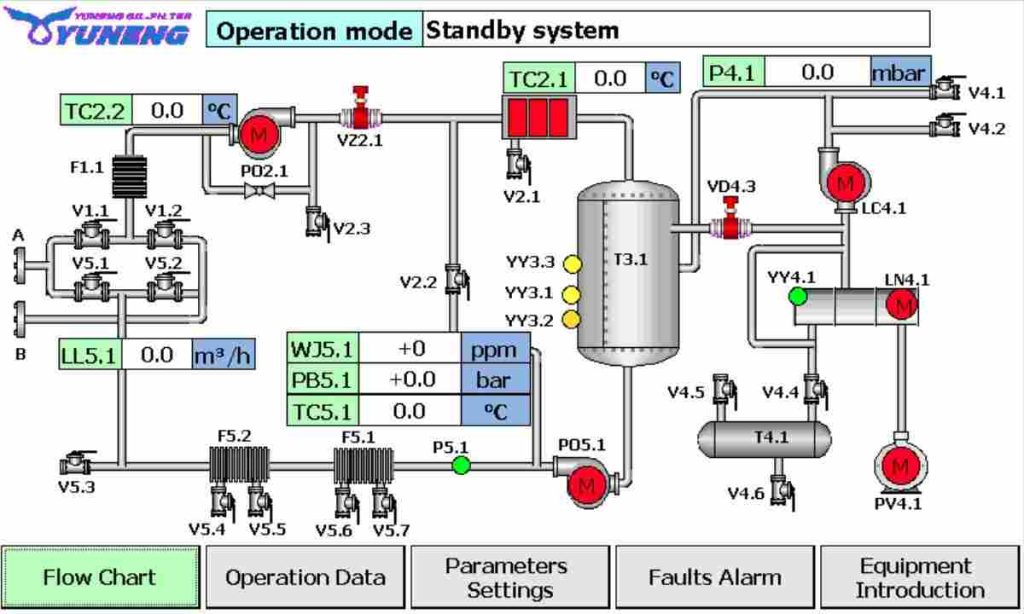
If you have executed this entire troubleshooting routine and still cannot break past the late-20s ppm ceiling on isolated oil batches, your processing equipment likely lacks the raw thermodynamic capabilities required for deep sub-10 ppm conditioning.
Standard single-stage vacuum purifiers often struggle at this very point, as the single vacuum pump cannot manage the combined non-condensable air leaks and high water vapour volumes
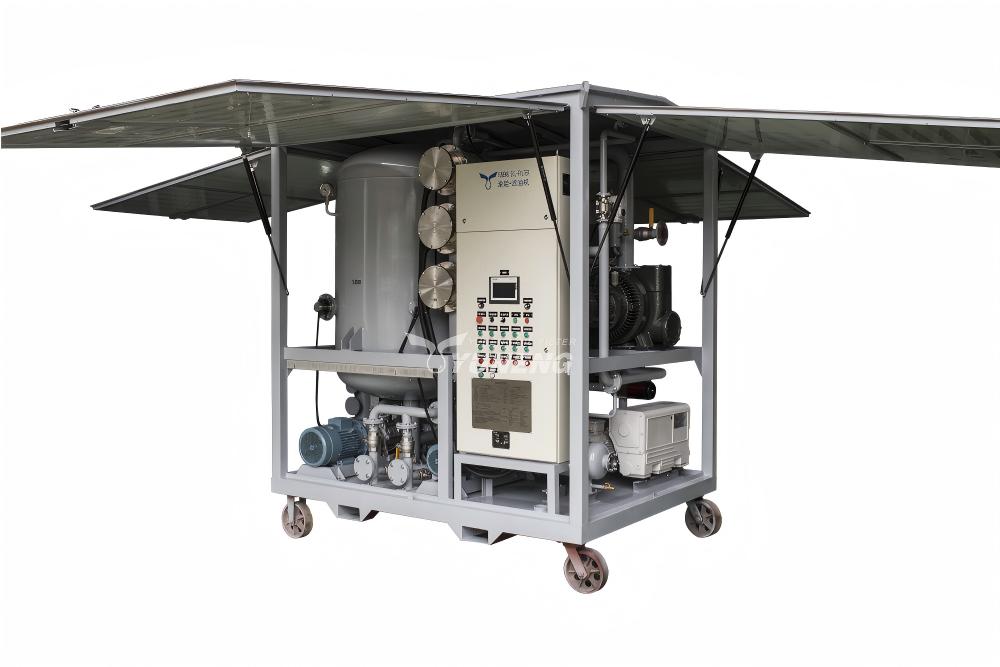
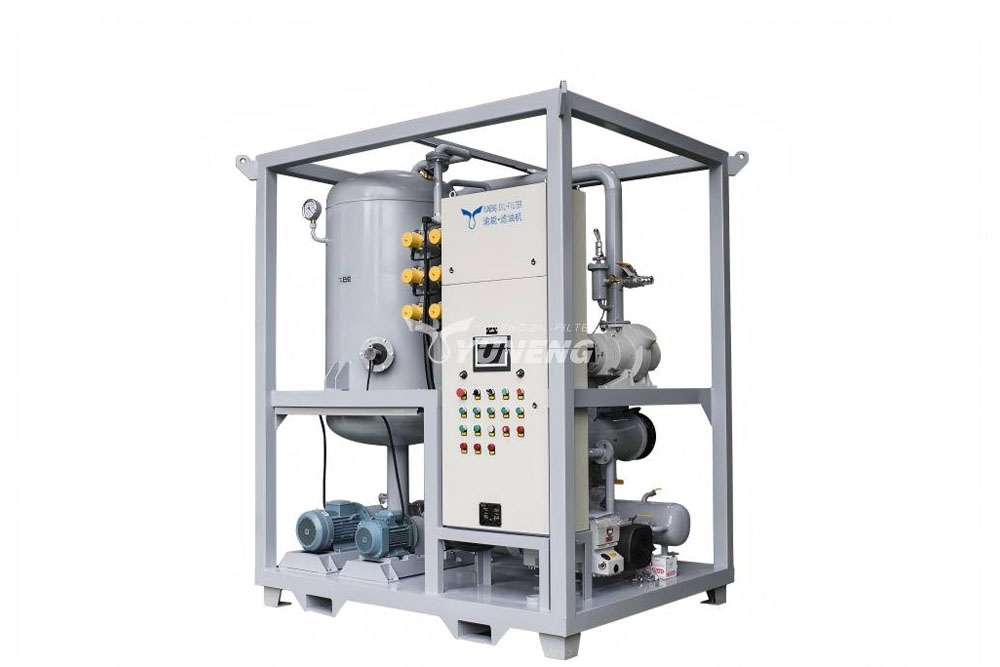
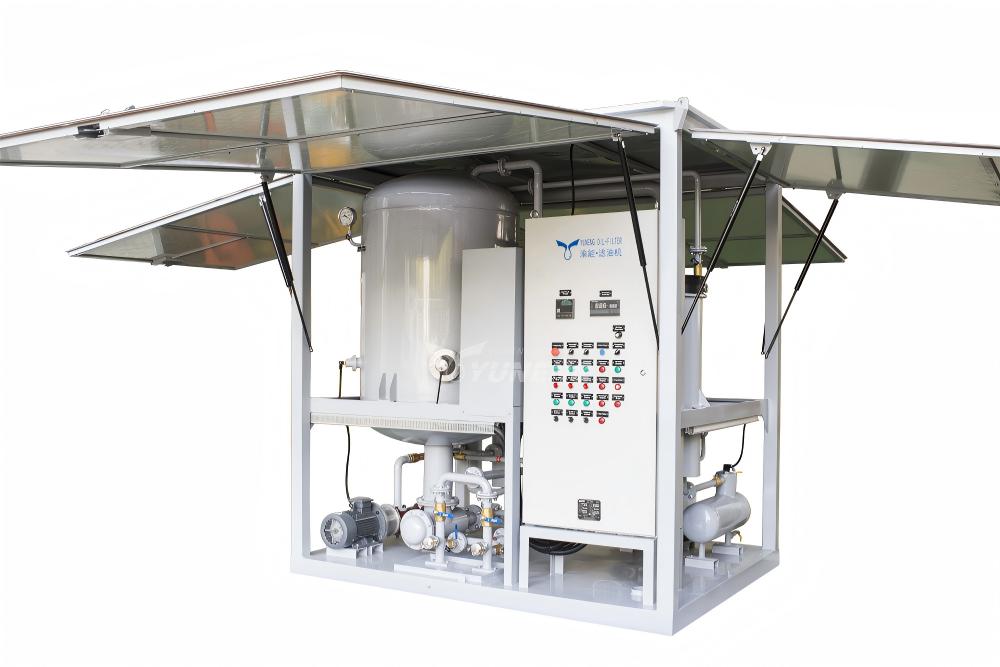
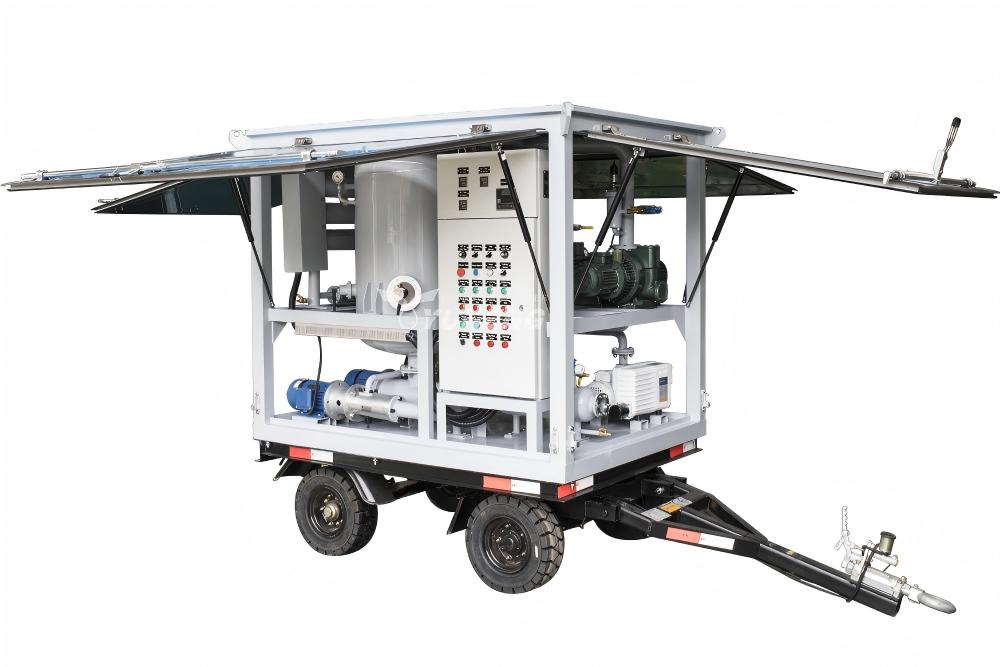
To achieve true EHV (Extra High Voltage) oil specifications, it is highly advantageous to transition to a high-efficiency two-stage vacuum transformer oil dehydration machine. These advanced configurations pair a primary rotary vane vacuum pump with a mechanical Roots booster blower pump. By linking these systems, a two-stage transformer oil filtration machine pulls an absolute vacuum deep into the <50 Pa (0.5 mbar) zone. This immense pressure differential shatters the 28 ppm equilibrium instantly, drawing out stubborn dissolved moisture and elevating the oil’s dielectric breakdown voltage to pristine field-ready standards.
Engineering Summary
Encountering a plateau at 28 ppm while treating 20,000 liters of transformer oil is a classic engineering challenge. Always check your insulation paper interactions first if you are filtering an active asset. If your oil is isolated, look for a flooded condenser chamber or minor vacuum leaks along your input seals. By methodically auditing your system’s sealing integrity, optimizing thermal inputs up to 75°C, and understanding when your asset profile requires a true two-stage vacuum upgrade, you can consistently eliminate moisture risks and safeguard your grid’s operational longevity.