
SF₆ Gas Recycling, Purification & Refilling in Carbon Markets

Power Utility Gas & Insulation Specialist
Table of Contents
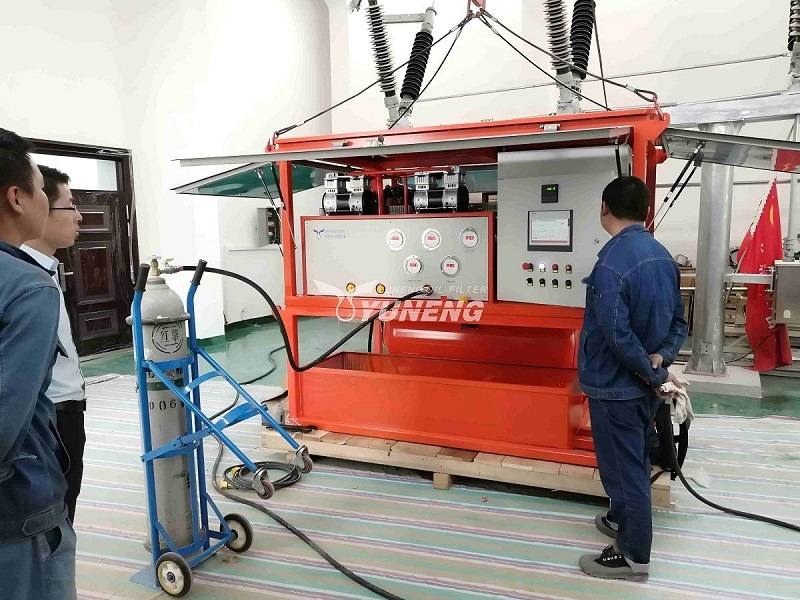
As global carbon markets move away from CO₂-centric frameworks, more and more people are paying attention to high-impact greenhouse gases that aren’t CO₂. Sulfur hexafluoride (SF₆) is one of them. It has a very high global warming potential (GWP) and is widely used in the power industry. In this context, recycled SF₆—made possible by SF6 gas recycling, SF6 gas purification, and SF6 gas refilling—is becoming a real way to cut emissions and possibly take part in carbon trading systems.
This article explores how recovered SF₆ is gradually integrating into the carbon market, examines policy development, accounting logic, technical processes, and future commercial impacts.
Why SF₆ Has Become a Carbon Market Focus
SF₆ is utilized as an arc-quenching and insulating gas in gas-insulated switchgear (GIS), circuit breakers, and other high-voltage power transmission and distribution equipment. Even while it has great dielectric qualities, its high GWP of roughly 23,500 means that even small amounts of it can have a big impact on the climate.
In the past, managing SF₆ was mostly about stopping leaks and getting rid of it at the end of its life. However, as carbon markets grow and focus on emissions across the course of a product’s life, the discourse is moving from simple containment to resource-based emission reduction, where SF₆ is seen as a recoverable asset instead of a disposable burden. This change makes it possible for SF6 gas recycling projects that are qualified for carbon credits to happen.
Carbon Market Pathways for Recycled SF₆
1. Compliance vs Voluntary Carbon Markets
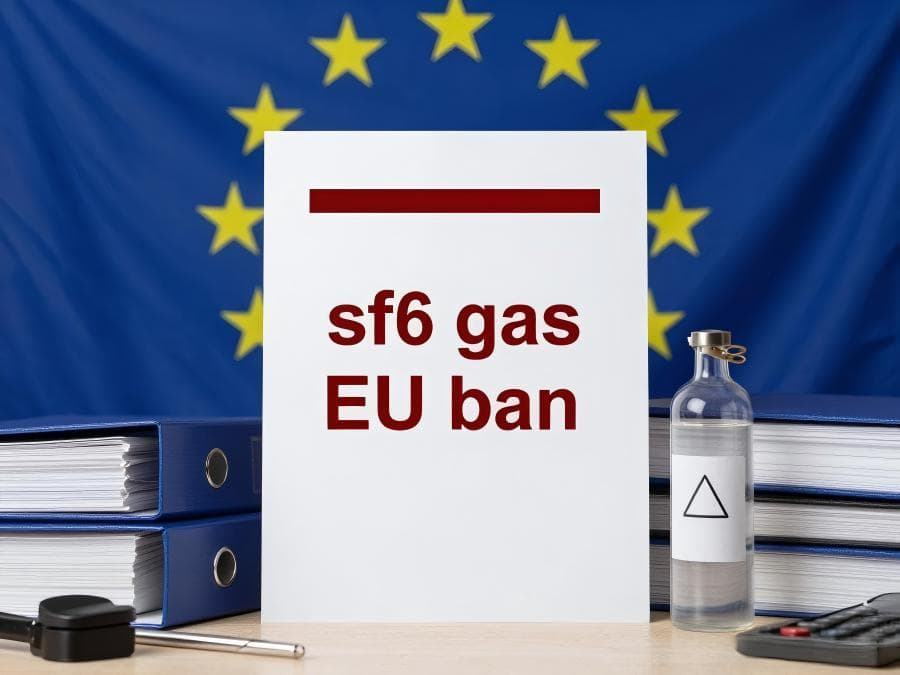
In major compliance markets such as the EU Emissions Trading System (EU ETS), SF₆ is primarily regulated through mandatory reporting, leak prevention requirements, and restrictions on new equipment. Direct crediting of SF₆ reduction projects remains limited.
In contrast, voluntary carbon markets (VCM) offer more flexibility. These markets already include methodologies for non-CO₂ gases where emissions can be accurately measured and independently verified. Recycled SF₆ fits well within this structure because its emission reductions are quantifiable in CO₂-equivalent terms and closely linked to physical gas flows.
2. Why Recycled SF₆ Is Carbon-Eligible
Carbon market acceptance depends on several criteria: additionality, measurability, permanence, and verifiability. Recycled SF₆ meets these conditions by:
- Avoiding emissions from uncontrolled leakage or disposal
- Reducing demand for newly produced SF₆
- Allowing precise mass-based tracking throughout the recycling chain
This makes SF6 gas recycling combined with purification and refilling, a strong candidate for carbon credit generation under appropriate methodologies.
Policy and Methodology Progress Enabling SF₆ Gas Recycling
In recent years, several jurisdictions have developed or proposed methodologies specifically addressing SF₆ recovery and reuse. These methodologies typically define a project boundary that includes:
- Recovery of used SF₆ from electrical equipment
- SF6 gas purification to meet reuse standards
- SF6 gas refilling into existing or refurbished equipment
These frameworks stress closed-loop management, where recycled gas replaces new SF₆ generation, instead of just rewarding destruction. This method is in line with the ideas of both climate change mitigation and a circular economy.
National pilot programs, especially in economies that rely heavily on the electricity sector, are very important for testing monitoring, reporting, and verification (MRV) methods. Many people see these pilots as steps toward getting more international recognition.
SF₆ Gas Recycling, Purification, and Refilling: The Technical Chain
1. SF₆ Gas Recycling: Recovery and Containment
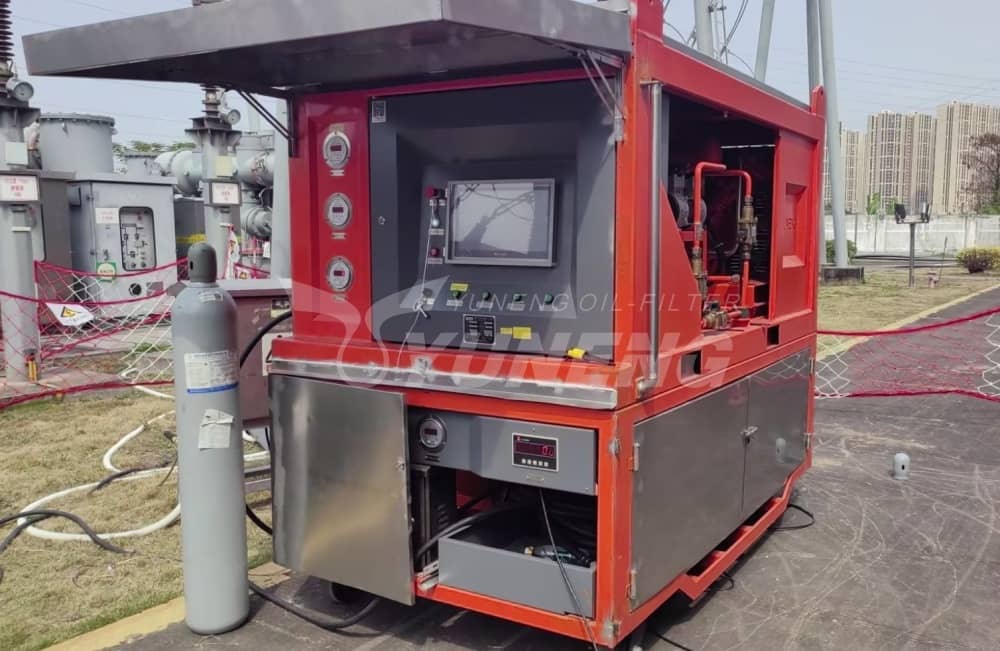
The first phase in the process is SF6 gas recycling, which means collecting SF₆ gas while equipment is being repaired, upgraded, or taken out of service. High recovery efficiency is particularly important because it directly affects the amount of emissions that are avoided.
Modern recovery methods cut down on gas losses and make it possible to track the recovered SF₆, making sure that it can be recorded toward carbon project goals.
2. SF₆ Gas Purification: Restoring Usability
When SF₆ is recovered, it often has water, acidic by-products, and solid particles that formed while the apparatus was running. Filtration, adsorption, and drying are some of the ways that SF6 gas purification gets rid of these impurities.
Purification standards typically specify limits for:
- Gas purity
- Moisture content
- Decomposition by-products
Meeting these standards is important for both safe reuse and the integrity of carbon accounting. This is because the quality of recycled gas influences how well it can replace virgin SF₆.
3. SF₆ Gas Refilling: Closing the Emission Loop
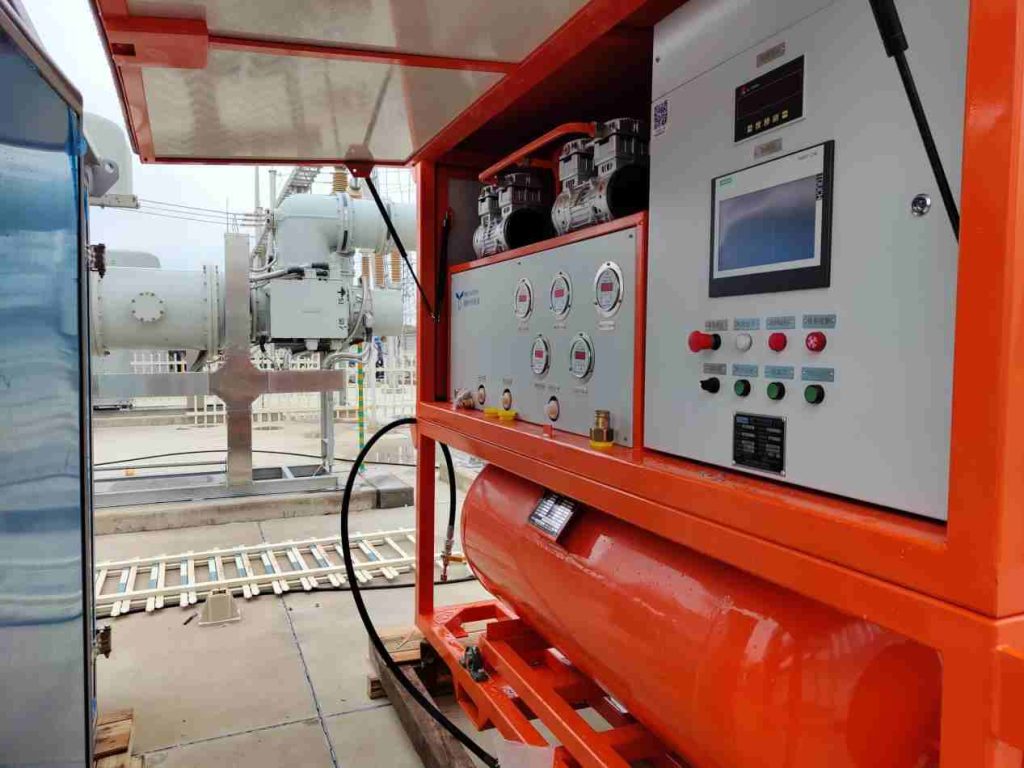
The last process, SF6 gas refilling, puts clean SF6 back into electrical equipment. This phase is very important from a carbon point of view: using each kilogram of recycled gas immediately replaces the demand for fresh SF₆, which avoids emissions from upstream production.
Recycling, purification, and refilling together make a measurable loop that lowers emissions, and carbon techniques can measure this with a high level of confidence.
Carbon Accounting Logic for Recycled SF₆
In a baseline scenario, used SF₆ may be vented, inadequately treated, or replaced entirely by new gas. The project scenario introduces controlled recovery, purification, and reuse, reducing net emissions.
1. Emission Reduction Calculation
Emission reductions are typically calculated as:
- Avoided SF₆ emissions × GWP
- Minus emissions from energy use, transport, and processing
Because SF₆ quantities are measured by mass, uncertainties are significantly lower than in many other offset project types.
2. Monitoring, Reporting, and Verification (MRV)
Robust MRV is a prerequisite for carbon market participation. Recycled SF₆ projects rely on:
- Certified gas analysis reports
- Equipment operation logs
- Third-party verification of recovery and refilling volumes
These elements ensure environmental integrity and market confidence.
Market Value of Recycled SF₆ in Carbon Trading and ESG Strategies
For utilities and grid operators, recycled SF₆ projects offer multiple benefits:
- Lower compliance risk under tightening SF₆ regulations
- Potential revenue from carbon credits
- Improved ESG and sustainability reporting
Carbon markets create new demand for integrated solutions that include SF6 gas recycling, purification, and refilling. This turns technical services into climate-friendly value propositions for service providers.
FAQs
Q1: Can SF₆ gas recycling generate carbon credits?
Yes. Properly recovered and reused SF₆ can count as measurable emission reductions eligible for carbon credits under voluntary or approved methodologies.
Q2: How does SF₆ gas purification affect carbon accounting?
Purification ensures recycled SF₆ meets quality standards, allowing it to fully replace new gas and accurately reflect avoided emissions.
Q3: Is SF₆ gas refilling considered emission reduction or reuse?
It is both: refilling prevents new SF₆ production (reducing emissions) and completes the reuse cycle.
Q4: Why is recycled SF₆ more acceptable than destruction-only projects?
Because it creates a measurable closed-loop, displaces virgin gas production, and ensures environmental integrity.
Q5: What industries benefit most from recycled SF₆ carbon projects?
Primarily power utilities, GIS manufacturers, and high-voltage equipment operators seeking emission reductions and carbon credit opportunities.
Recommend Products
No posts