When Should Transformer Oil Be Regenerated? 10 Test Indicators

Oil Purification & Vacuum Technology Expert
Table of Contents
Transformer oil does not become unsuitable for service because of one abnormal laboratory result. Moisture, low breakdown voltage, acidity, oxidation products, sludge, and dielectric losses can indicate different types of oil deterioration. Understanding these differences is essential for condition-based transformer maintenance.
So, when should transformer oil be regenerated? The answer should come from the overall oil condition, combined test results, and historical trends, rather than one isolated number. This guide explains 10 important transformer oil test indicators and how to interpret them when assessing oil aging and potential regeneration requirements.
Why One Transformer Oil Test Result Is Not Enough
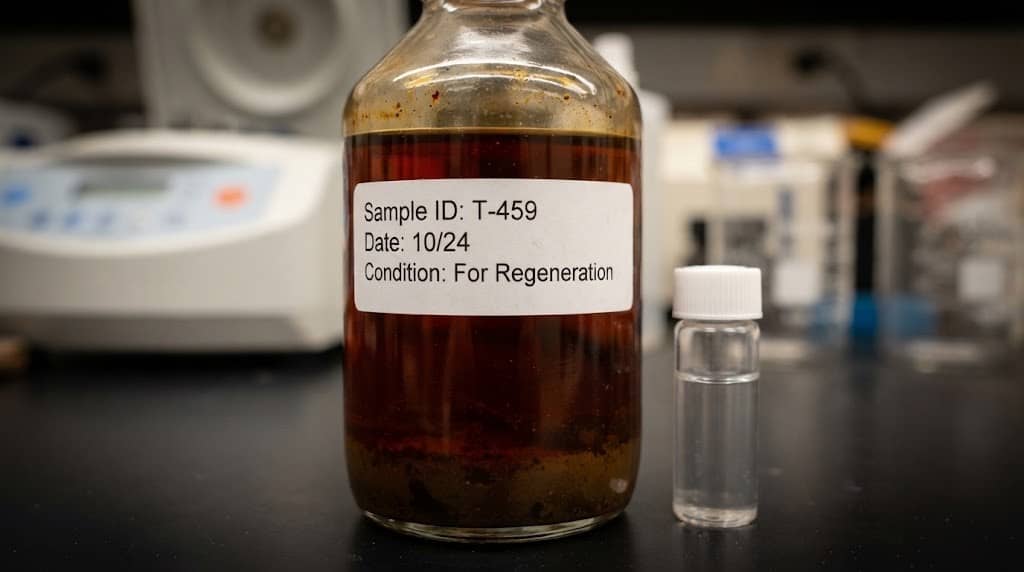
A transformer oil laboratory report can contain several parameters, but they do not all measure the same aspect of oil condition. Some tests primarily indicate physical contamination, while others provide evidence of chemical aging or dielectric deterioration.
A useful way to interpret the results is to group them into three categories:
| Oil Condition | Key Indicators | What They Help Assess |
| Physical condition | Moisture, particles, appearance, sludge | Contamination and deposits |
| Electrical condition | BDV, tan delta | Dielectric performance |
| Chemical condition | TAN, IFT, oxidation indicators, inhibitor content | Oil aging and degradation |
For example, a low BDV with increased moisture may point to moisture-related deterioration. In contrast, rising TAN, falling IFT, darker color, and sludge formation together provide stronger evidence of progressive oxidation. The key question, then, is not simply whether one result is abnormal, but whether multiple results tell the same story.
10 Transformer Oil Test Indicators to Monitor
1. Breakdown Voltage (BDV)
Breakdown voltage indicates the ability of transformer oil to withstand electrical stress. A reduced BDV can be associated with moisture, particles, fibers, gas bubbles, or other contaminants. However, low transformer oil BDV alone does not necessarily demonstrate advanced oil aging. When BDV remains low after routine oil treatment, engineers should investigate moisture, particle contamination, sampling conditions, and other possible causes before concluding that the oil has undergone chemical degradation.
When interpreting BDV, compare it with:
- water content;
- particle count;
- recent maintenance;
- sampling conditions; and
- previous BDV results.
A BDV decline combined with increasing moisture tells a different story from a BDV decline accompanied by several chemical aging indicators.
2. Water Content
Water content is a critical indicator because moisture can significantly affect the dielectric performance of insulating oil and the transformer insulation system.
When evaluating moisture results, consider:
- dissolved versus free water;
- transformer operating temperature;
- sampling conditions;
- recent maintenance;
- historical moisture levels; and
- corresponding BDV results.
A sudden increase may require a different investigation from a gradual rise over several sampling cycles. When moisture is identified as the primary oil-quality problem, vacuum transformer oil purification can be evaluated as part of the appropriate treatment strategy. Therefore, water-content trends can be more informative than a single test result.
3. Acid Number (TAN)
Total acid number, or TAN, provides useful information about chemical aging in mineral insulating oil. As oxidation progresses, acidic compounds and other degradation products can accumulate. A consistent increase in TAN can therefore indicate progressive oil deterioration.
However, TAN should be interpreted alongside other parameters. A more meaningful aging pattern may be:
TAN ↑ + IFT ↓ + darker color + sludge formation
This combination provides stronger evidence of chemical degradation than an isolated increase in acid number.
4. Interfacial Tension (IFT)
Interfacial tension is sensitive to polar contaminants and degradation products that accumulate as transformer oil ages. A declining IFT can therefore provide evidence of increasing oil degradation, particularly when it occurs alongside a rising TAN.
IFT is most useful as part of a combined transformer oil condition assessment rather than as an independent regeneration trigger. A consistent decline over several oil samples is generally more informative than a single unexpected result. When declining IFT occurs together with increasing acidity and other evidence of oxidation, a more comprehensive transformer oil regeneration assessment may be required.

5. Dielectric Dissipation Factor (Tan Delta)
Dielectric dissipation factor, commonly expressed as tan δ, helps assess dielectric losses and the presence of polar or conductive contaminants.
One important point is:
Acceptable BDV does not necessarily mean that transformer oil is chemically healthy.
For example, BDV may remain relatively stable while tan delta gradually increases. If TAN is also rising and IFT is declining, the combined results may indicate developing chemical deterioration. Tan delta therefore complements BDV by providing additional information about the dielectric and chemical condition of the oil.
6. Oil Appearance and Color
Oil color is an easy visual screening tool, but it should not be used as a standalone measure of transformer oil condition. Darkening can be associated with oxidation products and aging, but color can also be affected by other factors.
Therefore, Dark oil ≠ automatically oil that requires regeneration.
Instead, color changes should be compared with:
- TAN;
- IFT;
- sludge condition;
- dielectric properties; and
- historical samples.
When visual changes occur together with several chemical aging indicators, they become more meaningful.
7. Sludge and Sediment
Sludge is an important physical sign of advanced oil deterioration. Oxidation can generate degradation products that eventually form insoluble deposits. These deposits may remain suspended or settle inside the transformer.
Sludge assessment should therefore go beyond simply asking whether deposits are visible. For example: TAN ↑ + IFT ↓ + sludge ↑provides stronger evidence of an oxidation-related aging pattern than sludge alone.
Sludge can also affect heat transfer and the cleanliness of the transformer insulation system, making it an important condition-monitoring indicator. When sludge formation is accompanied by increasing acidity and other oxidation indicators, transformer oil regeneration and reclamation may be considered to address chemically degraded oil rather than only suspended contamination.
8. Particle Count and Oil Cleanliness
Particle contamination and chemical aging are not the same problem. Particle-count testing helps identify solid contamination from sources such as:
- maintenance activities;
- external contamination;
- insulation materials;
- internal wear;
- degradation products.
A high particle count may help explain poor dielectric performance, particularly when combined with reduced BDV. However, removing suspended particles does not necessarily remove dissolved acidic or polar degradation products.
This leads to an important distinction: Clean transformer oil is not necessarily chemically healthy transformer oil.
9. Oxidation Indicators
Transformer oil oxidation is a progressive process rather than a single test result. As oxidation develops, the oil may show a combination of:
increasing acidity → decreasing IFT → color darkening → sludge formation → deteriorating dielectric properties
The exact pattern varies with oil type, operating temperature, oxygen exposure, transformer design, and service history. The key diagnostic principle is to identify consistent changes across multiple related indicators rather than relying on one abnormal value.
10. Inhibitor or Antioxidant Content
Some mineral insulating oils contain antioxidant inhibitors that slow oxidation. Monitoring inhibitor content can therefore provide additional information about the remaining oxidation protection of the oil.
The result must be interpreted according to the oil type because inhibited and uninhibited oils have different characteristics. A reduction in inhibitor content does not automatically mean that regeneration is required. It becomes more meaningful when combined with other evidence of progressive oxidation.
How to Interpret Transformer Oil Test Results as a Pattern
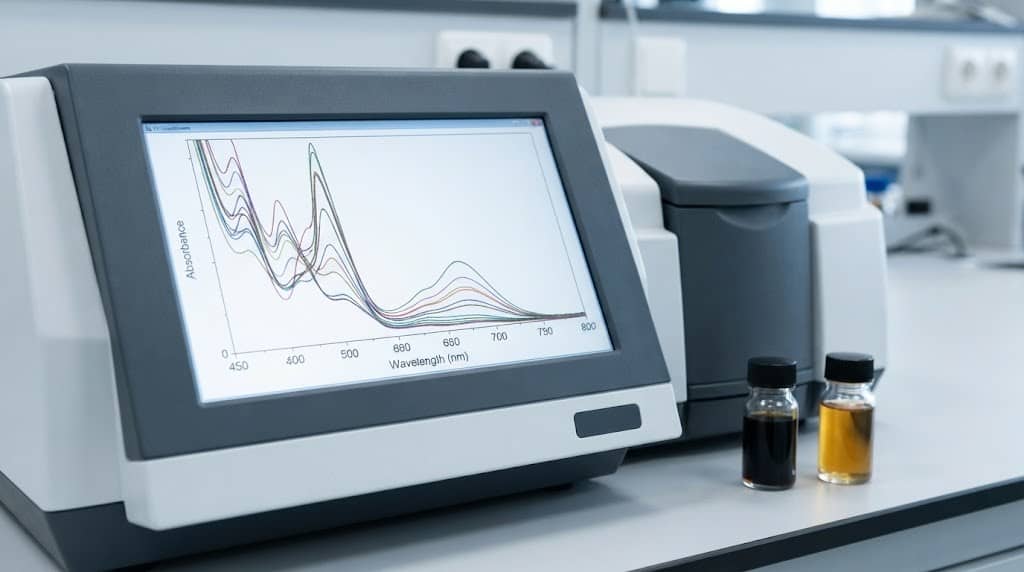
A useful oil analysis does not simply identify which number is outside a recommended range.
It asks: What do the combined results reveal about the condition and aging mechanism of the oil?
Consider these examples:
| Combined Test Pattern | Possible Interpretation |
| Low BDV + increasing moisture | Moisture-related dielectric deterioration |
| Low BDV + high particle count | Solid contamination |
| TAN increasing + IFT decreasing | Developing chemical aging |
| TAN increasing + darker color + sludge | Oxidation-related deterioration |
| Acceptable BDV + increasing tan delta | Increasing polar or dielectric-loss-producing contaminants |
| Several parameters deteriorating together | Progressive oil aging |
Once the oil-condition pattern has been identified, the next step is to determine whether the observed deterioration requires filtration, purification, regeneration, or another maintenance action. A transformer oil regeneration decision tree can help structure this assessment.
Why Transformer Oil Test Trends Matter
A laboratory report provides a snapshot. A series of oil test reports provides a trend. For condition-based maintenance, compare:
Current result → Previous result → Long-term trend
For example, gradually increasing TAN and decreasing IFT over several sampling cycles may indicate progressive oxidation.
By contrast, a sudden moisture increase with otherwise stable results may require investigation of:
- moisture ingress;
- recent maintenance;
- sampling conditions;
- oil handling;
- changes in operating conditions.
Historical oil data can therefore answer questions that a single laboratory report cannot. Long-term oil-condition trends can also help maintenance teams establish a more appropriate transformer oil regeneration and maintenance schedule instead of relying on a fixed treatment interval.
- Is the oil condition stable?
- Is deterioration accelerating?
- Which parameters are changing?
- Are multiple indicators changing together?
- Did previous maintenance improve the oil condition?
This makes transformer oil trend analysis an important part of long-term asset maintenance.
How to Validate an Abnormal Transformer Oil Test Result
An unexpected result should be investigated before it becomes the basis for a major maintenance decision.
1. Review Sampling Conditions
Check the sampling point, sample container, handling procedure, and possible exposure to ambient moisture.
2. Compare Historical Results
Determine whether the result represents a genuine trend or an isolated deviation.
3. Confirm Unexpected Results
Where appropriate, repeat the test or use a suitable confirmatory method.
4. Compare Related Parameters
For example, interpret BDV together with moisture and particle results rather than independently. Likewise, evaluate TAN together with IFT and other aging indicators.
5. Review Transformer Operating Conditions
Consider recent maintenance, elevated operating temperature, loading changes, oil top-up, or suspected moisture ingress.
6. Investigate the Transformer Condition
Oil analysis should not be used to explain every transformer abnormality. Evidence of internal electrical, thermal, or mechanical faults requires separate investigation.
When Do Multiple Oil Test Results Support a Regeneration Assessment?
Regeneration becomes a stronger consideration when test results indicate progressive chemical deterioration, rather than simple physical contamination.
Typical evidence may include:
- consistent deterioration in chemical aging indicators;
- increasing TAN with decreasing IFT;
- oxidation-related products becoming more evident;
- progressive sludge formation;
- worsening color supported by laboratory evidence;
- deteriorating dielectric properties alongside chemical changes;
- continued oil-quality deterioration despite routine contamination control.
The key principle is that transformer oil regeneration should be assessed from the complete oil-condition profile, not from one isolated laboratory result. This approach helps distinguish between oil that primarily requires contamination control and oil showing broader chemical aging.
What Should Be Reviewed Before Transformer Oil Regeneration?
Before proceeding with a regeneration assessment, gather information about both the oil and the transformer.
1. Oil History
Review:
- oil type;
- service age;
- previous treatment;
- oil top-up history;
- previous laboratory results;
- known contamination events.
2. Transformer Information
Useful information includes:
- transformer rating;
- oil volume;
- operating conditions;
- recent maintenance;
- loading history;
- suspected sources of contamination or moisture ingress.
3. Laboratory Data
The latest oil test report should be evaluated alongside historical reports.
4. Treatment Objective
Clearly define the purpose of treatment:
- improve dielectric performance;
- remove moisture and gases;
- reduce aging products;
- restore oil properties;
- extend oil service life;
- reduce the need for complete oil replacement.
A clear treatment objective makes the subsequent equipment and process selection more technically defensible.
Transformer Oil Regeneration Assessment Checklist
Before requesting a regeneration solution, ask:
1. Has oil condition deteriorated consistently over time?
2. Are multiple chemical indicators showing the same aging trend?
3. Are TAN and IFT changing consistently with oxidation?
4. Is sludge or another oxidation-related deposit present?
5. Have unexpected laboratory results been validated?
6. Have historical oil test results been reviewed?
7. Has the potential source of deterioration been investigated?
8. Is the primary issue chemical aging rather than simple particle or moisture contamination?
If several answers are yes, a detailed transformer oil regeneration assessment may be appropriate.
The final decision should consider the oil type, transformer condition, applicable standards, manufacturer recommendations, laboratory results, and maintenance history.
Final Takeaway: Look for the Aging Pattern, Not One Number
There is no single transformer oil test that determines regeneration requirements for every transformer. BDV indicates dielectric strength. Moisture identifies water contamination. TAN and IFT provide important evidence of chemical aging. Tan delta helps evaluate dielectric losses and polar contamination, while color, sludge, particles, oxidation indicators, and inhibitor content provide additional context.
The most reliable approach is: Test → Compare → Correlate → Validate → Assess. Rather than asking whether one number has crossed a fixed threshold, engineers should determine whether the overall evidence shows progressive chemical deterioration.
When several indicators point toward the same aging pattern, transformer oil regeneration can be evaluated as a condition-based maintenance option to restore oil quality and support longer transformer service life.
For transformer owners and maintenance teams, the goal is not simply to identify “bad oil.” It is to understand why the oil is deteriorating, how quickly its condition is changing, and what level of treatment is technically justified.