Vacuum Transformer Oil Filtration vs Centrifugal Filtration: A Technical Selection Guide

Oil Purification & Vacuum Technology Expert
Table of Contents
Transformer oil filtration is used to control moisture, solid particles, free water, and other physical contaminants that can affect the dielectric performance and service condition of insulating oil. However, different filtration technologies work through different separation mechanisms.
The main difference between vacuum transformer oil filtration and centrifugal filtration lies in the treatment of contamination. Vacuum systems employ a combination of vacuum dehydration, degassing and precision filtration. A transformer oil centrifuge is mainly used to separate contaminants by density. Therefore, the right technology should be chosen depending on the type and form of contamination, the required oil quality, the processing capacity and the objective of transformer maintenance.
Vacuum Transformer Oil Filtration: How Does It Work?
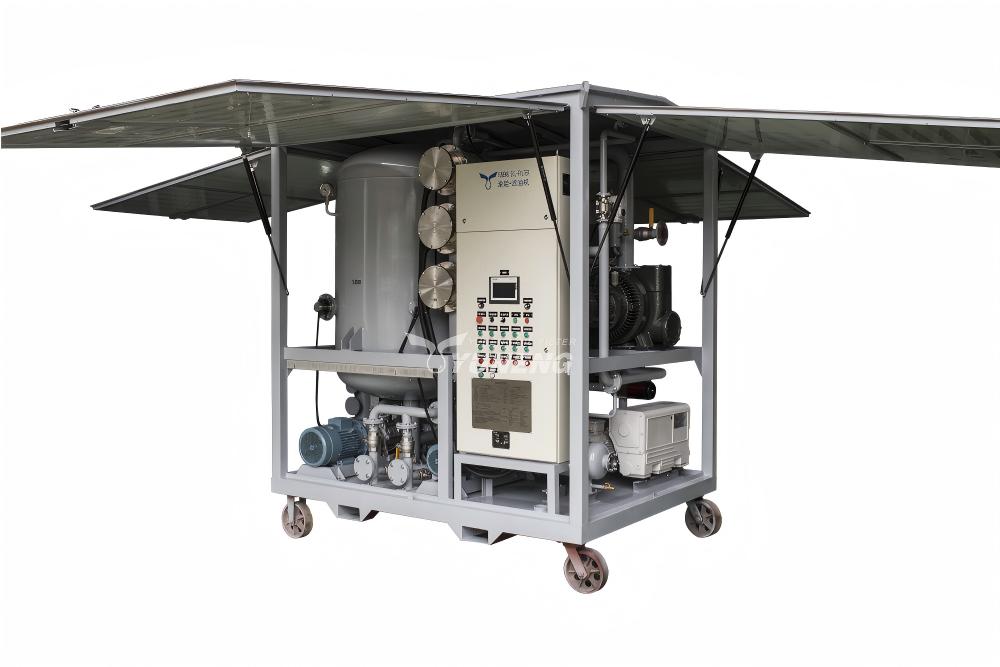
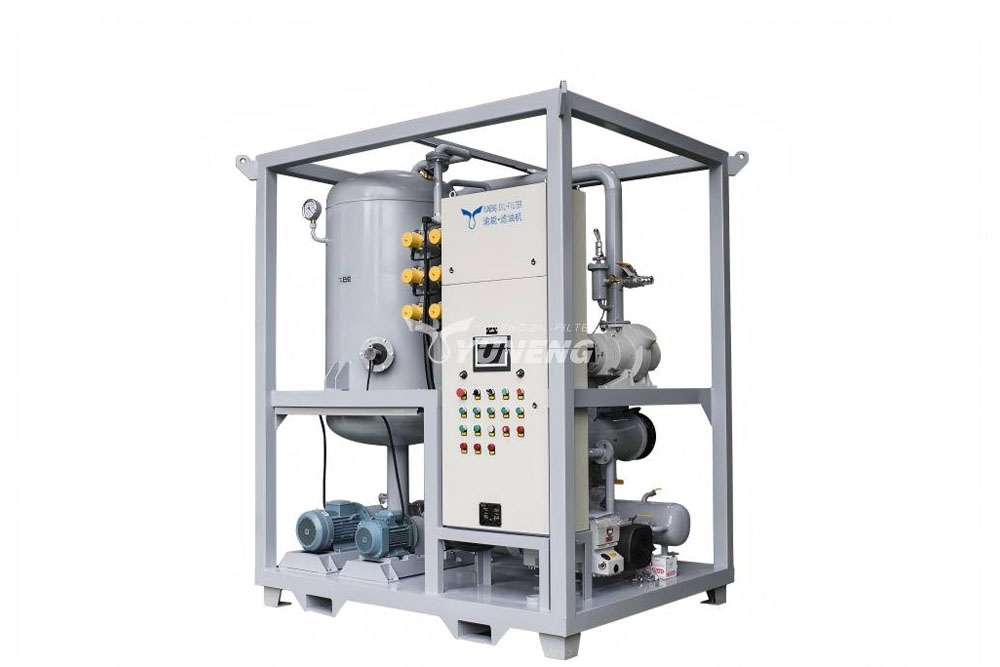
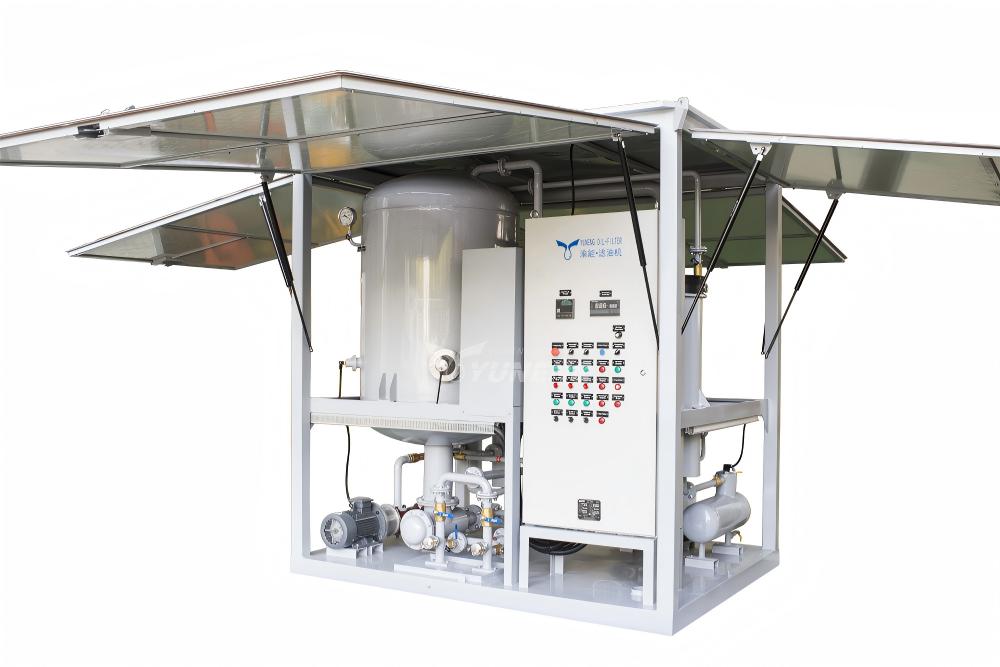
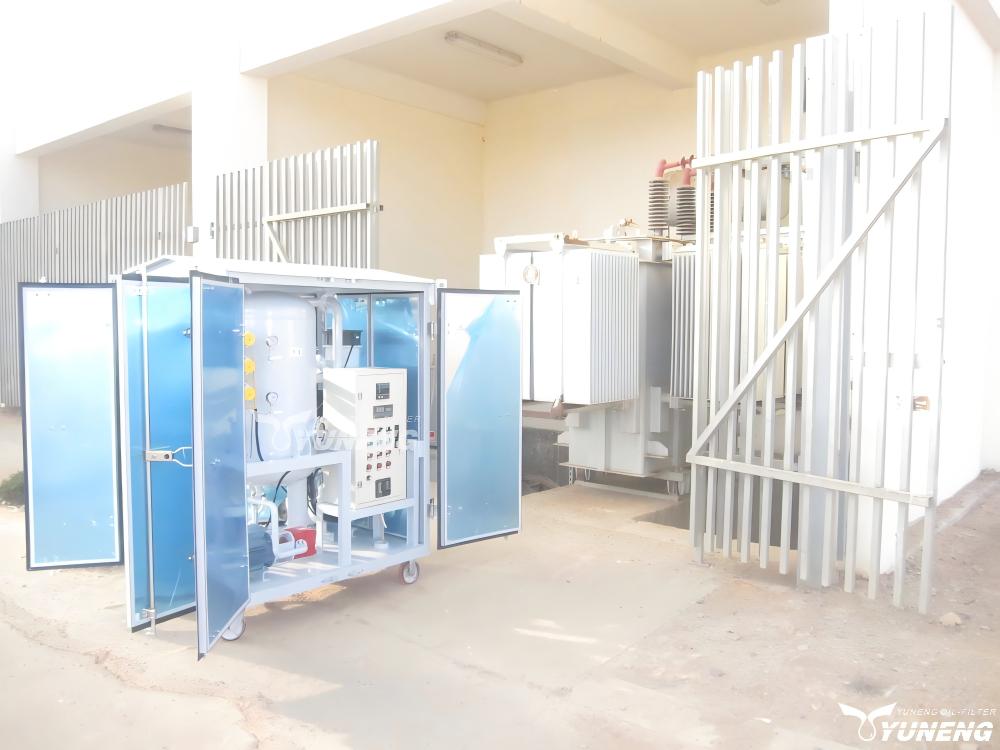
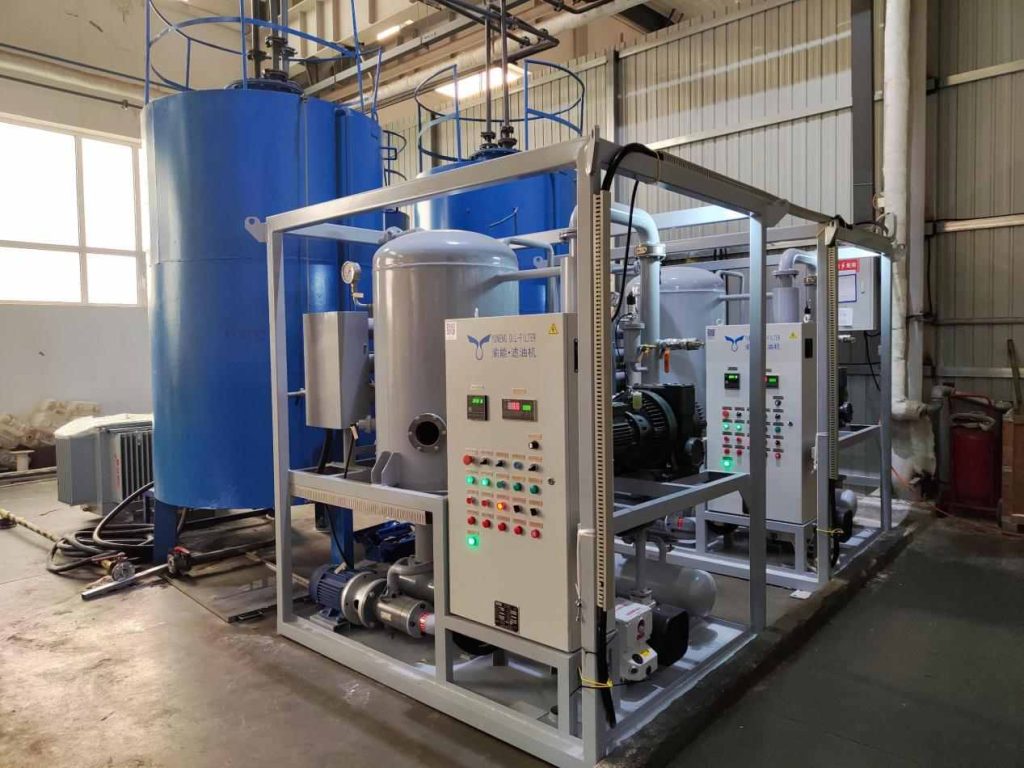
The vacuum transformer oil filtration system is a multi-stage treatment for the removal of physical contaminants from insulating oil. A typical process is heating, vacuum dehydration, vacuum degassing, precision filtration, and cleaning transformer oil.
The vacuum dehydration step lowers the partial pressure around the oil so water is more easily removed under controlled heating. This is especially important when moisture is present in dissolved form as well as free water. Vacuum treatment can also remove dissolved air and other gases from the oil. Finally, suspended and fine solid particles are removed by the last filtration stages.
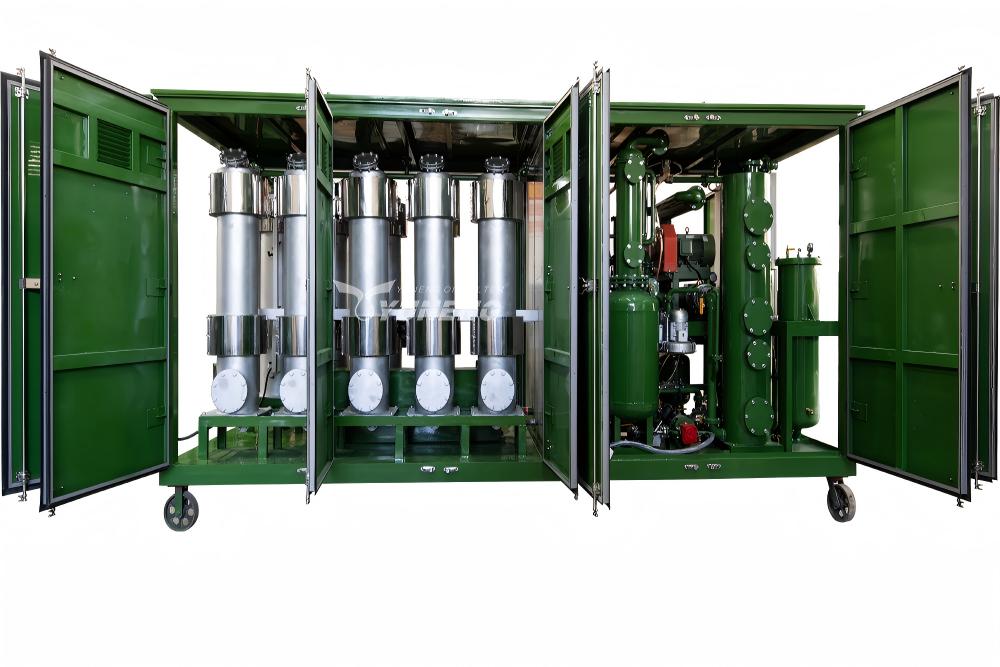
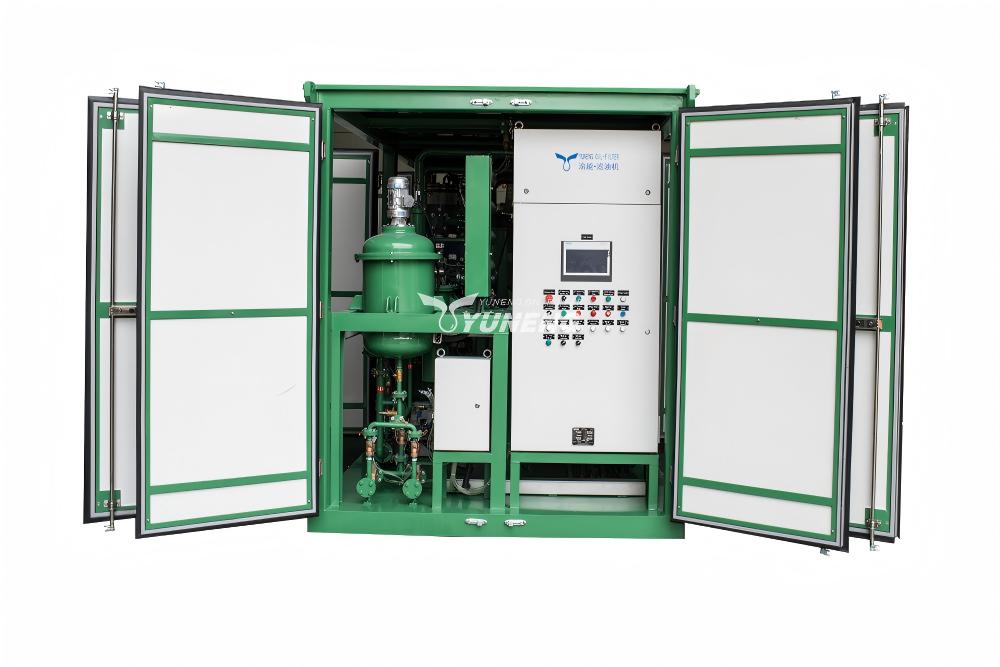
For example, YUNENG’s ZJA1.8 transformer oil purification system has a published flow rate of 1,800 L/h, working vacuum ≤80 Pa, ultimate vacuum ≤5 Pa, oil temperature range 45–65°C and filtration accuracy 1 μm. These specifications show the way a vacuum transformer oil purifier combines dehydration, degassing, heating and precision filtration in one treatment process. Actual treatment performance is dependent on oil condition and system configuration.
This makes vacuum filtration particularly suitable when transformer oil needs moisture removal, degassing and fine particle filtration at the same time.
Transformer Oil Centrifuge: How Does Centrifugal Filtration Work?
A transformer oil centrifuge is a device used to separate materials of different densities using centrifugal force. During operation contaminated oil enters a rotating separation chamber. The centrifugal force can separate heavier contaminants like free water droplets and relatively dense solid particles from the oil under high centrifugal force.
The simplified process is: Contaminated oil → Centrifugal force → Density-based separation → Separated contaminants
The key characteristic of centrifugal filtration is therefore density-based separation. This makes centrifugal treatment useful when contamination consists primarily of free water or heavier particles that can form a separate phase.
However, dissolved moisture and dissolved gases behave differently from free water and suspended particles. They are distributed within the oil rather than existing as an independent heavy phase. Consequently, a centrifugal system should not be considered equivalent to vacuum dehydration or vacuum degassing.
This distinction is particularly important when transformer oil test results indicate elevated dissolved moisture rather than only free water.
Vacuum Filtration vs Centrifugal Filtration: Technical Comparison
The following table compares the two technologies according to their primary treatment mechanisms:
| Treatment Requirement | Vacuum Transformer Oil Filtration | Centrifugal Filtration |
| Free water removal | Yes | Yes |
| Dissolved moisture removal | Strong capability | Limited |
| Dissolved air/gas removal | Yes | Limited |
| Suspended particle removal | Yes | Yes |
| Fine particle removal | Precision filtration stage | Depends on separator design |
| Density-based separation | Not the primary mechanism | Primary mechanism |
| Vacuum dehydration | Core function | Not the primary function |
| Vacuum degassing | Core function | Limited |
| Chemical aging products | Not removed by normal filtration | Not removed by density separation |
| Typical role | Deep physical purification | Free water and dense contaminant separation |
Vacuum transformer oil filtration is designed for combined dehydration, degassing, and precision particle removal, whereas centrifugal filtration primarily separates free water and dense contaminants according to density. When dissolved moisture or dissolved gases are important treatment targets, vacuum technology provides a more direct treatment mechanism. This distinction is more useful for equipment selection than simply comparing nominal flow rates.
Which Transformer Oil Contaminants Can Each Technology Treat?
Before selecting transformer oil purification equipment, engineers should identify the actual contamination through oil testing. Important indicators can include:
- Breakdown voltage (BDV)
- Moisture content
- Particle contamination
- Acidity
- Interfacial tension (IFT)
- Dissipation factor or tan delta
- Dissolved gas analysis (DGA), where applicable
A practical treatment matrix is:
| Transformer Oil Condition | Primary Treatment Consideration |
| Free water | Centrifugal separation or vacuum treatment |
| Dissolved moisture | Vacuum dehydration |
| Suspended particles | Mechanical filtration |
| Fine particles | Multi-stage precision filtration |
| Dissolved gases | Vacuum degassing |
| High acidity | Transformer oil regeneration assessment |
| Low IFT | Regeneration assessment |
| Significant oxidation products | Regeneration or replacement assessment |
| Abnormal DGA | Transformer fault diagnosis before oil treatment |
This distinction prevents an important maintenance error: treating every abnormal oil test result as a conventional filtration problem. For example, low BDV associated with high moisture may indicate a physical contamination problem that can respond to vacuum dehydration and filtration. In contrast, high acidity and reduced IFT may indicate chemical aging, which requires a different treatment approach.
Can Vacuum Filtration Improve Transformer Oil BDV?
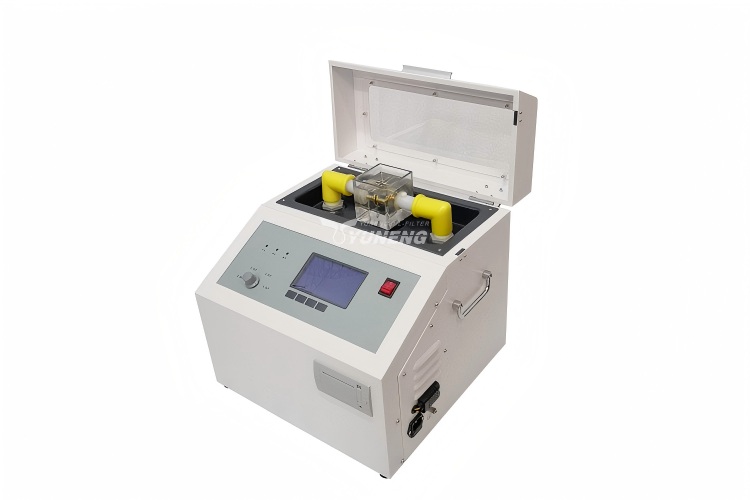
Breakdown voltage is an important indicator of the dielectric condition of transformer oil, but BDV alone does not identify the source of oil deterioration. Moisture and solid particles can reduce the dielectric strength of insulating oil. Therefore, the treatment approach should consider the relationship between BDV and other oil test results.
| Test Result Pattern | Possible Treatment Direction |
| Low BDV + high moisture | Investigate vacuum dehydration |
| Low BDV + high particle contamination | Investigate precision filtration |
| Low BDV + free water | Remove water by suitable separation |
| Low BDV + high acidity | Assess oil regeneration |
| Low BDV + low IFT | Assess chemical aging |
| Abnormal DGA + oil deterioration | Investigate transformer condition |
Vacuum transformer oil filtration can improve BDV when removable moisture or particle contamination is contributing to low dielectric strength. Centrifugal treatment may also improve oil condition when free water or relatively dense particles are the principal contaminants. The correct approach is therefore to treat BDV as one diagnostic indicator rather than the sole basis for selecting filtration equipment.
When Should You Choose Vacuum Filtration or Centrifugal Filtration?
The choice between vacuum filtration and centrifugal filtration should be based on the contamination profile and required treatment result.
Vacuum transformer oil filtration is particularly suitable when:
Dissolved moisture needs to be reduced.
- Transformer oil requires dehydration.
- Dissolved air or gases need to be removed.
- Fine particle filtration is required.
- Low BDV is associated with moisture or physical contamination.
- A combined dehydration, degassing, and filtration process is required.
Centrifugal filtration can be considered when:
- Free water is present as a separate phase.
- Relatively dense solid contaminants are present.
- Density-based separation matches the contamination profile.
- Deep vacuum dehydration or degassing is not the primary requirement.
The decision process can be summarized as:
Oil Testing → Identify Contaminant → Determine Physical/Chemical Condition → Select Treatment Technology → Process Oil → Verify Results
This approach allows transformer maintenance teams to select equipment based on measurable oil conditions rather than assuming that one technology is suitable for every application.
Transformer Oil Filtration vs Regeneration: When Is Filtration Not Enough?
Vacuum and centrifugal filtration primarily address physical contamination. They should not automatically be treated as complete solutions for chemically aged transformer oil. Transformer oil with elevated acidity, reduced IFT, significant oxidation products, or sludge may require transformer oil regeneration or reclamation.
The basic distinction is:
| Oil Problem | Typical Treatment Direction |
| Water | Filtration/vacuum dehydration |
| Solid particles | Precision filtration |
| Dissolved gases | Vacuum degassing |
| High acidity | Regeneration assessment |
| Low IFT | Regeneration assessment |
| Significant oxidation products | Regeneration assessment |
| Severe degradation | Replacement assessment |
This is an important equipment-selection principle: filtration removes contaminants that can be physically separated; regeneration is intended to address certain dissolved aging products that ordinary filtration does not remove. For this reason, oil testing should be completed before deciding whether a transformer oil purifier or regeneration system is required.
How to Select Transformer Oil Filtration Equipment
After determining the appropriate treatment technology, engineers should compare the actual technical configuration rather than selecting equipment only by rated capacity.
1. Flow rate
The required capacity depends on oil volume, desired circulation time, transformer maintenance schedule, and site conditions.
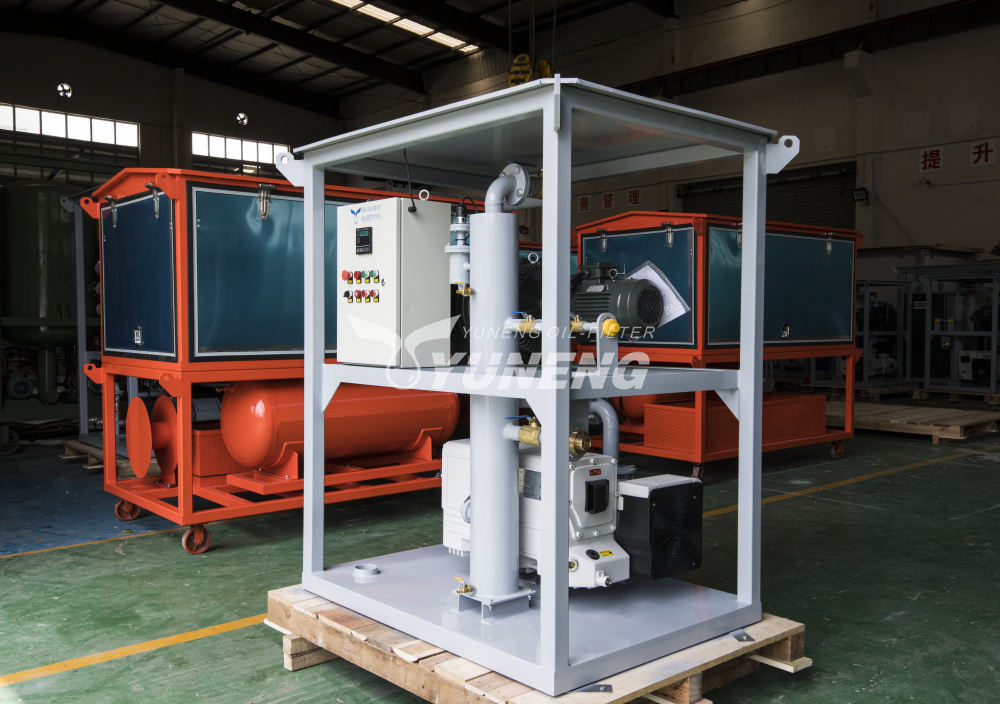
YUNENG provides transformer oil purification systems in multiple capacities, including 1,800 LPH, 3,000 LPH, 6,000 LPH, 9,000 LPH, 12,000 LPH, and 18,000 LPH configurations.
2. Vacuum performance
For applications requiring dehydration and degassing, working vacuum and ultimate vacuum are important specifications. These parameters should be evaluated together with the actual treatment requirements.
3. Filtration accuracy
The filtration rating should correspond to the required particle-control objective. A smaller micron rating is not automatically better; pressure drop, filter-element design, oil viscosity, and required flow rate must also be considered.
4. Oil heating
Controlled oil heating can support moisture evaporation during vacuum dehydration. The operating temperature should remain within the appropriate range for the oil, equipment, and treatment process.
5. Treatment objectives
Specify the desired results before choosing the machine:
- Moisture reduction
- BDV improvement
- Particle removal
- Degassing
- Overall oil purification
6. Site configuration
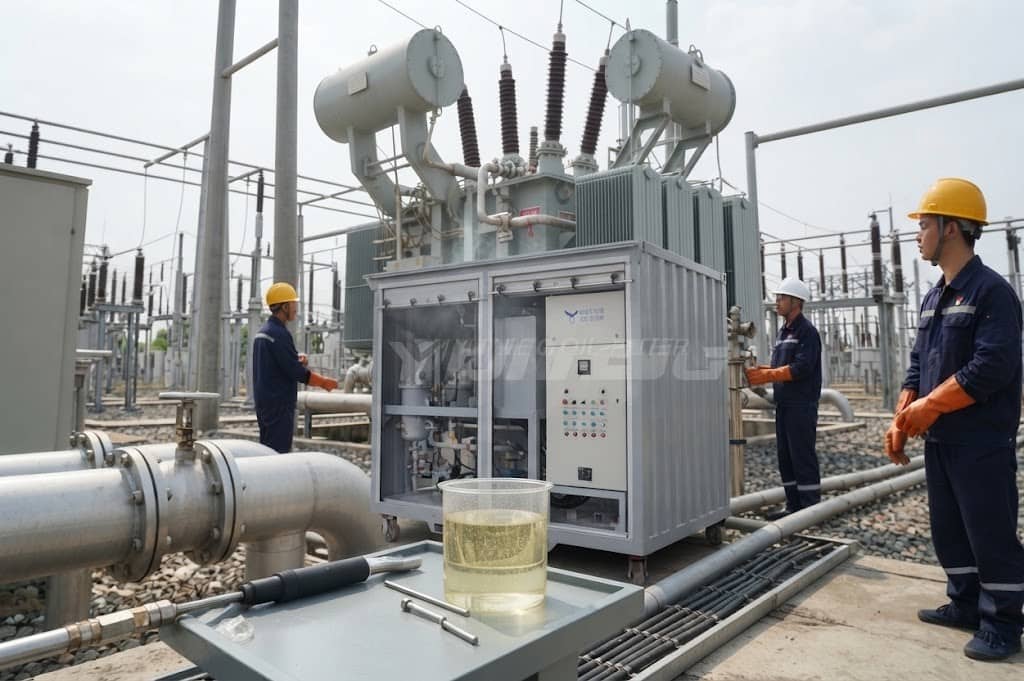
For field maintenance, consider equipment mobility, connection arrangement, automatic controls, hose configuration, power supply, and operating environment.
A properly specified transformer oil filtration machine should therefore be selected from the required treatment result backward, rather than from capacity alone.
Transformer Oil Filtration Workflow: From Oil Testing to Verification
A practical transformer oil treatment project can follow this workflow:
1. Oil Sampling
2. Test BDV, Moisture and Particle Contamination
3. Review Acidity, IFT and Other Relevant Indicators
4. Identify Physical Contamination or Chemical Aging
5. Select Centrifugal Filtration, Vacuum Filtration or Regeneration
6. Process the Transformer Oil
7. Perform Post-Treatment Testing
8. Compare Results with the Applicable Oil-Quality Requirements
Post-treatment testing is essential because visual appearance alone cannot confirm that dissolved moisture, dielectric performance, or particle contamination has reached the required condition.
FAQs About Vacuum and Centrifugal Transformer Oil Filtration
Q1: Is vacuum filtration better than centrifugal filtration for transformer oil?
A1: The two technologies serve different treatment purposes. Vacuum filtration is particularly suitable when dissolved moisture, dissolved gases, and fine particles need to be treated, while centrifugal filtration is primarily used for density-based separation of free water and heavier contaminants.
Q2: Can a transformer oil centrifuge remove dissolved water?
A2: A centrifugal separator is primarily designed to separate distinct phases according to density. Dissolved moisture does not behave like free water, so centrifugal separation has limited effectiveness for dissolved water compared with vacuum dehydration.
Q3: Can vacuum filtration improve transformer oil BDV?
A3: Yes, when low BDV is associated with removable physical contamination such as moisture or particles. However, BDV should be evaluated together with moisture, particle contamination, acidity, IFT, and other relevant test results.
Q4: Does centrifugal filtration remove dissolved gases?
A4: Centrifugal separation is not primarily a degassing process. When dissolved gases are a treatment target, vacuum degassing provides a more direct mechanism for removing gases from transformer oil.
Q5: When should transformer oil be regenerated instead of filtered?
A5: Regeneration should be considered when oil testing indicates chemical aging, such as elevated acidity, reduced IFT, or significant oxidation products. Conventional filtration primarily addresses physical contaminants rather than dissolved aging compounds.
Q6: What should be tested after transformer oil filtration?
A6: Typical post-treatment checks include breakdown voltage, moisture content, and particle contamination, together with other tests required by the applicable oil specification or maintenance procedure. The testing program should reflect the original treatment objective.